
Drive through the streets of Dubai, Riyadh, or Doha, and you'll witness a skyline in constant motion—cranes dotting the horizon, construction crews working around the clock, and billboards teasing the next "world's first" mega-project. The Middle East isn't just building buildings; it's building the future. From the sustainable city of Masdar to the ultra-luxury resorts of the Maldives (a stone's throw from the Gulf), and the ambitious NEOM project in Saudi Arabia, the region's construction sector is a testament to human ambition. But every great project relies on the details—the materials that hold it all together. Among these, plastic valve systems are the quiet workhorses, ensuring that water flows, gases are contained, and systems run smoothly. And behind these systems are plastic valve system suppliers, more than just vendors—they're partners in progress, turning challenges into solutions for some of the world's most demanding building environments.
The numbers tell the story: the Middle East construction market is projected to grow at 5.2% annually through 2027, fueled by urbanization, population growth, and a push for economic diversification beyond oil. Cities like Dubai alone are home to over 8,000 active construction projects, from residential towers to sprawling commercial hubs. Take the Dubai Expo 2020 site, now repurposed as District 2020—a 4.38-square-kilometer innovation hub that required millions of meters of piping and thousands of valves to support its utilities. Or NEOM, the $500 billion futuristic city in Saudi Arabia, which aims to house 9 million people and demands materials that can withstand extreme desert conditions. These projects don't just need materials; they need partners who understand the region's unique demands.
What makes Middle East construction so distinct? It's a mix of harsh environmental realities and sky-high expectations. Temperatures can soar to 50°C in summer, while sandstorms test the durability of every component. Water scarcity means systems must be leak-proof and efficient, and strict regulations—from fire safety codes to sustainability standards—add layers of complexity. For project managers and engineers, choosing the right materials isn't just about cost; it's about ensuring longevity, compliance, and performance in a region where failure isn't an option.
Imagine overseeing a hospital construction in Riyadh, where the plumbing system must not only deliver clean water but also withstand daily temperature swings from 15°C at night to 45°C during the day. Or managing a residential complex in Dubai, where corrosive salt air from the Persian Gulf can eat away at metal pipes in years. These are the realities for Middle East builders—and they're why material selection is a make-or-break decision.
Traditional materials like steel or copper, once the go-to for valves and piping, often fall short here. Steel rusts quickly in humid coastal areas, while copper expands and contracts under extreme heat, leading to leaks. Even galvanized iron, a cheaper alternative, succumbs to corrosion in saline environments. Add to that the pressure of tight deadlines—many projects aim to finish in 2-3 years, half the time of similar builds in Europe—and the need for lightweight, easy-to-install materials becomes clear. This is where plastic valve systems step in, and where plastic valve system suppliers prove their worth.
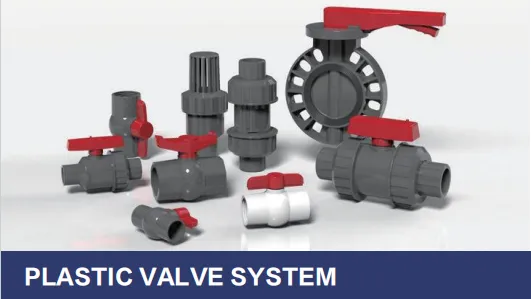
Plastic valves—made from materials like PVC, UPVC, PPR, and CPVC—have revolutionized Middle East construction, and for good reason. Let's start with durability: unlike metal, plastic doesn't corrode. In a region where water often contains high mineral content (hello, hard water in Abu Dhabi), plastic valves resist scaling and buildup, ensuring consistent flow for decades. Then there's temperature resilience: UPVC valves, for example, can handle temperatures from -10°C to 60°C, making them ideal for both indoor plumbing and outdoor irrigation systems in the desert.
Weight is another advantage. A plastic valve weighs 70% less than a comparable steel valve, making transportation and installation faster and cheaper. On a high-rise construction site in Doha, where every elevator trip counts, this can cut labor costs by 30% and shave weeks off the timeline. And let's talk cost: plastic valves are typically 40-50% more affordable than copper or brass, a critical factor for mega-projects with million-dirham budgets. For developers building 500-unit residential towers, that adds up to significant savings without compromising quality.
But it's not just about the product—it's about the solution. Plastic valve system suppliers don't just drop off boxes of valves; they provide end-to-end support. Need a valve customized to fit a unique PPR pipe from a trusted ppr pipe and fitting supplier? They'll engineer it. Unsure if a UPVC valve meets Saudi Arabia's SASO standards? They'll provide certification. In a region where "good enough" isn't enough, this level of partnership is invaluable.
If you ask Ahmed, a project engineer on a mixed-use development in Kuwait City, what makes a great supplier, he'll tell you it's about reliability. "We once had a metal valve supplier delay a shipment by six weeks," he recalls. "We had to halt plumbing work, and the client fined us $10,000 per day. Now, we work with a plastic valve system supplier who delivers on time, every time, and even sends a technical team to inspect installations. That's the difference between meeting a deadline and losing a contract."
Plastic valve system suppliers have redefined what it means to be a vendor. They act as consultants, helping clients navigate the region's complex regulatory landscape. For example, in the UAE, all plumbing materials must meet Emirates Standardization and Metrology Authority (ESMA) requirements; a reputable supplier will ensure their valves are pre-certified, saving clients months of paperwork. They also offer on-site training: in Jeddah, one supplier recently trained a crew of 50 workers on how to install PPR valves with minimal leakage, reducing post-installation repairs by 40%.
Customization is another area where these suppliers shine. Take the case of a luxury hotel in Bahrain that needed valves for its spa's hydrotherapy pools—systems that require precise pressure control to avoid discomfort for guests. The plastic valve system supplier worked with the hotel's engineers to design a custom ball valve with adjustable flow rates, ensuring the pools operated smoothly. This isn't just service; it's collaboration.
Plastic valve systems rarely work alone—they're part of a larger ecosystem that includes pipes, fittings, and other components. That's why top plastic valve system suppliers often partner with upvc pipe suppliers and ppr pipe and fitting suppliers to offer integrated solutions. For example, UPVC pipes, known for their strength and chemical resistance, pair seamlessly with UPVC ball valves in municipal water projects. PPR pipes, flexible and heat-resistant, are ideal for hot water systems in hospitals, where they're often paired with PPR check valves to prevent backflow.
To understand how these products fit together, let's look at the most common plastic valve types and their applications in Middle East projects:
| Valve Type | Material | Pressure Rating | Temperature Range | Ideal Application |
|---|---|---|---|---|
| Ball Valve | UPVC | 16 bar | -10°C to 60°C | Residential water supply, irrigation systems |
| Gate Valve | PPR | 10 bar | 0°C to 80°C | Commercial buildings (hot water lines, HVAC) |
| Check Valve | CPVC | 15 bar | -5°C to 93°C | Hospitals, schools (chemical-resistant piping, fire sprinklers) |
| Butterfly Valve | PVC | 8 bar | 0°C to 50°C | Municipal sewage systems, industrial cooling lines |
Each of these valves plays a role in keeping projects on track. For instance, in Dubai's Bluewaters Island development, a popular upvc pipe supplier provided UPVC pipes for the irrigation system, paired with UPVC ball valves from a plastic valve system supplier. The result? A leak-proof network that waters 10,000 trees and shrubs daily, even in 45°C heat. In Qatar's Education City, PPR pipes and check valves from a ppr pipe and fitting supplier ensure that laboratories have a steady supply of distilled water, critical for experiments.
Al Reem Island, Abu Dhabi, is home to "Azure Towers," a 45-story residential complex with 600 apartments. The project required a plumbing system that could handle 1,200 residents' daily water needs while resisting the coastal humidity. The engineering team initially considered copper valves but was concerned about corrosion and cost. Enter their plastic valve system supplier, who recommended UPVC ball valves paired with UPVC pipes from a trusted upvc pipe supplier.
The result? Installation time was cut by 25% (thanks to lightweight materials), and the system has operated leak-free for three years. "We've had zero valve replacements," says Maria, the building's facilities manager. "And with water bills 15% lower than similar buildings, residents are happy too."
King Faisal Specialist Hospital in Riyadh needed a piping system for its new pediatric wing, where hygiene and safety are paramount. The system had to transport medical gases, drinking water, and wastewater—each with strict purity and pressure requirements. The hospital partnered with a plastic valve system supplier and a ppr pipe and fitting supplier to design a solution using PPR pipes and CPVC check valves.
CPVC valves were chosen for their chemical resistance (critical for medical gases), while PPR pipes offered smooth interiors to prevent bacterial buildup. "We passed all health inspections on the first try," notes Dr. Hassan, the hospital's project lead. "The plastic valves are easy to clean, and their durability means we won't need maintenance for at least 15 years—vital for a busy hospital."
The Middle East construction sector isn't slowing down—and neither are plastic valve system suppliers. The next frontier? Sustainability. With the UAE aiming for net-zero emissions by 2050 and Saudi Arabia's Vision 2030 prioritizing green building, suppliers are innovating. Some are now offering recycled plastic valves, made from 30% post-consumer plastic, without compromising strength. Others are developing "smart valves" with sensors that alert maintenance teams to leaks in real time, reducing water waste—a critical feature in water-scarce regions.
Integration with smart building technology is another trend. Imagine a hotel in Dubai where the HVAC system automatically adjusts valve settings based on occupancy, saving energy. Or a residential complex where residents can monitor their water usage via an app, thanks to smart valves that track flow rates. Plastic valve system suppliers are partnering with tech firms to make this a reality, turning passive components into active parts of the building's ecosystem.
Sustainability certifications are also becoming a priority. Many suppliers now offer valves that meet LEED (Leadership in Energy and Environmental Design) standards, helping projects earn green building credits. For example, a shopping mall in Kuwait used plastic valves and PPR pipes to achieve LEED Gold certification, attracting eco-conscious tenants and shoppers.
In the Middle East's fast-paced construction world, plastic valve system suppliers are more than vendors—they're problem-solvers, innovators, and partners. They understand that a valve isn't just a valve; it's a link in the chain that connects a vision to reality. Whether it's a hospital in Riyadh, a residential tower in Dubai, or a futuristic city like NEOM, these suppliers provide the reliability, expertise, and solutions that make ambitious projects possible.
As the region continues to build upwards and forwards, the role of plastic valve system suppliers will only grow. They'll adapt to new technologies, stricter regulations, and evolving needs, ensuring that the Middle East's buildings aren't just iconic—they're efficient, sustainable, and built to last. Because in construction, as in life, the best projects aren't just about the big ideas; they're about the details that hold them together. And when it comes to those details, plastic valve system suppliers are leading the way.
Recommend Products












