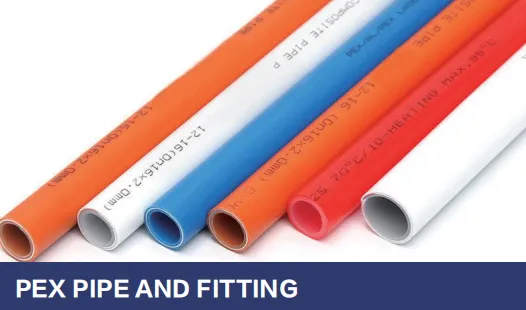
On a bustling construction site in Riyadh, where a 40-story commercial tower is taking shape, the project manager pauses to check the day's delivery schedule. Among the list of materials—steel beams, electrical wiring, and flooring materials—one line item stands out: 5,000 meters of PEX pipe and 2,000 brass fittings, set to arrive by noon. A delay here could push back the plumbing phase by weeks, cascading into missed deadlines for the entire project. For large-scale builds—whether hospitals, shopping malls, or residential complexes—the role of a reliable
PEX pipe and fitting supplier extends far beyond just delivering products. It's about orchestrating a seamless, end-to-end process that aligns with tight timelines, strict quality standards, and the unique demands of each project. In this article, we'll pull back the curtain on how these suppliers navigate the complexities of large-scale orders, ensuring that even the most ambitious construction projects stay on track.
Pre-Project Planning: The Foundation of Successful Order Management
Managing a large-scale order begins long before the first truck rolls out of the warehouse. For PEX pipe and fitting suppliers, the process starts with a deep dive into understanding the client's needs—a step that often involves months of collaboration. Unlike small-scale orders, where standard products might suffice, large projects demand a tailored approach, and suppliers must act as partners, not just vendors.
Consider a recent project: a 300-bed hospital in Jeddah requiring a complete plumbing overhaul. The client, a leading construction firm, needed PEX pipes for potable water lines, PPR pipes for hot water systems, and PVC DWV pipes for drainage—all from a single supplier to simplify coordination. The supplier's first move was to assign a dedicated project manager, who spent three weeks on-site, collaborating with architects, engineers, and contractors. They reviewed blueprints to map out pipe routes, calculated exact quantities (accounting for 5% extra to cover cuts and waste), and noted critical details: the hospital's pediatric wing required color-coded pipes for easy identification, while the surgical units needed PEX with anti-microbial coatings to meet healthcare standards. This level of detail isn't just about avoiding mistakes; it's about ensuring the materials integrate seamlessly with other systems, from flooring to electrical wiring, reducing the risk of rework later.
Another key part of pre-project planning is compliance. Large projects, especially in sectors like healthcare or education, often require materials that meet specific certifications. For PEX pipes, this might include ASTM F876/F877 standards for cross-linked polyethylene tubing, or NSF/ANSI 61 certification for drinking water applications. Suppliers must not only source products that meet these standards but also compile documentation—test reports, material safety data sheets (MSDS), and compliance certificates—to share with clients and regulatory bodies. In regions like Saudi Arabia, where building codes are stringent, this paperwork can make or break a project's approval. A single missing certificate could delay inspections, and thus, the entire construction timeline.
Finally, pre-project planning involves risk assessment. What if the project is delayed due to weather? Or if the client suddenly requests a design change? Suppliers must build flexibility into their plans, such as reserving production capacity or maintaining buffer stocks of critical materials. For example, a supplier might allocate 10% of their PEX manufacturing line to the hospital project, ensuring that even if another order ramps up, production for the hospital isn't sidelined. This proactive approach turns potential disruptions into manageable hurdles.
Supply Chain Coordination: Keeping the Wheels Turning
Once the planning phase is complete, the next challenge is keeping the supply chain moving. For large-scale orders, the supply chain is a complex ecosystem involving raw material suppliers, manufacturers, logistics partners, and on-site teams. A single bottleneck—whether a delay in raw material delivery or a production hold—can derail the entire timeline. To avoid this, PEX pipe and fitting suppliers must act as conductors, aligning each player to a shared.
Raw material sourcing is often the first domino. PEX pipes are made from cross-linked polyethylene, a material whose price and availability can fluctuate based on global market trends. For large orders, suppliers may lock in prices with raw material vendors six months in advance, or even invest in long-term contracts to secure supply. In 2023, when polyethylene prices spiked due to supply chain disruptions, one supplier avoided delays by tapping into a backup vendor in Europe, a partnership they'd established years earlier. This ability to pivot is critical; without it, a project could face weeks of delays while waiting for materials.
|
Phase
|
Activity
|
Timeline
|
Responsible Team
|
|
Raw Material Sourcing
|
Procure cross-linked polyethylene resin, brass for fittings
|
Weeks 1-2
|
Procurement Team
|
|
Production
|
Extrude PEX pipes, mold fittings, color-coding
|
Weeks 3-5
|
Manufacturing Team
|
|
Quality Control
|
Pressure testing, certification verification, batch sampling
|
Week 6 (Days 1-3)
|
QA/QC Team
|
|
Packaging & Labeling
|
Bundle pipes by length, label with project ID, batch numbers
|
Week 6 (Days 4-5)
|
Logistics Team
|
|
Delivery
|
Transport to site, coordinate with on-site storage
|
Week 7
|
Logistics + On-Site Team
|
Production scheduling is another tightrope walk. For large orders, suppliers often split manufacturing into phases, aligning with the project's construction milestones. For instance, if the hospital's ground floor plumbing is scheduled to start in Week 10, the supplier will prioritize producing and delivering pipes for that section first, followed by the upper floors. This "just-in-time" approach minimizes on-site storage needs—a critical factor for projects with limited space. It also reduces the risk of damage to materials, as pipes spend less time sitting in exposed areas, vulnerable to weather or accidental impact.
Collaboration with other suppliers is equally important. Many large projects require a "one-stop" approach, where the PEX supplier coordinates with providers of related materials, such as flooring or electrical components. For example, in the Jeddah hospital project, the PEX supplier worked closely with the
flooring supplier to ensure pipe deliveries didn't overlap with floor installation, avoiding congestion on-site. They shared delivery schedules via a cloud-based platform, allowing all parties to adjust plans in real time. This level of coordination isn't just efficient—it's essential for keeping the project on track.
Quality Control: Building Trust Through Consistency
In construction, a single faulty pipe can lead to catastrophic failures—water leaks, mold growth, or even structural damage. For large-scale projects, where thousands of meters of pipe are installed, quality control isn't just a step in the process; it's a culture. PEX pipe and fitting suppliers must implement rigorous checks at every stage to ensure consistency, reliability, and compliance.
The first line of defense is in the factory. During production, PEX pipes undergo continuous testing: samples are pulled every hour to check dimensions (diameter, wall thickness), and random batches are subjected to pressure testing—simulating 100 psi of water pressure for 100 hours to ensure they don't burst. Fittings, often made of brass or polymer, are tested for thread integrity and leak resistance. For specialized projects, like hospitals, additional tests may be required: anti-microbial coatings are sampled to verify they inhibit bacterial growth, while fire-resistant PEX (used in high-rise buildings) is tested to meet Class A fire ratings.
A recent incident highlights the importance of this rigor. A supplier was fulfilling an order for a shopping mall when a batch of PEX fittings failed a pressure test. Instead of pushing the batch through to meet the deadline, the supplier halted production, identified the issue (a mold misalignment causing weak threads), and reworked the fittings. The delay cost them three days, but it prevented a potential disaster on-site. The client, impressed by the transparency, later awarded the supplier a larger contract for a neighboring mall. This commitment to quality isn't just about avoiding liability; it's about building trust. Clients know that when they work with a reputable
PEX pipe and fitting supplier, they're getting materials that won't compromise the project's safety or longevity.
Beyond factory testing, suppliers also conduct pre-delivery inspections. Before loading materials onto trucks, a QA team verifies that labels match the project's specifications (e.g., "Pediatric Wing – Blue PEX, 1-inch diameter") and that documentation is complete. For international projects, this may include customs clearance papers or compliance with local standards—such as SASO certification for products sold in Saudi Arabia. These steps ensure that when materials arrive on-site, they're ready to be installed without delays for re-inspection.
On-Site Logistics: Delivering When and Where It Matters
Even the most carefully planned order can fall apart if delivery logistics are mismanaged. Large construction sites are chaotic: cranes move materials, workers rush to meet deadlines, and storage space is often limited. For suppliers, delivering 10,000 meters of PEX pipe under these conditions requires precision, flexibility, and close coordination with on-site teams.
Timing is everything. Suppliers often use "just-in-time" delivery, where materials arrive exactly when they're needed, rather than piling up on-site. For example, if the third floor's plumbing is scheduled to start on Monday, the supplier will deliver PEX pipes for that floor on the preceding Friday, giving the contractor the weekend to organize and prepare. This reduces the risk of theft, damage, or loss, and frees up space for other materials, like flooring or drywall.
Communication is key to making this work. Many suppliers use digital tools—a shared portal or mobile app—where on-site foremen can update delivery times, flag storage issues, or request urgent reschedules. For the Jeddah hospital project, the supplier's logistics team coordinated daily with the site manager via a WhatsApp group, sending photos of loaded trucks and GPS tracking links. When a sudden rainstorm threatened to delay delivery, the team rerouted trucks to arrive two hours early, avoiding the downpour and ensuring materials were stored safely indoors.
Handling and storage instructions are another critical detail. PEX pipes are sensitive to UV light, which can degrade the material over time, so suppliers often deliver them wrapped in opaque plastic and include guidelines: "Store in a shaded area, avoid stacking more than 5 layers high." For large diameter pipes (2 inches or more), they may even provide specialized racks to prevent bending or warping. These small touches reduce the risk of material damage, ensuring that what arrives on-site is in the same condition as when it left the factory.
Post-Delivery Support: Beyond the Handover
For PEX pipe and fitting suppliers, the job isn't done when the last truck leaves the site. Large-scale projects often face unexpected challenges during installation—from misaligned fittings to compatibility issues with other systems—and suppliers that offer post-delivery support set themselves apart.
Technical assistance is a common form of support. Many suppliers provide on-site training for contractors, teaching them how to properly crimp PEX fittings, use specialized tools, or troubleshoot common issues (like leaks caused by improper installation). For complex projects, they may even station a technical representative on-site for the first week of installation, answering questions and ensuring everything runs smoothly.
A recent example comes from a commercial office project in Riyadh, where contractors struggled to connect PEX pipes to existing PVC DWV lines. The supplier's technical team arrived within hours of the call, bringing adapters and demonstrating how to use transition fittings. What could have been a two-day delay was resolved in an afternoon. The client later noted that this level of support was a deciding factor in choosing the supplier for future projects.
Returns and replacements are another area where suppliers add value. Despite rigorous quality control, a batch may arrive damaged or incorrect. In these cases, reputable suppliers offer fast replacements—often within 24 hours for urgent orders. For the hospital project, a box of brass fittings arrived with the wrong thread size; the supplier dispatched a courier with the correct fittings the same day, at no extra cost. This willingness to take responsibility builds loyalty, turning one-time clients into long-term partners.
Finally, post-project feedback loops help suppliers improve. After a project wraps up, many suppliers conduct a debrief with the client, asking: "What worked? What could we do better?" For example, a client might mention that color-coded labels were helpful but that longer pipes (12 meters instead of 6) would reduce waste. The supplier can then adjust their offerings, making future orders even more efficient.
Conclusion: More Than a Supplier—A Partner in Success
Managing large-scale PEX pipe and fitting orders is a balancing act: between meeting tight deadlines and maintaining quality, between standardization and customization, and between delivering products and providing support. For suppliers who master this balance, the reward is more than just revenue—it's the trust of clients who know they can rely on them to keep their most ambitious projects on track.
In an industry where delays cost money and reputations, the best PEX pipe and fitting suppliers don't just sell materials—they offer peace of mind. They're the ones who show up early, stay late, and go the extra mile to ensure that when the project manager checks that delivery schedule, the line item for PEX pipes reads "arrived on time." In the end, that's what sets a great supplier apart: not just the pipes they deliver, but the partnership they build.