
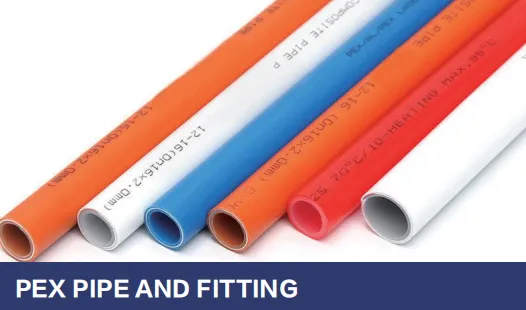
In the world of building materials, where every pipe, panel, and fitting plays a role in the safety, durability, and functionality of a structure, compliance with local standards isn't just a box to tick—it's the backbone of trust. For suppliers specializing in plumbing solutions, from PEX pipes to UPVC fittings, meeting these standards is both a legal obligation and a promise to clients that their products won't just perform, but protect. This is especially true in regions like Saudi Arabia, where extreme climates, strict regulatory frameworks, and high-stakes projects (think hospitals, schools, and commercial towers) demand nothing less than excellence. Let's dive into how a pex pipe and fitting supplier navigates the complex landscape of local standards, and why this matters for everyone involved in the building process.
Local standards are the guardrails that keep building materials safe, reliable, and suitable for their intended use. They're shaped by a region's unique challenges—whether it's Saudi Arabia's scorching temperatures and humidity, Europe's strict environmental regulations, or North America's focus on fire safety. For a pex pipe and fitting supplier, ignoring these standards isn't just risky; it's impossible. Imagine delivering PEX pipes to a construction site in Riyadh only to find they can't withstand the country's 50°C summer heat—this isn't just a product failure; it's a threat to the entire project's integrity.
Take Saudi Arabia, for example, a market where the saudi arabia building materials supplier community operates under the watchful eye of the Saudi Standards, Metrology, and Quality Organization (SASO). SASO sets rigorous benchmarks for everything from pipe pressure ratings to chemical resistance, ensuring that materials can handle the region's harsh conditions. For PEX pipes, this might mean adhering to standards like SASO 2870, which specifies requirements for plastic pipes used in water supply systems. But SASO isn't alone—other regions have their own bodies: in the U.S., it's ASTM International; in Europe, DIN; and globally, ISO. A reputable pex pipe and fitting supplier doesn't just follow one—they adapt to each, ensuring their products meet the specific needs of every market they serve.
| Region | Key Standards for PEX Pipes | Focus Areas |
|---|---|---|
| Saudi Arabia | SASO 2870, SASO 1062 | Heat resistance (up to 60°C), pressure tolerance, chemical stability |
| United States | ASTM F876 (PEX tubing), ASTM F877 (fittings) | Burst pressure, temperature cycling, lead-free compliance |
| Europe | DIN 16892 (PEX-a), DIN 16893 (PEX-b) | Long-term hydrostatic strength, environmental impact |
| Global (ISO) | ISO 15875 | General requirements for cross-linked polyethylene (PEX) pipes |
These standards aren't arbitrary. For instance, SASO 2870 in Saudi Arabia mandates that PEX pipes used in water supply systems must resist degradation from chlorine, a common disinfectant in the country's water treatment plants. Without this requirement, pipes could corrode over time, leading to leaks, contamination, or even structural damage. For a school or hospital—projects that often rely on class a fireproof cpl inorganic board for hospital and school supplier solutions for safety—compromised plumbing could put lives at risk. That's why compliance starts long before a product reaches the job site; it's baked into every step of the supply chain.
A pex pipe and fitting supplier isn't just a middleman moving products from factory to site. They're curators of quality, responsible for ensuring that every pipe, fitting, and accessory meets local standards. This responsibility starts with the raw materials. PEX pipes are made from cross-linked polyethylene, a durable plastic, but not all polyethylene is created equal. Suppliers must source resin that's free from harmful additives, meets purity standards, and has the right molecular structure to withstand cross-linking—a process that strengthens the material. Cutting corners here, using cheaper, lower-grade resin, could result in pipes that crack under pressure or leach chemicals into water supplies.
Next comes manufacturing. Modern PEX production facilities use advanced extrusion techniques, but even the best machinery can't compensate for poor quality control. A reputable supplier invests in in-line testing: sensors check for wall thickness consistency, pressure testing machines simulate years of use in hours, and thermal cycling tests expose pipes to extreme temperature fluctuations (from -20°C to 95°C) to ensure they don't become brittle or warp. For example, a pex pipe and fitting supplier serving the European market might use DIN 16892-compliant machinery that ensures PEX-a pipes (made via the peroxide cross-linking method) have uniform cross-linking, making them more flexible and resistant to kinking.
But testing doesn't stop at the factory gate. Third-party certifications are the gold standard here. Bodies like SGS, Intertek, or TÜV SÜD conduct independent audits, verifying that a supplier's products meet the letter and spirit of local standards. For a supplier targeting Saudi Arabia, a SASO certification isn't just a document—it's proof that their PEX pipes have been rigorously tested in accredited labs and found compliant. Similarly, in the U.S., ASTM certification is non-negotiable for selling PEX pipes in states like California, where plumbing codes are among the strictest in the country.
Compliance isn't a solo effort. A pex pipe and fitting supplier works alongside other specialists to ensure a project meets all standards. Take upvc pipe supplier and ppr pipe and fitting supplier partners, for example. UPVC pipes are often used in drainage systems, while PPR pipes excel in hot water applications. While their materials and uses differ, these suppliers share a common goal: compliance. A hospital project in Jeddah, for instance, might require PEX pipes for potable water, UPVC for wastewater, and PPR for heating systems. Each must meet SASO standards, and the supplier coordinating these materials must ensure compatibility—for example, that PEX fittings connect seamlessly with PPR adapters without compromising pressure or leak resistance.
Then there are specialized suppliers, like the class a fireproof cpl inorganic board for hospital and school supplier community. Hospitals and schools demand materials that can withstand fire, and Class A fireproof CPL inorganic boards are designed to do just that. While these boards are unrelated to plumbing, their suppliers follow similar compliance principles: rigorous testing, third-party certifications, and adherence to local fire codes. For a pex pipe and fitting supplier, collaborating with these specialists ensures that the entire building envelope—from walls to pipes—is safe. It's a reminder that compliance is a team sport, and every supplier has a role to play.
So, what exactly does a pex pipe and fitting supplier do to ensure compliance? Let's break it down into actionable steps:
Certifications are the most visible proof of compliance. A supplier should hold certifications from recognized bodies, such as SASO in Saudi Arabia, ASTM in the U.S., or CE marking in Europe. These aren't easy to obtain—they require submitting products to independent labs for testing, documenting manufacturing processes, and undergoing regular audits. For example, to earn SASO 2870 certification, a PEX pipe must pass tests for:
Certifications are important, but they're static. Quality control is dynamic, ensuring that every batch of PEX pipes meets standards, not just the ones tested for certification. This means implementing strict protocols on the production line:
Traceability is compliance's unsung hero. In the event of a product issue, a supplier must be able to track a pipe back to its batch, raw material lot, and production date. This isn't just for recalls—it's for preventing future problems. For example, if a batch of PEX pipes fails a pressure test, traceability helps identify whether the issue was with the resin, a machine calibration error, or a operator mistake. Suppliers use barcode systems, digital logs, and even blockchain in some cases to track every pipe's journey from resin to delivery. This level of transparency gives clients confidence that the supplier is accountable for their products.
Compliance isn't just about machines and certifications—it's about people. A pex pipe and fitting supplier invests in training its staff, from factory workers to sales teams, to understand local standards. Factory operators learn to spot signs of non-compliance during production (e.g., uneven wall thickness), while sales reps can explain to clients why SASO 2870 matters for their project in Dammam. This knowledge ensures that compliance is a company-wide priority, not just the responsibility of a single quality control team.
Despite best efforts, compliance isn't without challenges. For suppliers, the biggest hurdles include:
Evolving Standards: Local regulations aren't static. SASO, ASTM, and DIN update their standards regularly to reflect new technologies, safety concerns, or environmental goals. For example, in 2023, SASO revised its plumbing standards to include stricter requirements for lead-free materials, forcing suppliers to reformulate their PEX fittings. Keeping up with these changes requires constant vigilance—suppliers must monitor regulatory updates, invest in new testing equipment, and sometimes overhaul production processes.
Cost Pressures: Compliance isn't cheap. High-quality resin, advanced testing equipment, and third-party certifications add up. Some suppliers cut corners to lower costs, using inferior materials or skipping tests. But this is a short-sighted strategy—non-compliant products lead to failed inspections, project delays, and reputational damage. A reputable pex pipe and fitting supplier views compliance as an investment, not an expense, knowing that clients will pay more for products they can trust.
Supply Chain Complexity: Global supply chains mean raw materials, components, and finished products often cross borders. A PEX pipe made in Turkey for a project in Saudi Arabia must meet both Turkish manufacturing standards and SASO requirements. This can lead to delays if, for example, a batch of fittings from a sub-supplier fails SASO testing. To mitigate this, suppliers often partner with local manufacturers or invest in regional production facilities, reducing reliance on international shipping and simplifying compliance checks.
Let's put this all into context with a real-world example. In 2024, a leading pex pipe and fitting supplier was contracted to provide plumbing solutions for a new children's hospital in Riyadh. The project had strict requirements: PEX pipes for potable water, UPVC for drainage, and Class A fireproof materials for walls (sourced from a class a fireproof cpl inorganic board for hospital and school supplier ). The stakes couldn't have been higher—any failure in the plumbing system could risk patient safety, violate SASO regulations, and delay the hospital's opening.
The supplier started by conducting a thorough review of the project's specs and local standards. For PEX pipes, this meant SASO 2870 compliance, with additional requirements for antimicrobial properties (to prevent bacterial growth in water lines) and lead-free fittings (per SASO 1062). The supplier sourced medical-grade PEX resin, invested in a dedicated production line for the project, and brought in third-party auditors from SGS to oversee testing.
During production, every batch of pipes underwent:
The result? The hospital opened on schedule, with all plumbing systems passing SASO inspections on the first try. The pex pipe and fitting supplier's commitment to compliance not only avoided costly delays but also built trust with the client, leading to future partnerships on other healthcare projects in the region.
As building materials evolve, so too will compliance standards. The rise of smart buildings, for example, is pushing suppliers to develop PEX pipes with built-in sensors that monitor pressure, temperature, and flow rates in real time. These "smart pipes" will require new standards for data accuracy, cybersecurity, and integration with building management systems. A forward-thinking pex pipe and fitting supplier is already investing in R&D to meet these future requirements, partnering with tech companies and regulatory bodies to shape the next generation of compliance.
Collaboration will also play a bigger role. Suppliers, contractors, and regulators must work together to create standards that are both rigorous and practical. For example, in Saudi Arabia, the saudi arabia building materials supplier community is partnering with SASO to develop guidelines for sustainable plumbing materials, balancing durability with environmental impact. This kind of collaboration ensures that standards keep pace with innovation, rather than holding it back.
At the end of the day, compliance isn't just about following rules—it's about respecting the people who will use the buildings we construct. Whether it's a school in Jeddah, a hospital in Riyadh, or a home in Dammam, every pipe behind the walls has a job to do: deliver clean water, remove waste, and stand the test of time. A pex pipe and fitting supplier that prioritizes compliance isn't just selling products—they're selling peace of mind. They're saying, "We've checked, tested, and verified that this pipe will protect your project, your clients, and your reputation."
So, the next time you're choosing a supplier for your project, ask not just about price or delivery times, but about compliance. Ask to see their certifications, tour their factories, and understand their quality control processes. Because in the world of building materials, the best suppliers aren't just those who meet standards—they're the ones who set them.
Recommend Products












