


Navigating price trends, quality factors, and smart purchasing in today's market
The Clear Choice: Understanding PVC Transparent Fittings
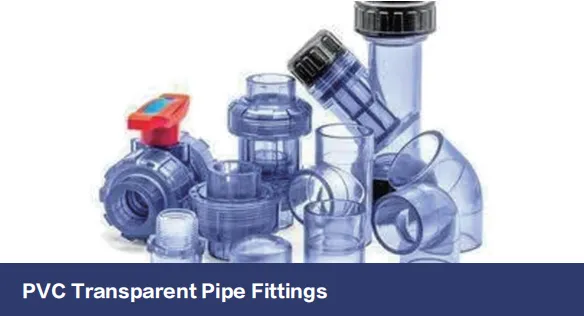
Let's talk about the unsung heroes of modern plumbing and industrial systems - those clear PVC fittings that give you a window into your pipelines. I've seen how the industrial pvc pressure pipes market has evolved over the years, and there's something genuinely fascinating about watching this transparent technology become more accessible. When you're working with liquid systems, there's real peace of mind in actually seeing what's flowing through your pipes.
Transparent PVC solves that age-old frustration of not knowing what's happening inside your pipes. No more guessing games about flow rates, contamination, or blockages – you get literal visibility into your system. But this clarity comes at a price, and today we're going to break down exactly what that means for your budget in 2025.
When I first started recommending these fittings to clients years ago, they were niche industrial components with premium pricing. Today, they've entered mainstream plumbing with surprisingly affordable options. The journey from novelty to necessity has been remarkable to witness. Whether you're troubleshooting a manufacturing line or installing a home brewing setup, these fittings offer practical advantages that go beyond just aesthetics.
2025 Pricing Landscape
The numbers we're seeing now reflect the maturation of transparent PVC technology combined with global supply chain stabilizations. Last year's volatility in raw material costs has settled into predictable patterns that benefit both manufacturers and end-users. I've watched manufacturers become more sophisticated about their resin sourcing, which directly impacts the transparency and durability of the final product.
Current Price Ranges
| Fitting Type | Standard (per piece) | Chemical-Resistant | High-Pressure |
|---|---|---|---|
| Elbow (90°) | $1.25 - $4.50 | $3.20 - $6.75 | $5.80 - $12.00 |
| Tee | $1.75 - $5.25 | $3.90 - $7.50 | $6.25 - $14.50 |
| Coupling | $0.95 - $3.25 | $2.50 - $5.20 | $4.60 - $9.80 |
| union | $2.75 - $8.50 | $5.25 - $11.25 | $8.95 - $18.50 |
| Reducer | $2.15 - $6.75 | $4.80 - $9.50 | $7.25 - $16.00 |
Notice how the basic components remain quite affordable while specialized versions command premium pricing? That's because standard clear fittings now benefit from mass production efficiencies, while specialty items still involve complex manufacturing processes. When I advise clients on procurement strategy, I always recommend identifying which fittings truly need enhanced specifications – overspending on industrial-grade fittings for simple applications is like wearing a hazmat suit to bake cookies.
Regional Pricing Variations
The geographic component introduces fascinating variations in pricing strategy. Manufacturers in Asia continue to dominate the entry-level market with incredibly competitive pricing, while North American producers focus on value-added chemical-resistant formulations. European pricing sits in the middle but with stricter certifications that justify the premium.
What Moves the Needle on Pricing?
Material Quality
The resin formulation determines everything from clarity retention to impact resistance. Top-tier manufacturers use specialized PVC compounds that maintain optical properties for years rather than months.
Manufacturing Precision
Proper molding techniques prevent stress points that lead to premature clouding. I've handled fittings from dozens of suppliers, and the difference in mold quality is immediately apparent to the touch.
Certifications
NSF, FDA, and ISO certifications add significantly to costs but open doors to pharmaceutical, food processing, and laboratory applications where visual monitoring provides critical process control.
Volume Discounts
Unlike opaque fittings, transparent PVC benefits less from economy-of-scale production due to specialized handling requirements. Still, strategic purchasing can yield 15-25% savings.
Most professionals I work with get tripped up on the transparency-vs-durability balance. The common misconception is that clearer equals better, when actually, the highest-clarity fittings often sacrifice structural integrity. The sweet spot for most applications is around 92-94% light transmission with reinforced wall thickness.
Market Forecast & Purchasing Strategy
The market intelligence I've gathered points toward steady price erosion through 2025 as production innovations continue. We're likely to see a 7-12% decrease in standard fitting costs by year's end, while premium fittings may only see 3-5% reductions due to their specialized nature.
Strategic Buying Insights
For procurement teams, timing matters significantly. The resin market shows predictable seasonal dips in February and August when negotiating larger orders provides maximum leverage. For smaller buyers, leveraging distributor promotions during plumbing industry trade events yields unexpected advantages.
The supplier landscape is rapidly evolving as more manufacturers recognize the value of offering visual verification in fluid systems. I've noticed fascinating pricing experiments where companies bundle transparent fittings with monitoring systems to create premium package solutions. These provide excellent value when visibility matters for operational efficiency.
Final Recommendations
Over my years studying piping systems, I've developed a simple framework for choosing transparent fittings: start with the application's actual visibility requirements, then prioritize UV resistance if outdoors, chemical compatibility if handling solvents, and pressure ratings for closed systems. The most expensive fitting isn't automatically the best solution.
For most scenarios, mid-tier fittings from established manufacturers offer the best balance between cost and performance. Don't pay for pharmaceutical-grade certifications unless your application demands them - that money could be better spent on additional monitoring points throughout your system.
The market has reached an exciting inflection point where transparency isn't just a luxury add-on but a practical feature that pays dividends in maintenance savings and operational insight. Whether you're managing an industrial facility or tinkering in your home workshop, these fittings provide that invaluable window into the unseen world flowing through your pipes.










