
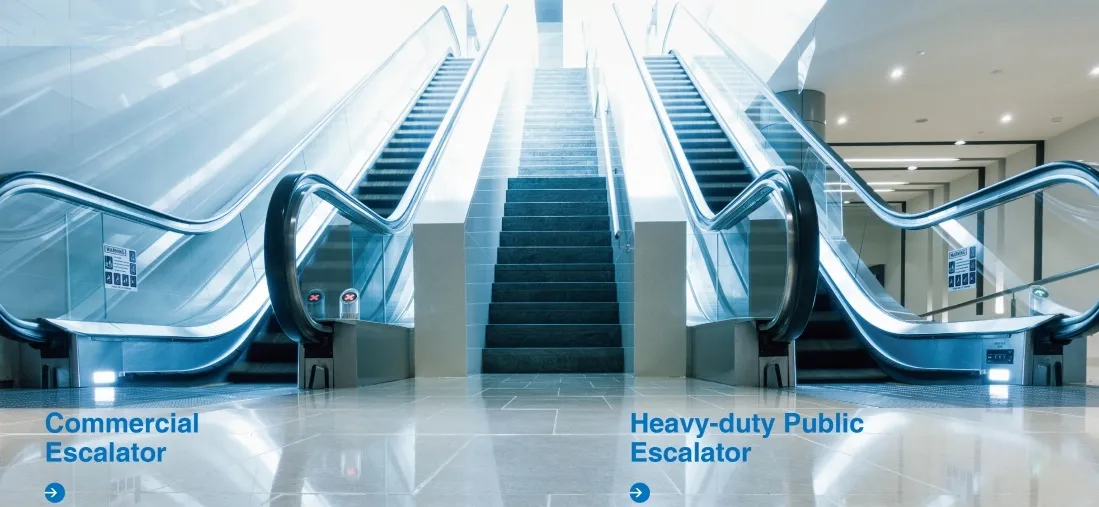
Ever wonder how shopping malls and airports manage those massive escalators all day long without racking up astronomical electricity bills? The secret lies in Variable Frequency Drive (VFD) technology – the unsung hero of modern vertical transportation. It's not just about moving people; it's about doing it smartly and sustainably.
VFDs for escalators are like cruise control for your car – they automatically adjust energy output based on real-time demand. Traditional escalators operate at full throttle 24/7, while VFD-equipped escalators sense passenger flow and modulate their operation to match actual usage.
At its core, VFD technology solves a fundamental energy waste problem. Picture an escalator running empty at 4 AM in a closed department store. Traditional systems keep pumping full power through that motor as if it's rush hour. It's like keeping all lights on in an empty building – terribly inefficient and costly.
Imagine your escalator getting smarter during downtime. That's exactly what Reduced Speed Mode does:
The beauty lies in the transition. Remember those jerky escalator starts? VFDs provide buttery-smooth acceleration using precision ramp-up control. Passengers don't even realize the escalator was operating in eco-mode moments before they arrived.
Real-world example: A London Underground station implemented VFDs across 25 escalators. During night hours when foot traffic dropped by 90%, they saved enough electricity to power 40 homes annually. That's sustainable infrastructure in action!
For extended inactivity periods (think office buildings after hours), Standby Mode takes efficiency further:
| Hours/Day at Reduced Speed | Hours/Year* | Annual Savings** | CO 2 Reduction |
|---|---|---|---|
| 2 hours | 730 hours | $73 | 0.8 tons |
| 4 hours | 1,460 hours | $146 | 1.6 tons |
| 8 hours | 2,920 hours | $292 | 3.2 tons |
* Based on 365 operational days
** Energy cost at $0.10/kWh
*** CO
2
calculations based on US national average
VFDs deliver advantages beyond just lowering utility bills:
This technical aspect significantly impacts your electrical system's efficiency. Traditional escalator motors typically operate at 0.7-0.8 PF, meaning 20-30% of power is wasted as reactive power. VFDs elevate this to 0.95+ PF, essentially eliminating waste and:
Slower operation during downtime means less wear-and-tear on:
Maintenance records show 30-40% longer service intervals on VFD-equipped escalators. The smoother acceleration profile also prevents those sudden jolts that accelerate component fatigue.
While the benefits are clear, successful implementation requires consideration:
Installation tip: Modern VFD retrofits take just 2-3 days per escalator with minimal disruption. Most facilities schedule installations during low-traffic periods and complete entire concourses within weeks.
Tomorrow's escalators are evolving into connected, predictive systems:
We're rapidly approaching a future where escalators become active energy participants rather than passive consumers. Early tests of regenerative systems show promise for net-zero operation in high-traffic locations.
As global focus intensifies on sustainable building operation, VFD technology transforms escalators from energy liabilities to efficiency leaders. This innovation demonstrates how thoughtful engineering can yield substantial environmental and economic benefits without compromising functionality. The next time you ride an escalator, appreciate the invisible technology making that journey greener – one intelligent adjustment at a time.
Recommend Products












