
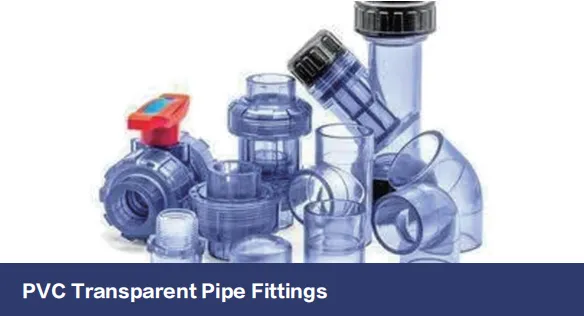
Ever wonder why some plumbing systems flow like a mountain stream while others gurgle and choke like a clogged drain? The secret often lies right at the surface where liquid meets pipe wall. PVC transparent pipe fittings have transformed how we manage fluid systems by solving two critical challenges: fluid resistance and precipitation buildup . Let's explore why the invisible engineering inside these clear pipes makes such a visible difference in industrial and residential applications.
Fluid dynamics isn't just for engineers in labs—it's happening right inside your pipes every time you turn on a faucet. When liquid travels through piping systems, it's not just sliding through an empty tunnel. The friction generated between the fluid and the pipe surface creates turbulence , which steals energy, reduces flow rates, and ultimately makes your systems work harder while accomplishing less.
Traditional metal pipes create microscopic landscapes of peaks and valleys that disrupt smooth flow. Picture water trying to navigate a rocky riverbed versus gliding across a polished ice rink. The smoother the surface, the less energy gets wasted fighting friction. PVC's exceptionally smooth interior essentially creates a slip-and-slide for fluids, reducing pumping energy by up to 40% compared to conventional materials.
That polished interior does more than save energy—it actively fights the buildup that plagues industrial systems. Consider these common scenarios:
PVC's non-porous surface has no welcoming crevices for these uninvited guests. Maintenance teams using these transparent pipes frequently report that cleaning cycles can be extended by 200-300% compared to metal alternatives. And because you can actually see the interior surface , visual inspections replace guesswork—no more surprise blockages during critical operations.
Clear PVC isn't just about aesthetics—it's a functional game-changer. Imagine troubleshooting a flow issue:
| Traditional Opaque Pipes | Transparent PVC Fittings |
|---|---|
| Require system shutdown for inspection | Visual checks during operation |
| Guesswork about deposit locations | Pinpoint buildup locations instantly |
| Partial cleaning with blind spots | Targeted cleaning with verification |
In chemical processing plants, this visibility prevents catastrophic cross-contamination. In pharmaceutical applications, it validates sterilization effectiveness. Even in breweries, it helps monitor yeast propagation. The clarity isn't just convenient—it's creating smarter, safer systems where process integrity is visible from start to finish.
How does clear PVC really stack up? Let's compare critical performance factors:
| Material | Surface Roughness (μm) | Corrosion Resistance | Visual Monitoring | Installation Ease |
|---|---|---|---|---|
| PVC Transparent | 0.0015 | Excellent | Full visibility | Glue/solvent weld |
| Stainless Steel | 1.5-3.0 | Good (but pitting risk) | None | Welding/threading |
| Copper | 1.0-2.5 | Moderate | None | Soldering |
| Standard PVC | 0.005 | Excellent | None | Glue/solvent weld |
The numbers reveal why clear PVC has become the darling of industries from biotech to food processing. That microscopically smooth surface (nearly 1000x smoother than steel!) translates directly to operational savings. One semiconductor manufacturer documented a 28% reduction in pump energy costs after switching cooling systems to transparent PVC.
The proof emerges in diverse applications worldwide:
Water Treatment Plant, Netherlands: By replacing aging metal pipes with transparent PVC for chemical dosing lines, operators eliminated iron oxide contamination that previously caused weekly shutdowns. The system now runs 9 months between cleanings with visible confirmation of interior cleanliness.
Craft Brewery, Colorado: After struggling with yeast buildup in transfer lines, a microbrewery implemented clear PVC fittings. Not only did cleaning time drop by 65%, but the brewmaster now visually monitors yeast propagation—an unexpected quality control benefit that improved product consistency.
What's next for PVC transparent technology? Researchers are exploring:
These advancements could further revolutionize how we manage fluids in critical applications from pharmaceutical manufacturing to energy production. The combination of visible interior surfaces with predictive analytics will create systems that alert technicians to developing issues before they cause downtime.
In today's demanding industrial environments, every efficiency gain matters. The smooth, visible interiors of PVC transparent pipe fittings offer benefits that go beyond just pipe fittings performance—they provide peace of mind through operational transparency. As one plant manager told us: "It's like having X-ray vision for your piping network." That visibility, combined with the energy savings from reduced fluid resistance, creates compelling case for considering clear PVC in any system where flow efficiency and maintenance predictability matter.
Recommend Products












