
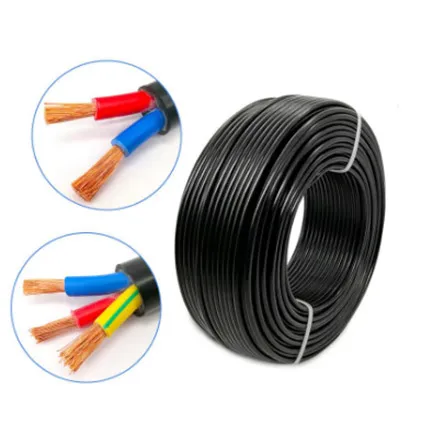
Picture this: you're in a modern high-rise building when a small electrical fire breaks out in a server room. Within minutes, flames start traveling through cable trays like highways, turning what should've been a contained incident into a catastrophic inferno. This is where flame retardant cables become unsung heroes. Unlike ordinary cables that act as fire accelerants, specially engineered flame retardant cables fight back, giving people valuable escape time and preventing fires from turning deadly.
Flame retardant cables aren't just building materials —they're meticulously designed firebreaks. When regular cables burn, they behave like flammable fuses, spreading flames horizontally through ceilings and vertically between floors. Retardant cables fundamentally alter this equation through three key mechanisms: they resist ignition, limit flame travel distance, and reduce toxic smoke—all governed by strict international standards like IEC 60332.
To appreciate how retardant cables work, imagine fire as a greedy intruder that needs three things: fuel (the cable materials), oxygen, and heat. Standard PVC cables practically invite this intruder to dinner:
Unlike standard cables that accelerate fire's path, flame retardant versions create "dead ends" along flame highways—literally forcing fires to hit roadblocks where they'd otherwise race through buildings.
The International Electrotechnical Commission's IEC 60332 standard acts like a global security system for cables, with precise testing protocols that verify how cables behave when flames come knocking:
Imagine holding a single cable vertically over a controlled propane flame at a 45° angle (like a welder's torch aimed sideways). For 60 seconds, the flame tries to travel upward. Passing requires the cable to self-extinguish within 50mm of the ignition point—proving it won't act as a fire wick alone.
This is where things get serious. Bundles of cables mounted vertically on steel ladder trays face fierce propane flames (750°C) for 20 minutes while forced air simulates firestorm conditions. The entire bundle must self-extinguish within 2.5 meters—the critical threshold that prevents "cable fire avalanches" in vertical shafts.
Performance ratings under this standard are categorized from Class A (strictest) to Class D (minimum compliance). The testing resembles how wildfire fighters create firebreaks—artificial gaps that stop advancing fires by removing fuel sources.
Put simply: Retardant cables act like firewalls preventing fire from moving between spaces; resistant cables act like armored data lines that won't fail even when surrounded by flames.
Manufacturers essentially turn cables into "self-extinguishing systems" through intelligent chemistry:
These aren't just minor tweaks—they transform cable behavior from "fire accelerant" to "fire containment system." During London's King's Cross Station fire (1987), standard PVC cables contributed to lethal smoke spread. Modern installations now mandate LSZH compounds that reduce smoke opacity exponentially.
Effective fire strategy involves layered cable selection:
Modern projects like Singapore's Marina Bay Sands use zone-specific cable strategies, treating them as active fire protection—not just passive components. Proper implementation reduces fire damage risk by over 60% according to fire engineering studies.
Case studies reveal fire behavior differences:
Winchester Tower, Pittsburgh: When an electrical panel failed in 2019, retardant cables confined flames to 30% of predicted area. Fire Chief's analysis concluded the cable choice gave occupants 8 extra minutes to evacuate.
Industrial Warehouse, Rotterdam: Post-fire investigation showed standard PVC cables spread flames 120 meters along trays. Retrofitted sites with IEC 60332-3 compliant cables limit flame spread to under 3 meters.
While standards like IEC 60332 might seem abstract, they create physical fire containment boundaries—like turning building sections into fireproof vaults during an emergency.
Fire engineers are pushing toward "active-retardant systems":
These innovations could eventually make traditional fire-stopping compounds obsolete, turning cables into autonomous fire marshals built into our infrastructure.
Flame retardant cables aren't about passing technical tests—they change outcomes:
Perhaps most crucially, they buy time. In fire engineering, 90 seconds can mean the difference between orderly evacuation and chaos. The right cables provide that buffer against disaster.
So next time you walk through a building, remember—behind those walls run carefully engineered cables that stand ready to contain fire, rather than spread it. They're silent guardians designed with one mission: to make sure if fire breaks out, it doesn't get to break free.
Recommend Products












