
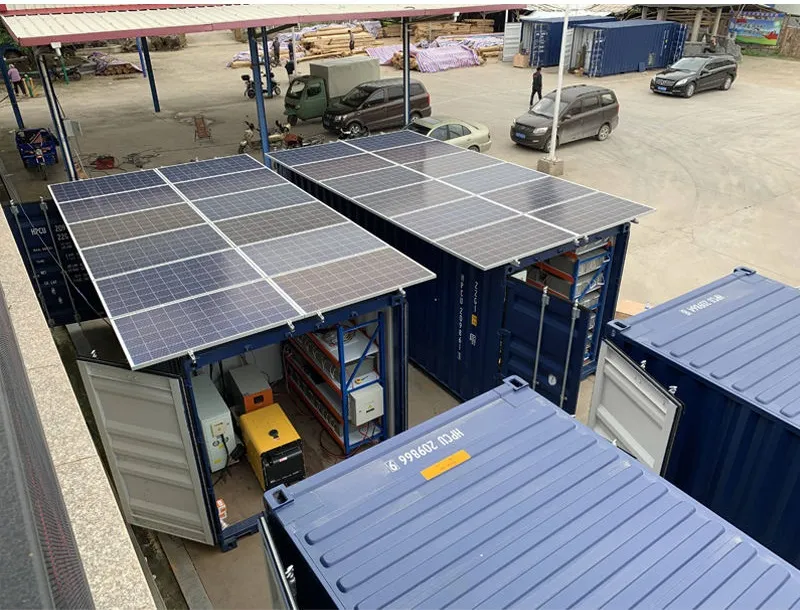
Look around Europe today, and you'll see rooftops glistening with photovoltaic panels like a modern-day gold rush. Just last year, global solar installations hit nearly 600 gigawatts – a 33% jump from 2023. For perspective, that's like adding France's entire electricity capacity in twelve months. In the EU, solar now generates 5% of all electricity, powering homes from Athens to Stockholm. But beneath this success story lies a paradox: How "green" is a solar panel manufactured with coal-powered electricity halfway around the world?
The European Commission's REPowerEU plan isn't playing small ball. Their target? Install 600 gigawatts of solar capacity by 2030 – double today's numbers. That's equivalent to lining every single highway in Europe with solar panels three times over. But quantity alone won't cut it anymore.
We've been celebrating solar's carbon-free operation while ignoring its manufacturing footprint. Producing silicon wafers is energy-intensive – like baking cookies in a blast furnace. The carbon footprint swings wildly depending on where and how panels are made. In ideal conditions? As low as 10.8 grams of CO₂ per kilowatt-hour. But make those same panels using coal power, and you're looking at 44 grams – four times dirtier.
Professor Lina Vogel from TU Berlin puts it bluntly: "Every solar panel carries the invisible baggage of its creation. Aluminum frames, glass sheets, silicon purification – each step imprints carbon fingerprints on what we call 'clean' energy." Manufacturers racing to cut costs often disregard these emissions, treating carbon like an uncharged fee.
Starting in 2025, the EU's Ecodesign Directive introduces mandatory carbon accounting rules developed by the Joint Research Centre. This isn't voluntary feel-good reporting – it's binding legislation changing the game completely. Their methodology standardizes measurements across 3 critical dimensions:
For procurement officers, this changes everything. Jan Horak, a Prague-based solar installer shares: "Last year, we just compared €/watt. Now we're getting carbon certificates like nutrition labels – and clients care."
China currently supplies 80% of EU solar panels. But their grid runs on 61% coal. When the new rules hit:
| Supplier Type | 2023 Reality | 2025 Forecast |
|---|---|---|
| China-Based Factories | Low prices dominate | Market share drop 40-60% |
| European Manufacturers | 15% market share | Expected to triple capacity |
| Turkish Hybrid Plants | Niche players | Emerging as carbon arbitrage hubs |
"Suddenly, Norway's hydropower matters more than Malaysian labor costs," observes Mikael Jensen, VP at Voltaic Systems. Manufacturers near clean energy sources gain advantage overnight. Norwegian startup NorSun recently doubled investment after calculating their hydro-powered silicon plants produce panels with 35% less carbon than competitors.
Procurement departments now juggle three variables:
Barcelona's municipal solar program recently canceled 70MW of orders after carbon audits showed higher-than-promised emissions. Sustainability officer Elena Rodriguez explains: "We committed to true decarbonization, not carbon outsourcing."
Meanwhile, French installations tripled since their carbon cap regulations started in 2022. SolarFarm CEO Louis Bernard shares this marketplace evolution: "Buyers now negotiate carbon credits like they used to bargain over module thickness."
The transition sparks practical headaches:
The Verification Dilemma: With China producing over 75% of global solar components, how do EU inspectors verify factory energy sources? Blockchain traceability pilots show promise but implementation lags.
Industry insider Dr. Arjun Patel highlights audit friction: "When a Malaysian factory claims renewable power, inspectors ask: Do they own the wind farm or just buy certificates?" Third-party verification is emerging as its own specialized field.
Regulatory pressure fuels remarkable R&D:
As these building materials innovations mature, they promise double wins: lower emissions and reduced costs. University of Copenhagen researcher Freja Nielsen sees parallels with vehicle efficiency standards: "Tight rules sparked the automotive revolution. Solar's going through its CAFE moment."
The Ecodesign rules remain carbon-focused for now, but broader sustainability metrics loom:
| Criterion | Current Status | 2030 Horizon |
|---|---|---|
| Water Consumption | Voluntary reporting | Likely in next regulatory phase |
| Silicon Waste Recycling | <30% recycled | EU proposal targets 90% by 2028 |
| Toxic Materials | Restricted under RoHS | Full elimination roadmap |
Spanish manufacturer SolarFirst recently invested in closed-loop water systems predicting regulatory shifts. "The trend is clear," says CSO Maria Lopez. "Carbon today, water tomorrow, full circular economy by decade's end."
The carbon certification revolution reshapes solar economics:
"The transition reminds me of organic food labeling," reflects energy analyst James Wilson. "First it seemed niche. Now consumers – and regulators – won't accept anything less." As the 2025 deadline approaches, this green certification becomes more than paperwork – it's reshaping where Europe gets its sunshine in a box.
Recommend Products












