

When architects and contractors specify epoch stone for large-scale commercial or residential developments, the conversation quickly moves beyond aesthetics. The real test of a supplier is not whether they can deliver a beautiful sample board — it is whether they can replicate that quality across thousands of square meters, over multiple shipment phases, and across different installation zones, without visible inconsistency. This article examines how a professional epoch stone supplier manages the complex demands of large-scale project supply consistency.
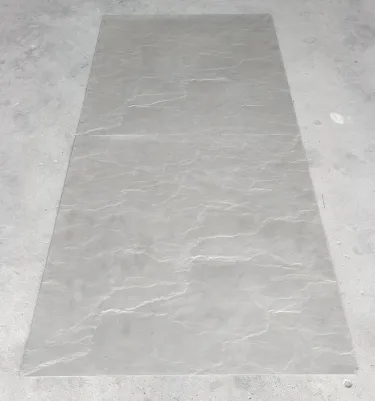
Epoch stone belongs to the broader category of decorative profiles — a versatile group of architectural surface materials that includes metal series, mirror series, bright marble, wood grain, matte marble, Bali stone, boulder slab, and many other engineered textures. Unlike natural quarried stone, epoch stone is manufactured through a controlled production process that combines mineral-based raw materials with advanced molding and finishing techniques. This engineered nature gives it a critical advantage in large-scale projects: the ability to achieve far greater consistency than natural stone while still delivering authentic texture and visual depth.
However, "manufactured" does not mean "automatic." Even within a controlled production environment, batch-to-batch variation can occur due to raw material sourcing, pigment mixing ratios, curing conditions, temperature fluctuations, and surface finishing parameters. For a project spanning 5,000 or 50,000 square meters, these small manufacturing variables must be managed with precision.
Large-scale construction projects introduce several supply chain complexities that do not exist in small orders. When a hotel chain needs consistent interior wall cladding across 200 rooms, or a commercial complex requires uniform façade panels across multiple buildings, the supplier faces challenges that go well beyond production capacity.
Batch control is the single most important discipline in epoch stone solutions for large-scale projects. It goes far beyond assigning a batch number to each production run. Effective batch control begins before production and continues through to final installation.
A well-structured batch control system starts with raw material pre-qualification. The supplier tests and reserves all raw materials needed for the full project scope before cutting the first panel. This includes mineral powders, pigments, binders, and any additives. Each incoming raw material lot is sampled, tested, and assigned a reference code. If a particular lot shows deviations from the project specification, it is either rejected or quarantined for use in non-critical areas only.
During production, each batch of finished panels is sampled and compared against the approved master sample. Colorimeters measure Delta-E values to ensure color deviation stays within the agreed tolerance. Thickness is checked with calibrated instruments at multiple points per panel. Surface finish is evaluated under standardized lighting conditions. These measurements are recorded in a batch quality dossier that travels with the project documentation.
Key principle: If two panels will be installed adjacent to each other, they should be produced and controlled together. This simple rule drives the entire batch grouping logic — panels destined for the same visible zone are manufactured in the same production window, from the same raw material lot, and under the same processing parameters.
Quality control for large-scale epoch stone supply is not a single inspection at the end of production. It is a multi-stage process integrated into every phase of the workflow.
| QC Stage | What Is Checked | Method |
|---|---|---|
| Raw material intake | Mineral composition, pigment tone, particle size | Laboratory sampling and comparison against project reference |
| In-process production | Molding pressure, curing temperature, line speed | Real-time sensor monitoring with automated alerts |
| Post-production sampling | Color consistency (Delta-E), thickness, surface texture | Per-batch measurement with calibrated instruments |
| Dry lay inspection | Visual flow, joint logic, color transition across panels | Manual floor layout simulating installation conditions |
| Pre-shipment verification | Final batch-to-batch comparison, crate labeling accuracy | Side-by-side visual review under standardized light |
The dry lay inspection deserves particular attention. Before packing, panels from different production batches are laid out on a flat surface in the sequence they will be installed. This allows the quality team to see how color transitions flow across a large area, identify any panels that stand out, and verify that the joint logic between adjacent pieces is visually coherent. For projects exceeding 1,000 square meters, this step is indispensable.
In a phased delivery, the site team may receive crate one in January and crate ten in June. If the label system is inconsistent between shipments, the installation team will spend unnecessary time cross-referencing documents, opening wrong crates, and making phone calls to the factory. A professional epoch stone supplier establishes a master label logic before the first shipment and maintains it throughout the project.
An effective label for large-scale project supply should answer five questions at a glance: which batch the panel belongs to, which drawing or area it corresponds to, which floor or zone it is destined for, which crate contains it, and which shipment phase it belongs to. When every crate across six months of deliveries follows the same naming convention, the site team can work efficiently without constantly referring back to the factory.
The packing list should also be project-ready — not just a customs document. It should include the shipment phase, crate number, material name, batch reference, finish, thickness, area or floor designation, drawing reference, piece number range, and quantity. This level of detail turns the packing list from a logistics formality into an installation tool.
One often-overlooked factor in supply consistency is the breadth of a supplier's product portfolio. When a single project requires epoch stone wall panels, matching flooring, complementary ceiling materials, and coordinated sanitary fixtures, sourcing each category from a different supplier multiplies the coordination burden. Different production schedules, different quality standards, different shipping timelines — each additional supplier adds a layer of complexity that can compromise overall project consistency.
A one-stop building materials supplier that offers epoch stone solutions alongside walls, flooring, ceilings, pipes and fittings, sanitary fixtures, customized furniture, home appliances, windows and doors, decorative profiles, elevators, electrical fixtures, lights, and solar panels can synchronize production planning, unify quality standards, and consolidate logistics. This integrated approach reduces the risk of material mismatch between different product categories and simplifies project management for the buyer.
Before placing a large-scale order, procurement managers and project stakeholders should ask the supplier several key questions to verify their supply consistency capability.
These questions help distinguish between a supplier who can produce good samples and one who can deliver consistent quality across the full scope of a large-scale development.
Large-scale projects almost always benefit from reserve material planning. Installation breakage, future design changes, and long-term maintenance all require matching panels. The question is not simply "how many spare pieces should we order" — it is what specific risks the reserve material is meant to address.
If the primary risk is installation damage, spare cut pieces from the same batch are sufficient. If the risk is a future renovation or expansion, the buyer may need extra full panels with the same batch reference. If the project has particularly complex custom shapes, reserve panels should be produced at the same time as the main order to ensure identical processing parameters. Every reserve panel should be linked to the batch record so that even years later, the material can be traced back to its production origin.
Managing large-scale project supply consistency for epoch stone is a discipline that combines raw material control, production process management, multi-stage quality inspection, intelligent batch grouping, and disciplined logistics documentation. When these elements work together, the result is a project where the first installed panel and the last installed panel look like they belong to the same story — regardless of how many months separate them. For procurement teams evaluating epoch stone supplier options, the ability to demonstrate this level of control is the true measure of a partner worth trusting with a large-scale project.
Recommend Products












