
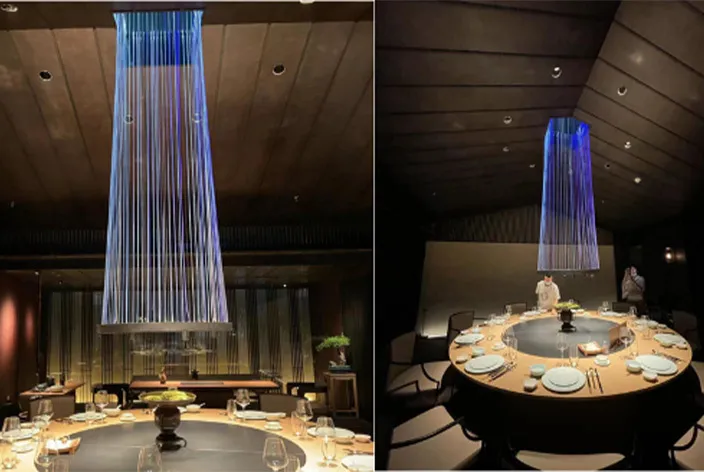
When a restaurant chain plans to open or renovate dozens or even hundreds of locations simultaneously, lighting becomes one of the most critical — and most demanding — components of the project. A single restaurant may require hundreds of fixtures across multiple zones, from the dining area to the kitchen, the exterior facade to the signage. Multiply that by 50, 100, or 500 locations, and the complexity grows exponentially. So, how does a professional restaurant lighting supplier handle large-scale rollout projects? This article breaks down the end-to-end process, from planning to execution.
Before a single fixture is manufactured, a capable supplier must first develop a deep understanding of the project's scope. This involves more than just counting lights. The supplier needs to assess the architectural plans of each location, the specific lighting requirements for different zones, the local electrical standards and building codes in each country where the restaurants are located, and the overall brand identity guidelines that must be maintained consistently across all sites.
For a global restaurant chain, these requirements can vary significantly from one region to another. A location in the Middle East may have different voltage standards and climate considerations than one in Southeast Asia or North America. A seasoned hospitality lighting manufacturers team will conduct a thorough site-by-site audit, often working closely with the client's architects and interior designers to ensure every detail is captured before the project moves forward.
Once the scope is defined, the planning phase begins in earnest. This stage is where the supplier's design and engineering capabilities are put to the test. The key activities include:
Key Insight: The most successful large-scale rollouts are those where the supplier is brought in early — during the architectural design phase — rather than being treated as a last-minute vendor. Early involvement allows for better integration of lighting with the overall building design and avoids costly redesigns later.
This is where the supplier's manufacturing strength becomes the decisive factor. Large-scale rollouts demand production capacity that can deliver thousands — sometimes tens of thousands — of fixtures within tight timeframes, without compromising on quality. Leading suppliers based in manufacturing hubs like China, particularly in the Guangdong province where the lighting industry is concentrated, operate advanced production facilities with automated assembly lines, in-house testing laboratories, and rigorous quality control systems.
A well-managed supply chain for a large-scale rollout involves:
Logistics is often the most underestimated aspect of a large-scale rollout, yet it can make or break the entire project. The supplier must coordinate the shipment of fixtures to multiple destinations, often across different continents, with precise timing. A fixture arriving too early takes up storage space on site; arriving too late delays construction and incurs penalty costs.
Effective logistics management for restaurant lighting rollouts typically includes:
Even the best fixtures will fail to perform if installed incorrectly. A professional supplier provides comprehensive installation support as part of the rollout package. This includes detailed installation manuals with clear diagrams, wiring schematics and connection guides, mounting instructions for each fixture type, and remote or on-site technical support during the installation phase.
For very large projects, the supplier may also provide on-site supervision at key locations, conduct training sessions for the local electrical contractors, and perform pre-commissioning checks to verify that all fixtures are installed correctly and functioning as designed. This proactive approach significantly reduces the risk of installation errors, rework, and project delays.
One of the biggest challenges in a multi-site rollout is maintaining absolute consistency. A customer dining in a restaurant in Dubai should experience the same lighting ambiance as one in Riyadh or London. Achieving this requires the supplier to implement strict standardization protocols:
| Quality Dimension | Control Measure |
|---|---|
| Color temperature consistency | All LED chips in a project are sourced from the same bin and batch; each batch is tested with an integrating sphere before shipment. |
| Lumen output uniformity | Drivers are calibrated to deliver identical current output; spot-checks are performed on random samples from every production batch. |
| Finish and appearance | Powder coating, anodizing, or painting processes are standardized with color matching against master samples retained for the project duration. |
| Durability and lifespan | Accelerated aging tests and IP-rated waterproof testing are conducted on samples from each batch to ensure long-term reliability. |
A large-scale rollout does not end when the last fixture is installed. The supplier must provide ongoing support throughout the warranty period and beyond. This includes maintaining a dedicated stock of spare parts and replacement units for each project, offering a clear and efficient warranty claim process, providing troubleshooting support for any issues that arise post-installation, and conducting periodic follow-up reviews to ensure client satisfaction.
Leading suppliers also offer extended warranty options and maintenance service agreements for restaurant chains that want long-term peace of mind. The ability to respond quickly — within 24 to 48 hours — to any issue, anywhere in the world, is what separates a transactional vendor from a true project partner.
Restaurant chains increasingly prefer working with suppliers that can provide more than just lighting. A one-stop solution provider that also supplies complementary building materials — such as flooring, wall panels, ceiling systems, sanitary fixtures, furniture, and electrical components — can streamline the entire project by reducing the number of vendors the client needs to manage, simplifying logistics and customs clearance, and ensuring better coordination between different material categories.
For example, a supplier offering hospitality lighting alongside flooring, wall panels, and customized furniture can deliver a fully coordinated interior package, saving the client significant time and coordination effort. This integrated approach is becoming the preferred model for restaurant chains undertaking large-scale expansion or renovation programs.
Handling a large-scale restaurant lighting rollout is a complex undertaking that demands far more than just manufacturing capability. It requires meticulous planning, robust supply chain management, precision logistics, installation expertise, and unwavering quality control across every single location. The most successful projects are those where the supplier is treated as a strategic partner from the earliest stages of design, rather than a commodity provider at the end of the procurement chain.
For restaurant chains planning their next expansion, the key takeaway is clear: choose a supplier with proven experience in large-scale projects, comprehensive in-house capabilities, and a commitment to quality that matches your own brand standards. When these elements come together, the result is not just a well-lit restaurant — it is a consistent, memorable brand experience that customers can count on, no matter where in the world they walk through the door.
Recommend Products












