
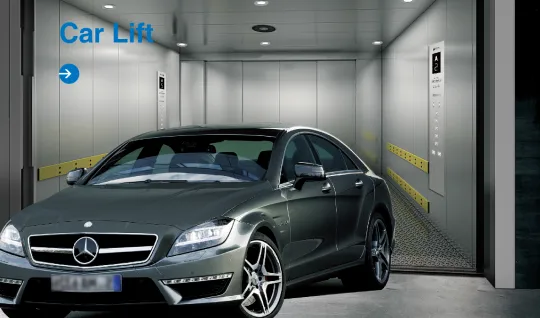
When installing a car lift in a residential, commercial, or industrial setting, compliance with local building codes is not optional — it is a legal and safety requirement. A responsible car lift supplier plays a critical role in ensuring that every lift installation meets the applicable regulations from the very beginning of the project.
Building codes vary widely across jurisdictions. In North America, the International Residential Code (IRC) and International Building Code (IBC) require automotive lifts to be listed and labeled in accordance with ANSI/ALI ALCTV safety standards. These standards mandate independent third-party testing for structural integrity, proper operation, and overload protection. In Europe, the Machinery Directive 2006/42/EC and EN 81-41 govern the safety requirements for vehicle lifts. In the Middle East, authorities such as Dubai Municipality and local civil defense departments enforce their own sets of regulations covering structural safety, fire protection, and emergency access.
A knowledgeable car lift supplier stays current with these evolving requirements and helps clients navigate the compliance landscape regardless of the project location. Understanding which standards apply is the first step toward a code-compliant installation.
One of the most important ways a car lift supplier ensures compliance is by verifying that all lift models carry the necessary third-party certifications. In North America, this means selecting lifts that bear the ALI Gold Certification Label, confirming they have been tested and validated by an OSHA-accredited Nationally Recognized Testing Laboratory (NRTL). In Europe, CE marking indicates conformity with applicable EU directives. Suppliers should be able to provide copies of certification documents and direct clients to official directories where certified lift models are listed.
Without verified certification, building inspectors may reject the installation, and insurance providers may refuse coverage. A reputable supplier makes certification verification a non-negotiable part of the procurement process.
Before any installation begins, a qualified car lift supplier conducts or coordinates a thorough site assessment. This includes evaluating the concrete slab thickness and strength — typically a minimum of 4 to 6 inches of 3,000 PSI reinforced concrete for most lifts — as well as ceiling height clearance, electrical supply capacity, and ventilation conditions. For pit-type lifts, excavation permits and soil stability assessments are also required.
The supplier works closely with structural engineers to confirm that the building can safely accommodate the lift system. In retrofit scenarios, where a lift is being added to an existing structure, the assessment may reveal the need for floor reinforcement, electrical upgrades, or even minor structural modifications. Addressing these issues before installation prevents costly delays and ensures the final setup meets all code requirements.
Installation is where compliance is most visibly enforced. A responsible supplier deploys trained installation teams who follow standardized procedures aligned with both the manufacturer's specifications and local building codes. This includes proper anchoring, electrical wiring to code, safety mechanism calibration, and post-installation load testing.
After installation, the supplier provides complete documentation — load test reports, inspection certificates, operation manuals, and maintenance schedules — that building inspectors and insurance providers may request. This documentation serves as proof that the installation was performed in accordance with applicable regulations and that the equipment is safe for operation.
Compliance does not end when the installation is complete. Building codes and safety regulations often require periodic re-inspection of lifting equipment. A responsible car lift supplier offers ongoing maintenance and inspection services to keep the lift in safe working condition throughout its service life. Regular inspections check for wear on mechanical components, hydraulic fluid integrity, proper function of safety devices such as emergency brakes and overload sensors, and any signs of structural fatigue.
This proactive approach helps building owners stay compliant with regulatory requirements and extends the operational lifespan of the equipment. It also reduces the risk of accidents, liability claims, and unplanned downtime.
As a one-stop building material supplier, COLORIA GROUP understands that car lifts are part of a larger construction ecosystem. The company's elevator product line includes car lifts, home lifts, hospital elevators, freight lifts, and commercial escalators — each designed to meet regional safety and quality standards. With its headquarters in Foshan, China, and an overseas agent in Saudi Arabia, COLORIA GROUP is positioned to serve clients across multiple markets while maintaining awareness of local regulatory environments.
COLORIA GROUP's role as a comprehensive elevators supplier means it can coordinate lift specifications with other building components — from structural flooring to electrical systems — ensuring seamless integration and compliance throughout the project. This integrated approach reduces the coordination burden on project managers and helps prevent compliance gaps that can arise when different suppliers work in isolation.
Key Takeaway: Whether outfitting a residential garage, a commercial parking structure, or an industrial service center, selecting a car lift supplier with proven expertise in building code compliance is the foundation of a safe and legally sound installation. Working with a supplier that understands the full scope of construction requirements — from structural integrity to fire safety and electrical standards — helps ensure that every project meets its regulatory obligations from day one.
Recommend Products












