
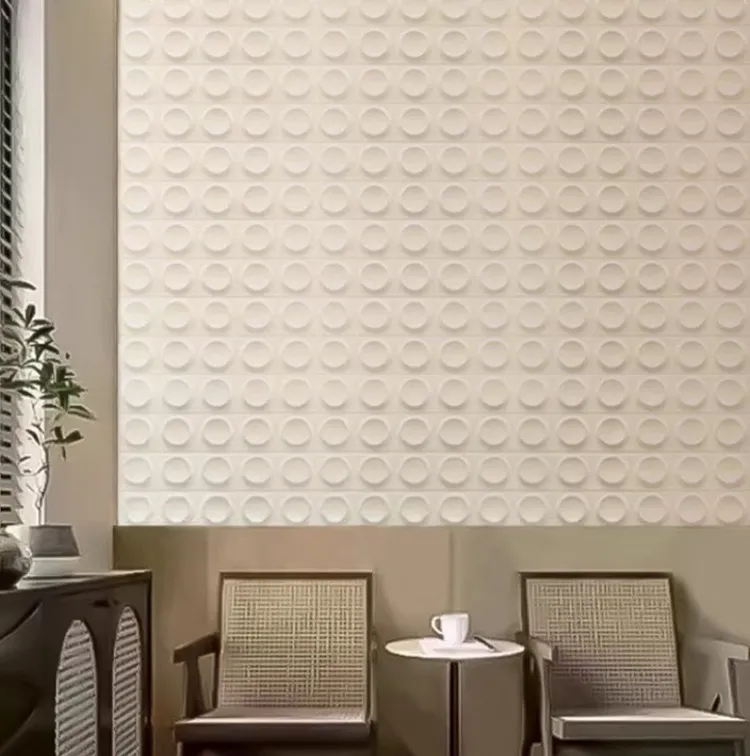
When selecting wall and floor finishes for a construction or renovation project, the choice between small round plate assembly solutions and traditional mosaics goes beyond aesthetics. Both options have carved out strong positions in the building materials market, but they differ significantly in terms of design flexibility, installation complexity, slip resistance, and long-term maintenance. Understanding these differences helps contractors, designers, and property owners make informed decisions that balance visual impact with practical performance.
Small round plate assembly solutions refer to circular-format tiles — often called penny rounds or round mosaic tiles — that are pre-mounted on mesh-backed sheets for easier handling and installation. Each individual tile is typically small, measuring between 20 mm and 50 mm in diameter, and multiple tiles are arranged in a grid pattern on a flexible sheet. This sheet-mounted format allows the tiles to maintain consistent spacing while being laid in larger sections, reducing the manual effort of placing each piece individually.
These round tiles are manufactured in a range of materials including porcelain, ceramic, glass, and natural stone. Porcelain variants are particularly popular for flooring due to their high density and low water absorption rate. On the wall side, products like pu stone wall panel solutions have gained traction as a lightweight alternative that mimics the look of natural stone without the weight or installation burden of traditional masonry.
Traditional mosaics are composed of small, typically square tiles (tesserae) arranged on mesh sheets to form repeating geometric patterns. The most common formats are square, hexagonal, and rectangular. These tiles are often made from ceramic, porcelain, glass, or natural stone such as marble and travertine. A well-known example in the decorative building materials space is mosaic travertine, which combines the natural texture of limestone with the structured layout of square mosaic sheets.
Traditional mosaics have been used for centuries in both residential and commercial settings. They are valued for their clean lines, predictable layout, and the ability to create precise geometric designs. However, the rigid grid structure can feel angular and less organic compared to round alternatives, especially in spaces that benefit from a softer visual flow.
Small round plate assemblies create a distinctly different visual rhythm than traditional square mosaics. The circular geometry introduces a sense of movement and fluidity that square tiles cannot replicate. When light moves across a round tile surface, the curved edges generate softer shadows and highlights, adding depth without the harsh linear breaks that square tiles produce. This makes round formats particularly effective in spaces where a gentle, organic feel is desired — such as spa bathrooms, feature walls, and curved architectural surfaces.
Traditional mosaics, by contrast, deliver a more structured and geometric appearance. Their straight edges and predictable grid pattern lend themselves to formal, orderly designs. Square mosaics remain the go-to choice for heritage-style interiors, commercial lobbies, and spaces where crisp, architectural lines are part of the design language.
One of the most significant functional advantages of round plate assemblies is slip resistance. The circular shape of each tile creates a higher grout-to-tile ratio on the finished surface. Each grout line acts as a micro-traction point, providing grip underfoot — especially in wet areas like bathrooms, shower floors, and pool surrounds. This dense network of joints helps break up water film and reduces the risk of slipping more effectively than larger-format tiles or traditional mosaics with fewer grout lines.
Square mosaics also offer slip resistance through their grout joints, but the effect is generally less pronounced because the straight edges do not interrupt water flow to the same degree. For safety-critical applications such as shower floors and commercial wet rooms, round plate assemblies are often the preferred specification.
Both small round plates and traditional mosaics come on mesh sheets, which simplifies handling compared to loose tiles. However, round plates present unique alignment challenges. Because the sheets contain circular tiles, even a slight shift between adjacent sheets can create visible gaps or disrupt the continuous pattern. Installers often need to adjust individual tiles by hand to maintain consistent spacing, which adds time and labor cost.
Traditional square mosaics are generally more forgiving during installation. Their straight edges align naturally, and minor shifts between sheets are less noticeable after grouting. Cutting square tiles around fixtures and drains is also more straightforward than cutting circular tiles, which requires more precision and specialized tools.
The higher grout density of round plate assemblies means more grout lines to clean and maintain. Soap residue, mineral deposits, and everyday dirt tend to accumulate in grout joints, and round tile installations have more of them. This makes regular cleaning essential. Using pH-neutral cleaners and sealing cement-based grout periodically helps preserve the surface appearance. For high-moisture areas, epoxy grout is recommended because it resists stains, mold, and mildew without requiring sealing.
Traditional mosaics, with their comparatively fewer grout joints per square meter, are slightly easier to maintain. However, the difference narrows significantly when epoxy grout is used in either installation type.
The material cost of round plate tiles and traditional square mosaics is broadly comparable when comparing similar materials (e.g., porcelain vs. porcelain). The cost difference emerges primarily in labor. Round plate installations typically require more time for alignment, cutting, and grouting, which translates to higher labor costs. The additional grout material needed for round tiles also adds a marginal material expense.
For budget-conscious projects, traditional mosaics offer a more predictable installation timeline and lower labor requirement. For projects where visual distinction and safety are higher priorities, the additional investment in round plate assemblies is often justified.
Regardless of whether you choose round plates or traditional mosaics, material selection is critical. Porcelain is the preferred material for floors in wet areas due to its density and low water absorption. Ceramic works well for walls and dry areas at a lower price point. Natural stone delivers premium aesthetics but requires sealing and more maintenance. Glass adds reflectivity and works beautifully on feature walls.
For projects that require a broader decorative scope, decorative profiles can complement both round and square mosaic installations by adding trim, edging, and transitional elements that frame the tiled area and give the finished surface a polished, professional look. These profiles are available in various materials and finishes to match the overall design scheme.
Small round plate assembly solutions and traditional mosaics each bring distinct strengths to a building or renovation project. Round plates offer superior slip resistance, a softer visual rhythm, and the ability to wrap around curved surfaces — making them the top choice for wet rooms, shower floors, and feature walls where safety and organic design are priorities. Traditional mosaics provide easier installation, a structured geometric aesthetic, and lower labor costs, which suits large-format commercial floors, heritage interiors, and backsplash applications.
The decision ultimately comes down to the specific requirements of the project: the balance between safety and style, the complexity of the surface geometry, and the available budget for both materials and labor. By understanding how these two formats compare across design, installation, maintenance, and cost, building professionals can specify the right solution with confidence.
Recommend Products












