
A comprehensive analysis of cost, durability, and upkeep for architectural and decorative applications
When designing modern facades, accent walls, or landscape features, the warm, earthy rusted-steel aesthetic has become one of the most sought-after looks in contemporary architecture. But achieving that look raises an important question: should you invest in genuine Corten steel (weathering steel), or opt for rust stone solutions — decorative wall panels and cladding that replicate the rusted appearance without the structural and maintenance challenges of real metal?
This article examines the two approaches side by side across cost, maintenance, durability, and installation, helping architects, contractors, and property owners make an informed decision. As a leading architectural façade solutions provider, COLORIA GROUP offers a range of rust-look decorative panels that serve as practical alternatives to traditional Corten steel.
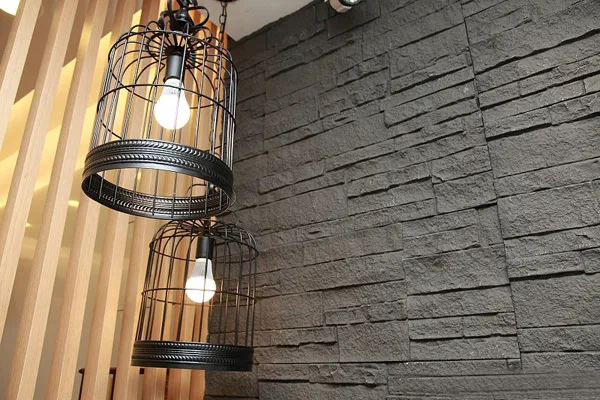
Rust stone solutions are engineered decorative panels that faithfully reproduce the texture, color variation, and visual depth of naturally rusted stone and weathered steel surfaces. Unlike Corten steel — which is a specific alloy (ASTM A588/A606-4) that develops a genuine oxide patina over time — rust stone panels are typically manufactured from materials such as polyurethane (PU), wood-plastic composite (WPC), modified clay materials (MCM), or high-density polyurethane foam with mineral coatings.
These panels are part of a broader category of decorative profiles and exterior decoration materials that deliver the visual impact of natural materials at a fraction of the weight and cost. COLORIA GROUP's rust stone product line includes PU stone wall panels, MCM flexible cladding stone, and WPC wall panels — all designed to capture the rusted-metal aesthetic while eliminating the practical drawbacks of genuine weathering steel.
The cost difference between the two options is substantial and often the deciding factor for project budgets.
Genuine Corten steel panels typically range from $8 to $15 per square foot for the raw material alone. When factoring in professional fabrication — which requires specialized welding techniques to preserve the patina-forming properties — and installation labor, the total installed cost for Corten cladding commonly reaches $30 to $50 per square foot. For a medium-sized commercial facade project of 1,000 square feet, this translates to an investment of $30,000 to $50,000 before any design or engineering fees.
Engineered rust stone panels are significantly more economical. Depending on the material type — PU, WPC, or MCM — material costs generally fall between $3 and $8 per square foot. These panels are lightweight (often weighing around 1 pound per square foot), which dramatically reduces shipping costs, structural support requirements, and installation labor. The total installed cost for rust stone cladding typically ranges from $10 to $22 per square foot. For that same 1,000-square-foot project, the total cost would be between $10,000 and $22,000 — a savings of 50% to 65% compared to Corten steel.
For a 1,000 sq. ft. commercial facade, rust stone solutions can save $20,000 to $28,000 in total project costs compared to genuine Corten steel.
Maintenance is where rust stone solutions truly differentiate themselves from Corten steel. While Corten is often marketed as "low-maintenance," the reality is more nuanced.
Corten steel is heavy. A standard 11-gauge Corten panel weighs approximately 5 pounds per square foot, requiring substantial structural support, reinforced framing, and often crane-assisted installation for multi-story projects. The weight also increases shipping costs significantly, especially for international procurement.
Rust stone panels, by contrast, are engineered for lightweight performance. A typical PU stone wall panel weighs around 1 pound per square foot — roughly one-fifth the weight of Corten. This lightweight characteristic means:
Corten steel is rated for 40 to 75 years of structural life under ideal atmospheric conditions — moderate humidity, low salinity, and clean air. However, in less-than-ideal environments (coastal, industrial, or high-pollution areas), its effective lifespan can be significantly shorter. The protective patina that gives Corten its durability may fail to form properly, leading to ongoing corrosion rather than protection.
High-quality rust stone panels from established exterior decoration materials manufacturers offer a 20 to 40-year service life with consistent aesthetic performance. Because they do not rely on a chemical reaction with the environment to maintain their appearance, they perform consistently across all climate zones — from humid coastal regions to dry inland areas. Key durability factors include:
Corten steel offers one primary aesthetic: the rusted patina, which evolves over time from bright orange to deep brown-purple. While undeniably striking, this look is singular and irreversible. Once installed, the color and texture are determined by environmental factors largely outside the designer's control.
Rust stone solutions, by contrast, offer predictable and consistent aesthetics from day one. The color, texture, and finish are manufactured to specification and remain stable throughout the product's life. Additionally, COLORIA GROUP's decorative profiles collection includes a wide variety of stone and rust-look finishes — from Bali Stone and Epoch Stone to Muretto Stone and Century Stone — giving designers far more creative freedom than a single-material solution.
| Factor | Corten Steel | Rust Stone Solutions |
|---|---|---|
| Material Cost | $8 – $15 / sq. ft. | $3 – $8 / sq. ft. |
| Installed Cost | $30 – $50 / sq. ft. | $10 – $22 / sq. ft. |
| Weight | ~5 lbs / sq. ft. (11-gauge) | ~1 lb / sq. ft. |
| Rust Staining | Yes — significant runoff during first 1-3 years; ongoing in wet climates | None — appearance is pigment-based, not actual oxidation |
| Maintenance | Requires drainage design, periodic cleaning of adjacent surfaces, environmental monitoring | Occasional soap and water cleaning |
| Lifespan | 40–75 years (ideal conditions); shorter in coastal/industrial zones | 20–40 years; consistent across all climates |
| Installation | Specialized fabrication, heavy equipment, reinforced framing | Standard tools, lightweight handling, no structural reinforcement needed |
| Design Variety | One primary aesthetic; color evolves unpredictably over time | Multiple stone and rust-look finishes; color and texture stable from day one |
| Coastal Suitability | Poor — chloride accelerates corrosion | Excellent — moisture-resistant materials unaffected by salt air |
| Fire Rating | Non-combustible (steel) | Class A fire-rated options available |
Corten steel remains the right choice in specific scenarios:
Rust stone panels are the practical choice for the majority of architectural and decorative applications:
The Bottom Line
For the vast majority of architectural cladding, facade design, and decorative wall applications, rust stone solutions deliver the coveted rusted-steel aesthetic at 50% to 65% lower installed cost, with zero rust staining, simpler installation, and consistent appearance across all climate conditions. Corten steel retains its place in structural and high-budget architectural projects where its material authenticity and load-bearing capacity justify the premium. As a comprehensive architectural façade solutions provider, COLORIA GROUP offers a curated selection of rust stone panels and decorative profiles that combine the visual warmth of weathered steel with the practical advantages of modern engineered materials — helping builders and designers achieve the look they want without compromising on budget or performance.
Recommend Products












