


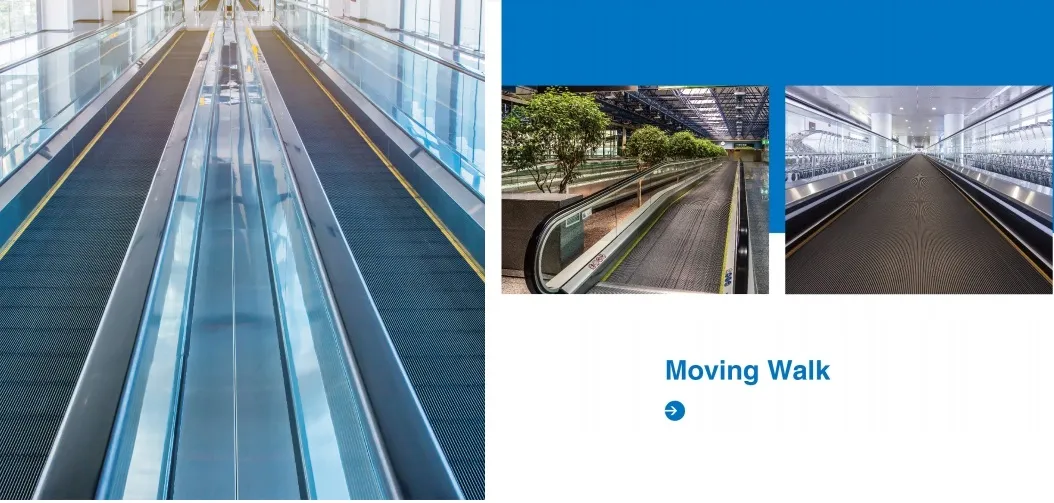
You've just stepped off a 14-hour flight, legs stiff, eyelids heavy. Ahead stretches what seems like miles of terminal corridors - but then you spot them: those magical moving pathways we've all come to rely on. More than just convenient conveyor belts, these travelators serve as unsung heroes in modern air travel.
The Physics of Fatigue: Why Airport Walks Exhaust Us
Human biomechanics reveal why terminal treks feel disproportionately tiring. When we walk:
- Calorie expenditure triples compared to standing
- Joint impact forces reach 1.5 times body weight
- Stress hormones increase steadily after 15+ minutes
Airport architects call this "terminal trudge fatigue" - a phenomenon amplified by luggage, sleep deprivation, and dehydration. Without intervention, passenger experience ratings plummet alongside spending at retail concessions.
A Timeline of Travel Innovation
1958
First commercial moving walkway installation at Love Field Airport in Dallas, greeted with both wonder and skepticism.
1970s
Hub-and-spoke models create massive terminals where travelators become essential infrastructure rather than luxuries.
2004
Heathrow Terminal 5 debuts "acceleration lanes" where walkways gradually speed up to reduce stumbling incidents.
Present Day
Smart sensors adapt speed to passenger density while integrating with lightweight building decorative panels for enhanced aesthetic appeal.
Psychological Relief: More Than Just Mechanics
The true benefit extends beyond physics. Studies reveal:
Perceived Control
Passengers report 34% less stress when they can choose between walking and standing travel options
Visual Distraction
Art installations above walkways (like Detroit's Light Tunnel) reduce perceived journey time by up to 28%
Social Signaling
Positioning near retail zones subtly encourages browsing behavior without exhausting travelers
"What passengers call 'convenience' is actually a sophisticated fatigue management system. Moving walkways are physiological reset buttons," notes mobility expert Dr. Anika Voss.
Terminal Layouts That Make the Difference
Airports implementing travelator solutions most effectively typically feature:
Strategic Sequencing
Alternating between 200ft of walking corridors and 100ft travelators mirrors natural rest patterns observed in urban walking behavior.
Vertical Integration
Multi-level connections between terminals allow passengers to maintain momentum while transitioning between spaces.
Wayfinding Synchronicity
Singapore Changi's "Path Finder" system projects estimated walking times with/without walkway use at decision points.
The results speak for themselves: Copenhagen Airport reported 17% fewer complaints about walking distances after implementing these zoning principles.
The Future of Fatigue-Free Travel
Emerging technologies promise even greater relief:
- Adaptive Speed - Montreal's AI-powered walkways use cameras to accelerate during low-density periods
- Weight-Aware Systems - Prototype models in Dubai detect luggage weight and adjust torque accordingly
- Biometric Integration - Seoul Incheon's pilot program offers personalized speed settings linked to boarding passes
- AirCurrent Tech - Japanese designs incorporate subtle breezes that reduce perceived temperatures around walkways
Perhaps most promising are the magnetic levitation systems being tested in Toronto Pearson International that eliminate the vibration fatigue caused by traditional belt systems. These innovations transform travelators from passive people-movers into responsive passenger wellness systems.
The Human Dimension
Beyond the engineering specifications lies an essential truth: travel fatigue isn't merely physical. The emotional exhaustion of navigating unfamiliar spaces compounds bodily tiredness. Moving walkways function as psychological landmarks - predictable elements in the often chaotic travel experience.
Sarah Mitchell, a frequent flyer who travels with arthritis, puts it best: "Those moving pathways aren't about laziness. They're about dignity. They mean I can arrive at my gate with enough energy to smile."
As air travel volumes continue growing, the role of these quiet facilitators only increases. The next-generation airport won't just move people between points, but carefully shepherd their physical and emotional reserves from curbside to clouds. That's the real destination for travel technology - and it's already unfolding beneath our feet.










