
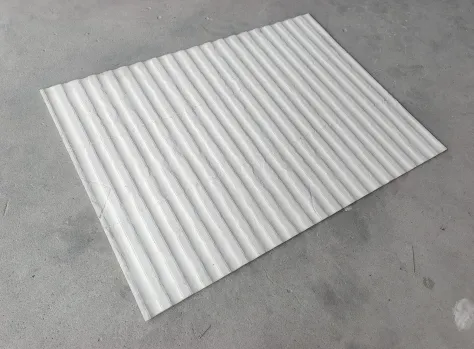
Whenever people look at a stone-clad facade, the same quiet question surfaces: does this actually read as real stone, or is it just pretending? Between century stone solutions and the many modern stone veneers on the market, that answer is not as simple as it looks. Authenticity is not one thing. It is a layered idea that includes how a surface feels under your hand, how its colour behaves as the light shifts, and how honestly it ages over a decade of weather. Looking at these layers is the fairest way to compare the two.
Century stone is a premium class of engineered and cured stone used for wall cladding, facade panels and decorative surfaces. A good example is the century stone profile carried by COLORIA GROUP, which deliberately finishes each panel with slight thickness differences, mineral flecks and hand-tool marks so no two installations look identical. Modern stone veneer is a broader family: it ranges from genuine stone cut into thin slices to manufactured panels cast from cement, resin or composite bases that imitate the look of natural rock.
The key difference for authenticity is not the word "stone" in the name, but how each material earns its texture, colour and long-term behaviour. That is where residentially relevant practical differences begin to show.
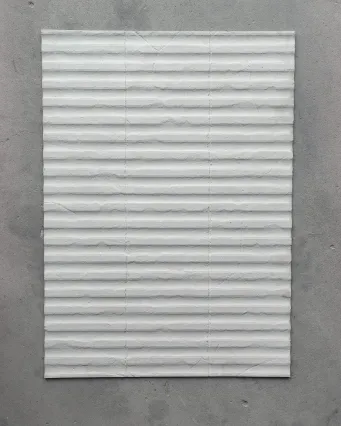
Real stone is never perfectly flat, and this is the first thing the hand notices. High-quality century stone embraces that imperfection. Its panels vary in thickness, typically around 35 to 45 millimetres, so broad surfaces catch light differently through the day and develop shadows that shift from morning to late afternoon. This organic variation is difficult to fake with a flat, uniformly cast veneer.
The same principle applies to lighter alternatives. An MCM flexible cladding stone wall panel is thin and bendable enough to wrap curved walls, yet its surface still reproduces the grain, fissures and roughened edges that make stone convincing at eye level. Because the pattern rarely repeats in a rigid grid, adjacent panels read as one continuous geological surface rather than an obvious repeat stamp.
On the true-veneer end, a natural stone slice does keep its real grain. But thin, perfectly rectangular slices often sit in repeating mortar joints, and the flat cut tends to erase the relief that makes an old quarry wall compelling. The tactile realism of a quality century surface, with its uneven depth and tool marks, frequently wins at close range.
Flat, monochrome panels are the most common giveaway of artificial stone. Real rock carries mineral variation, darker veins and warmer patches that shift with the angle of the sun. Premium century stone profiles build these harmonies deliberately: a single span can move from honey gold to soft grey as minerals concentrate or thin out, so the wall looks alive rather than plastic.
Manufactured veneers have improved a great deal, and some multi-tone casts are convincing from a distance. The honest test is lighting. Point a work light across a century stone panel and you will see raised edges and recesses throw real shadow; across a flat, uniformly coated veneer, the surface tends to go dull and even. For interior accent walls, fireplace surrounds and lobby features where people stand close, that difference is decisive.
Authenticity has a surprising engineering side. Genuine stone is heavy, and that weight limits where you can use it. A full stone veneer can demand structural reinforcement on upper floors and balconies. Modern century stone panels sidestep this by engineering realism into a lighter body.
Data from COLORIA GROUP's own testing illustrates the gap. Traditional stone veneer can weigh roughly 11 to 15 pounds per square foot and absorb up to 7 percent moisture, while their century stone board comes in around 1.8 pounds per square foot with water absorption near 0.2 percent. Lighter and far less water-hungry, it offers the heaviness of appearance without the structural penalty.
For the lightest realistic finish, a PU stone wall panel reproduces the relief of stacked natural rock at a fraction of the weight, which suits fast commercial fit-outs and retrofit projects where the existing structure cannot carry masonry. In this sense, a stone-clad look can be authentic visually without pretending to be load-bearing.
The authenticity question people rarely ask is the most important one: what does the surface look like in ten years? Natural stone earns its character through weathering. Cheap veneers, by contrast, tend to fade, chalk, or let moisture creep into joints under freeze-thaw cycles.
Cured century stone is built to age the way quarried rock does. Low water absorption means rainwater beads off instead of soaking in, so staining and frost spalling do not get a foothold. The colour is baked through the body rather than coated on top, so fading on sun-facing walls is minor. Manufacturers back this with long structural warranties, typically a 50-year cover against cracking or fading, which is a rare promise for a decorative panel.
A conventional thin manufactured veneer can still be an excellent, economical choice where the installation is dry, shaded and indoors. The honest advice is to match the material to the exposure: demanding exterior facades benefit from the durability and colour stability of century stone, while protected interior features may be fine with a lighter veneer.
There is no single winner, because authenticity asks different questions in different rooms.
For most residential and commercial projects, high-quality century stone hits the balance most buyers are actually after: the honest look and evolving character of natural rock, delivered in a modern panel that installs cleanly and stands up to weather. When the light rakes across a good century stone wall and throws depth you can trace with your fingers, the distinction between "real" and "realistic" quietly stops mattering. That, in the end, is authenticity done right.
Recommend Products












