
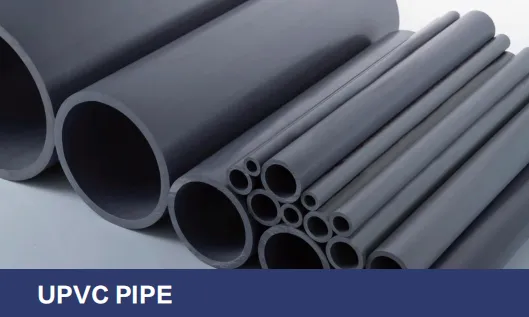
Picture this: A bustling construction site in Riyadh, where workers are racing to finish the plumbing for a new children's hospital. The project manager, Ahmed, checks his watch—today is supposed to be the day the UPVC pipes arrive. Without them, the entire schedule slips: electricians can't install wiring around the pipes, painters can't finish walls, and the hospital's opening date, already delayed by supply chain snags, inches further away. Then, a truck rumbles in, emblazoned with the logo of a local building materials supplier. The driver hands over a delivery note: 500 meters of UPVC pipe, 200 PVC DWV fittings, and a batch of PPR pipe and fittings—all on time, all exactly as ordered. Ahmed exhales. For a moment, the chaos of construction fades, replaced by relief. This isn't luck. It's the result of a UPVC pipe supplier that has mastered the art of consistent material supply.
In the world of construction, consistency isn't just a nice-to-have—it's the backbone of success. Delays in materials can derail budgets, strain client relationships, and even compromise safety. For a pipes fittings supplier, ensuring that products like UPVC pipes, plastic valve systems, and PPR pipe and fittings arrive when and where they're needed requires a symphony of strategy, technology, and human expertise. Let's pull back the curtain and explore how the best suppliers make consistency look effortless.
At the heart of consistent supply lies a supply chain that can adapt—because in construction, surprises are inevitable. A UPVC pipe supplier worth its salt doesn't rely on a single thread to hold its operations together; it weaves a safety net of redundancy, foresight, and flexibility.
Take raw materials, for example. UPVC pipes start with polyvinyl chloride resin, a key ingredient whose price and availability can fluctuate with global market trends, geopolitical tensions, or even weather events (like a hurricane disrupting resin production in the Gulf). To avoid getting caught short, leading suppliers don't put all their resin eggs in one basket. Instead, they partner with 3–5 verified resin suppliers, spread across different regions. Some might be local (e.g., in Saudi Arabia or the UAE) for quick turnarounds, while others are international (e.g., Europe or Asia) to balance costs. Each supplier undergoes rigorous vetting: Do they meet ISO 9001 standards? Can they scale production during peak demand? What's their track record during crises (like the 2021 resin shortage that crippled smaller suppliers)?
Diversification isn't just about raw materials—it extends to logistics, too. A supplier might maintain two warehouses: one in Jeddah for west coast projects and another in Dammam for the east. This cuts down delivery times from 3 days to 24 hours for urgent orders, like when a contractor realizes they need extra PVC DWV pipe for a last-minute design change in a residential complex. For international projects, they'll partner with multiple freight forwarders, comparing not just costs but reliability. During the 2022 Suez Canal blockage, for instance, suppliers with backup routes (via the Cape of Good Hope or air freight for small batches) kept deliveries on track while competitors floundered.
But resilience isn't just about avoiding disaster—it's about predicting it. Modern suppliers use data analytics to map potential risks: If a key resin supplier's factory is in an area prone to monsoons, they'll stockpile 2–3 months of resin in advance. If a major highway renovation is scheduled near their Dammam warehouse, they'll reroute deliveries through secondary roads weeks before construction begins. It's supply chain management as a form of storytelling: anticipating the plot twists before they happen.
Consistency isn't just about showing up on time—it's about showing up with products that perform. A batch of UPVC pipe that cracks under pressure or a PVC DWV fitting that leaks isn't just a hassle; it's a safety hazard. For a UPVC pipe supplier, quality control is the gatekeeper that ensures every delivery meets the mark.
Consider the in-house testing lab at a leading supplier's Riyadh facility. Here, technicians in white coats subject UPVC pipes to a battery of tests: They measure wall thickness with laser calipers to ensure compliance with ASTM D1785 (the standard for UPVC pipe dimensions). They pump water through pipes at 10 bar pressure for 1000 hours to simulate decades of use, checking for leaks or deformation. For PPR pipe and fittings, they test heat resistance—essential for hot water systems in hospitals or schools—by immersing samples in 95°C water for weeks. Even plastic valve systems undergo torque testing to ensure handles don't snap and gaskets maintain a tight seal after 10,000 cycles.
What about traceability? Every batch of product gets a unique QR code, linked to a digital record that tracks its journey from resin to delivery. Scan a UPVC pipe's code, and you'll see: resin batch number, production date, machine operator, test results, and even the truck that delivered it. If a contractor reports an issue with a PVC DWV pipe, the supplier can trace it back to the exact batch, identify if others are affected, and replace them before more problems arise. This isn't just about fixing mistakes—it's about preventing them. For example, if a batch of PPR pipe and fittings shows slightly lower heat resistance, the supplier can flag it early and adjust the manufacturing process (like tweaking the extrusion temperature) before shipping to clients.
Certifications matter, too. A reputable UPVC pipe supplier will hold certifications like SASO (Saudi Arabian Standards Organization) for local compliance, ISO 14001 for environmental management, and maybe even Class A fireproof ratings for specialized products (though UPVC itself is inherently fire-resistant, with low smoke emission). These certifications aren't just wall decor—they're proof that the supplier's quality control systems are third-party verified, giving clients like Ahmed the confidence that their hospital's pipes won't fail when lives depend on them.
| Pipe/Fitting Type | Key Applications | Quality Control Focus | Typical Standards |
|---|---|---|---|
| UPVC Pipe | Water supply, irrigation, industrial piping | Pressure resistance, wall thickness uniformity | ASTM D1785, SASO 1645 |
| PVC DWV Pipe | Drainage, waste, vent systems in residential/commercial buildings | Impact strength, chemical resistance (to drain cleaners) | ASTM D2665, EN 1451 |
| PPR Pipe and Fittings | Hot/cold water systems, solar heating | Heat deformation temperature, weld strength | ISO 15874, DIN 8077/8078 |
| Plastic Valve Systems | Flow control in water supply, HVAC, industrial systems | Seal tightness, handle durability, pressure rating | ASTM D2004, EN 1254-2 |
If supply chain resilience is the "what" and quality control is the "how well," then technology is the "how fast." In an industry where a single delayed shipment can cost $10,000 per day in construction downtime, suppliers are turning to digital tools to streamline operations and eliminate human error.
Take enterprise resource planning (ERP) systems, for example. A leading pipes fittings supplier might use a cloud-based ERP that tracks inventory in real time. When a contractor orders 100 meters of UPVC pipe, the system automatically deducts from stock and flags when levels hit a "reorder point" (e.g., 200 meters left). For slow-moving items like specialized plastic valve systems, it uses AI to predict demand based on historical data: If hospitals tend to order more Class A fireproof valves in Q1 (before summer construction booms), the system will suggest ramping up production in December. This isn't just about avoiding stockouts—it's about optimizing cash flow, too. No more tying up capital in excess inventory or scrambling to rush-order materials at premium prices.
On the production floor, Internet of Things (IoT) sensors are changing the game. Imagine a UPVC pipe extrusion line where sensors monitor temperature, pressure, and speed 24/7. If the temperature in the extruder drifts by 2°C—enough to weaken the pipe—the system alerts technicians via SMS and email before a single defective pipe is produced. Predictive maintenance takes this a step further: By analyzing vibration data from machinery, the system can predict when a bearing might fail, scheduling repairs during a planned shutdown instead of letting it break mid-production. For a supplier, unplanned downtime can cost $5,000 per hour; IoT turns reactive fixes into proactive prevention.
Then there's client communication. The best suppliers don't wait for clients to call with questions—they keep them in the loop. A contractor like Ahmed might log into a client portal to track their order: "UPVC pipe batch #4562 is in transit, ETA: 3:00 PM tomorrow." If there's a delay (e.g., a flat tire on the delivery truck), the system sends an automated update with a new ETA and a link to track the truck in real time. For complex orders—like a mix of PPR pipe and fittings, PVC DWV pipes, and plastic valve systems—the portal lets clients view delivery notes, test certificates, and even 3D models of the products to ensure they match specs. It's transparency that builds trust: Clients don't just know their order is coming—they know exactly where it is, and why.
Consistency isn't a one-way street. A supplier can have the fanciest ERP and the strictest quality control, but if they don't understand their clients' needs, they'll still miss the mark. The best UPVC pipe suppliers act less like vendors and more like partners—anticipating what clients need before they even ask.
Consider how a supplier might work with a commercial contractor building a shopping mall. The contractor's schedule is tight: They need UPVC pipes for the food court's water lines by Week 8, PVC DWV pipes for the restrooms by Week 10, and PPR pipe and fittings for the HVAC system by Week 12. Instead of just taking orders, the supplier assigns a dedicated account manager to map the project timeline, flagging potential conflicts. "You've ordered 100 PPR elbows for Week 12," the manager might note, "but our production calendar shows we'll be running a large PPR batch the week before—we can deliver them a day early if that helps you stay ahead." Small gestures like this turn transactions into relationships.
Flexibility is another cornerstone. Construction projects rarely go exactly to plan. A residential builder might realize mid-project that they need 50 extra PVC DWV pipes—stat. A supplier that can pivot, rerouting a delivery from another site or fast-tracking production, becomes indispensable. Some suppliers even maintain a "quick-ship" inventory: common items like UPVC pipe, standard plastic valve systems, and PPR fittings kept in stock for 24-hour delivery. It's a premium service, but for a contractor staring down a $20,000/day delay, it's worth every penny.
Then there's feedback. Great suppliers don't just deliver products—they ask, "How can we do better?" After Ahmed's hospital project wraps up, the supplier might send a survey: "Was the UPVC pipe easy to install? Did the delivery truck have trouble accessing the site? Is there a product we don't offer that would have made your job easier?" This input shapes everything from new product lines (e.g., adding a lightweight UPVC pipe for high-rise installations) to logistics tweaks (e.g., using smaller trucks for tight urban sites). It's a reminder that consistency isn't static—it evolves with the clients it serves.
In today's world, consistency isn't just about meeting today's needs—it's about ensuring tomorrow's needs can be met, too. Construction is one of the most resource-intensive industries, and clients are increasingly asking: "Is this supplier built to last?" For forward-thinking UPVC pipe suppliers, sustainability isn't a buzzword; it's a way to future-proof their supply chains.
Start with raw materials. Traditional UPVC production relies on virgin resin, but innovative suppliers are blending in recycled content—up to 30% in some cases—without sacrificing quality. Scrap PVC from production (e.g., trimmings from pipe ends) is ground into pellets and reintroduced into the extrusion process. For clients like schools or hospitals, which often prioritize eco-friendly materials, this reduces their carbon footprint while keeping costs stable. Some suppliers even partner with recycling facilities to collect and repurpose old UPVC pipes from demolition sites, closing the loop on waste.
Energy efficiency is another focus. UPVC pipe production is energy-intensive, but suppliers are investing in solar panels to power factories, heat recovery systems to reuse energy from extrusion, and LED lighting to cut electricity use. A factory in Riyadh with a 500kW solar array might reduce its grid dependency by 40%, shielding it from energy price spikes and ensuring production can continue during power outages. For clients, this means more stable pricing—no sudden cost hikes due to energy crises—and a supplier that's less vulnerable to external shocks.
Sustainability also extends to packaging. Instead of using single-use plastic wraps for pipes, suppliers might switch to reusable steel crates or biodegradable stretch film. Delivery trucks are upgraded to hybrid models, and routes are optimized using GPS to minimize fuel consumption (and emissions). For a client like Ahmed, who's under pressure to meet the hospital's green building certification (e.g., LEED), these efforts aren't just nice—they're a requirement. A supplier that can prove its sustainability credentials becomes a partner in the project's success, not just a vendor.
Back at the hospital construction site, Ahmed watches as workers unload the UPVC pipes. He thinks about the months of planning: the late nights reviewing specs, the calls with the supplier's account manager, the worry that one wrong delivery could derail everything. But today, as the first pipe is fitted into place, he smiles. This is why consistency matters. It's not just about pipes arriving on time—it's about enabling projects that change lives: hospitals that heal, schools that educate, homes that shelter.
For a UPVC pipe supplier, consistency is the product of resilience (supply chains that adapt), rigor (quality control that never wavers), innovation (technology that streamlines), empathy (customer focus that listens), and foresight (sustainability that endures). It's not easy, but when done right, it transforms suppliers into trusted partners—ones that contractors like Ahmed will call, project after project, because they know: with this supplier, "on time and as promised" isn't a goal. It's a guarantee.
Recommend Products












