
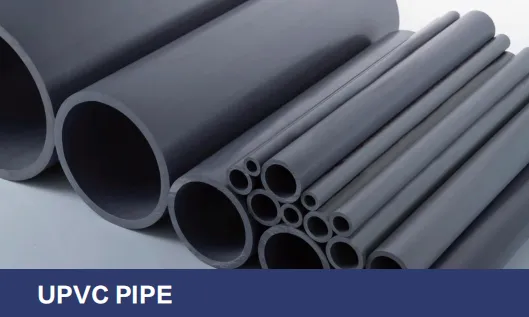
Let's face it: construction projects have a reputation for one thing—going over budget. Whether it's a small residential build or a sprawling commercial complex, the numbers on the spreadsheet rarely stay neat and tidy. Labor costs creep up, delays add unexpected expenses, and material prices? They can feel like a moving target. But here's a secret many seasoned project managers learn the hard way: your material supplier isn't just a vendor. They're a partner in keeping costs in check. And when it comes to materials that make or break a budget, few are as impactful as pipes—specifically, UPVC pipes. In this article, we'll pull back the curtain on how a reliable UPVC pipe supplier doesn't just deliver products; they deliver tangible, bottom-line savings. We'll dive into real-world scenarios, compare costs, and explore why choosing the right supplier for UPVC, PPR, and PVC DWV pipes could be the difference between a project that stays in the black and one that spirals into red ink.
Before we get into how suppliers drive savings, let's talk about the star of the show: UPVC pipes. Short for Unplasticized Polyvinyl Chloride, UPVC is a rigid, durable plastic that's been a staple in construction for decades. Unlike regular PVC, it's (plasticizers), which gives it extra strength and heat resistance. But why does that matter for your budget? Let's break it down. UPVC pipes are lightweight, corrosion-resistant, easy to install, and—crucially—affordable. They're used in everything from residential plumbing and drainage to commercial irrigation and industrial piping. And when paired with a supplier who understands both the product and your project's needs, their cost-saving potential skyrockets.
Let's start with the most obvious place savings show up: the price tag on the materials themselves. Walk into any hardware store, and you'll notice a clear trend: metal pipes (think copper, steel, or galvanized iron) cost significantly more than UPVC. For example, a 3-meter length of 2-inch diameter steel pipe might set you back $25–$35, while a similar UPVC pipe? Around $8–$12. That's a savings of roughly 60% per meter. Multiply that by the hundreds (or thousands) of meters needed for a project, and the numbers start to add up fast.
But why are UPVC pipes cheaper? It boils down to raw materials and production. UPVC is made from vinyl chloride monomer, a widely available plastic resin, which is less expensive than the iron ore or copper needed for metal pipes. Plus, UPVC suppliers often benefit from economies of scale—mass-producing pipes in standard sizes means lower per-unit costs, which they can pass on to you. Compare that to custom-fabricated steel pipes, which require more labor and specialized equipment, driving up prices.
It's not just metal, either. Even some other plastic pipes, like PPR (Polypropylene Random Copolymer), can cost more than UPVC for certain applications. PPR is great for hot water systems (it handles higher temperatures), but for cold water lines, drainage, or irrigation? UPVC is often the more budget-friendly choice. A smart UPVC pipe supplier will help you assess which pipe—UPVC, PPR, or PVC DWV (Drain, Waste, Vent)—is best for each part of your project, ensuring you don't overspend on a material that's "better" than you need.
Here's a cost many project managers overlook: labor. Even if a material is cheap, if it takes twice as long to install, those savings vanish. This is where UPVC pipes (and the suppliers who support them) truly shine. Let's paint a picture: You're a contractor installing a 200-meter plumbing line in a new apartment building. Option A: Steel pipes. They're heavy—each 3-meter section weighs 15–20 kg. You need a team of 4 workers to lift and position them, plus a certified welder to join the sections. Welding requires specialized equipment, safety gear, and time—each joint can take 10–15 minutes. For 200 meters, that's 67 joints and over 10 hours of welding alone.
Option B: UPVC pipes. Each 3-meter section weighs just 2–3 kg—one worker can carry 4–5 at a time. No welding needed. Instead, you use solvent cement or rubber gaskets to connect joints, which takes 2–3 minutes per joint. For the same 200-meter line? 67 joints, but only 2–3 hours of work. That's a labor time savings of 70%! And labor isn't cheap—if your crew costs $50/hour, that 7-hour difference translates to $350 saved on just one part of the project. Multiply that across all the piping in a building, and you're looking at tens of thousands in labor savings.
"We switched to UPVC for our residential projects three years ago, and the install time alone cut our plumbing labor costs by 40%," says Mark, a general contractor in Riyadh. "Our crews used to dread pipe installation days—now, they breeze through it. The supplier even provided training on the best cementing techniques, so we reduced mistakes and rework too."
Anyone who's owned a home or managed a building knows this: the cheapest material upfront isn't always the cheapest in the long run. A $5 pipe that needs replacing every 5 years is more expensive than a $10 pipe that lasts 50. That's where UPVC's durability becomes a secret weapon for cost savings. Unlike metal pipes, UPVC doesn't rust, corrode, or degrade when exposed to water, chemicals, or soil. In coastal areas, where saltwater can eat through steel in years, UPVC pipes last decades without a scratch. In industrial settings with acidic wastewater? UPVC holds strong, while metal would need constant repairs.
Maintenance costs tell the same story. Steel pipes often require periodic painting to prevent rust; copper pipes can develop pinhole leaks from corrosion. UPVC? No painting, no rust, no scaling. Even better, if a clog occurs, UPVC's smooth interior makes snaking or hydro-jetting easier, reducing plumber call-out fees. Let's crunch the numbers: Over a 20-year lifespan, the average maintenance cost for a steel pipe system is $2–$3 per meter annually (for painting, repairs, etc.). For UPVC? It's $0.20–$0.30 per meter annually. For a 500-meter system, that's $9,500 saved over 20 years.
| Pipe Type | Initial Cost (per meter) | Installation Time (per 100m) | Annual Maintenance Cost (per meter) | Estimated Lifespan |
|---|---|---|---|---|
| UPVC | $8–$12 | 3–4 hours | $0.20–$0.30 | 50+ years |
| Galvanized Steel | $25–$35 | 10–12 hours | $2–$3 | 15–20 years |
| PPR (Hot Water) | $12–$18 | 4–5 hours | $0.30–$0.40 | 40–50 years |
| Copper | $40–$50 | 8–10 hours | $1.50–$2.50 | 20–30 years |
Here's a hidden cost that can sink a project: non-compliant materials. If your pipes don't meet local building codes—say, they're not fire-resistant or lead-free—you could face fines, forced rework, or even project shutdowns. A reputable UPVC pipe supplier doesn't just sell pipes; they sell peace of mind. They'll provide certification documents (like ASTM D1785 for UPVC pipes) proving their products meet safety, quality, and environmental standards. For example, in Saudi Arabia, where building codes are strict, a supplier familiar with local regulations can ensure your UPVC pipes comply with SASO (Saudi Arabian Standards Organization) requirements, avoiding the nightmare of tearing out non-compliant piping and starting over.
Safety is another angle. Metal pipes are conductive, posing electrocution risks if they come into contact with wiring. UPVC is non-conductive, reducing the need for expensive insulation or rerouting. In hospitals or schools—where safety is paramount—this isn't just a cost-saver; it's a lifesaver. And when it comes to fire safety, some UPVC pipes are rated for high temperatures, making them suitable for use in areas where fire codes are strict. A supplier who understands these nuances can help you avoid over-specifying (and overpaying) for fire-rated materials where they're not needed, or under-specifying and risking penalties.
Ever tried coordinating with five different suppliers for pipes, fittings, flooring, and sanitary fixtures? It's a logistical nightmare. You're juggling delivery schedules, invoices, and quality checks—each with its own set of delays and headaches. This is where a UPVC pipe supplier who offers "one-stop" solutions becomes a game-changer. Many top suppliers don't just sell UPVC pipes; they also stock PPR pipes for hot water systems, PVC DWV pipes for drainage, and even complementary products like fittings, valves, and adhesives. Some even partner with flooring suppliers or sanitary fixtures/bathrooms suppliers to offer bundled packages.
Why does this save money? For starters, bulk ordering. When you buy UPVC pipes, PPR fittings, and PVC DWV pipes from the same supplier, you'll often get a volume discount. Second, fewer deliveries mean lower shipping costs. Instead of paying for five separate truckloads, you get one. Third, simplified communication. If there's a problem with a fitting, you call one supplier—not five. And finally, customization. A good UPVC supplier can cut pipes to your exact specifications, reducing waste from trimming on-site. For example, if you need 2.5-meter sections instead of standard 3-meter lengths, they'll deliver exactly that, so you're not paying for extra material you'll just throw away.
Let's put all this into context with a real project. In 2023, a construction firm in Jeddah was building a 50-unit residential complex. Their initial plumbing budget was $120,000, based on using galvanized steel pipes. Halfway through planning, they switched to a local UPVC pipe supplier who also offered PPR pipes for hot water and PVC DWV pipes for drainage. Here's how the savings stacked up:
Total savings? $49,000—nearly 18% of the original plumbing budget. The project finished on time and under budget, and the contractor now uses the same supplier for all their residential builds. "It wasn't just about the pipes," the project manager noted. "It was about the supplier understanding our deadlines and budget constraints. They even suggested switching some non-critical steel sections to UPVC, which we hadn't considered. That's the kind of partnership that makes a project successful."
At the end of the day, construction cost savings aren't about cutting corners. They're about making smart choices—choices that balance quality, efficiency, and budget. And when it comes to materials, few choices are as impactful as selecting the right UPVC pipe supplier. From lower material and labor costs to reduced maintenance and compliance headaches, the savings add up in ways that go far beyond the initial invoice. So the next time you're planning a project, don't just shop for pipes—shop for a partner. Look for a supplier who asks about your goals, offers expertise, and delivers solutions that make your budget breathe easier. After all, in construction, every dollar saved is a dollar that can go into making your project better, safer, and more successful.
Recommend Products












