
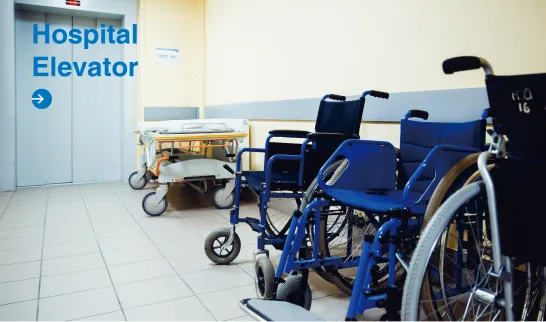
When we walk into a hospital, our attention is often drawn to the bustling nurses, the beeping monitors, or the sterile smell of antiseptic. But there's an unsung hero working quietly in the background—one that can mean the difference between life and death in a crisis: the elevator. Not just any elevator, though. In healthcare settings, where every second counts and safety is non-negotiable, emergency evacuation lifts aren't just equipment—they're lifelines. And for hospitals across the globe, finding a manufacturer that understands this critical role is more than a purchase; it's a partnership in protecting lives.
Enter Coloria, a name that's been making waves in the building materials industry as a one-stop architectural solution provider. While the company is renowned for its wide range of products—from solar panels to custom furniture—its expertise in hospital elevators, especially emergency evacuation lifts, stands out as a testament to its commitment to safety and innovation. In this article, we'll dive into why emergency evacuation lifts are a game-changer for hospitals, what sets Coloria apart in this niche, and how their solutions are shaping the future of healthcare infrastructure, particularly in regions like Saudi Arabia.
Let's start with the basics: not all hospital elevators are created equal. Standard hospital elevators are designed to move patients, staff, and supplies efficiently during regular operations. But emergency evacuation lifts? They're built for the worst-case scenarios. Think fires, earthquakes, or power outages—situations where every second wasted can cost a life. These lifts aren't just "stronger" versions of regular elevators; they're engineered with a specific mission: to safely evacuate people, including those on stretchers or in wheelchairs, when normal escape routes like stairs are impassable.
So, what makes them different? For starters, they're built to withstand extreme conditions. We're talking fire-resistant materials, backup power systems that kick in instantly during outages, and reinforced structures that can handle heavier loads (we're talking up to 2,500 kg or more—enough to carry multiple stretchers at once). They also come with smart features like emergency communication systems, real-time monitoring, and automatic recall to the ground floor when alarms trigger. In short, they're elevators that don't panic when everything else does.
Here's the thing: in many countries, building codes for hospitals now mandate these specialized lifts. It's not just a "nice-to-have"—it's a legal requirement. And for good reason. When a fire breaks out in a multi-story hospital, patients on higher floors can't just "take the stairs." Elderly patients, those on life support, or individuals with mobility issues depend entirely on these lifts to get to safety. That's why choosing the right manufacturer isn't just about compliance; it's about trusting that the lift will perform when the stakes are highest.
Now, you might be wondering: with so many elevator manufacturers out there, why Coloria? Let's break it down. Coloria isn't just a hospital elevator supplier—they're a one-stop architectural solution provider with decades of experience in the building materials industry. That means when they design an emergency evacuation lift, they're not just thinking about the lift itself; they're thinking about how it fits into the entire hospital ecosystem. From the moment a hospital breaks ground to the day it opens its doors (and beyond), Coloria is there, offering everything from the elevator shafts to the wall panels to the lighting—all under one roof.
But let's zoom in on their emergency evacuation lifts. What makes them stand out? For starters, they're built with a deep understanding of healthcare workflows. Hospitals aren't just buildings—they're complex environments where every detail impacts patient care. Coloria's lifts are designed to integrate seamlessly with hospital operations, whether that means extra-wide doors to accommodate stretchers, smooth acceleration/deceleration to avoid jostling patients, or quiet operation to keep noise levels low in sensitive areas like ICU wings.
Another key point: customization. No two hospitals are the same. A small community clinic might need a compact lift that fits in tight spaces, while a large trauma center could require multiple high-capacity lifts with advanced monitoring systems. Coloria doesn't believe in "one-size-fits-all." Their team works closely with hospital architects and administrators to tailor each lift to the facility's unique needs. Need a lift that can operate in extreme temperatures (hello, Saudi Arabia's scorching summers)? They've got it. Require compliance with the latest international safety standards, like EN 81-76 (the European norm for evacuation lifts)? Done. It's this flexibility that makes them a go-to choice for healthcare projects worldwide.
Let's get into the nitty-gritty of what makes Coloria's emergency evacuation lifts tick. These aren't just metal boxes on cables—they're packed with cutting-edge technology designed to prioritize safety, reliability, and efficiency. Here are some of the standout features:
In a fire, regular elevators become death traps—shafts act like chimneys, spreading smoke and heat. Coloria's lifts, though, are built with fire-rated enclosures (think steel frames and heat-resistant glass) that can withstand temperatures up to 1,000°C for at least 2 hours. That's enough time to evacuate patients before the lift itself is compromised. They also come with smoke detectors in the shaft and car, automatically stopping the lift if smoke is detected—preventing it from becoming a smoke funnel.
Hospitals can't afford power outages, and neither can their elevators. Coloria's emergency evacuation lifts are equipped with dual power systems: a primary connection to the hospital's main grid and a backup generator that kicks in within seconds if the main power fails. Some models even have a third layer of protection—battery packs that can keep the lift operational for an additional 30 minutes, ensuring no one gets stranded between floors during a blackout.
Imagine a lift that can "talk" to you. Coloria's lifts come with IoT-enabled monitoring systems that track everything from elevator speed to door functionality in real time. If a component starts to fail, the system sends alerts to both the hospital's maintenance team and Coloria's global support center—often before a breakdown occurs. This predictive maintenance isn't just about avoiding downtime; it's about ensuring the lift is always ready for an emergency.
Hospitals serve people with a range of mobility needs, and Coloria's lifts reflect that. They feature extra-wide door openings (at least 1.4 meters) to fit stretchers and wheelchairs, handrails for stability, and Braille buttons for visually impaired users. The interior is also designed to be easy to clean—critical in infection-control environments—with smooth surfaces that resist bacteria growth and can be wiped down with hospital-grade disinfectants.
| Feature | Standard Hospital Elevators | Coloria's Emergency Evacuation Lifts |
|---|---|---|
| Maximum Load Capacity | 1,000–1,600 kg | 2,000–3,000 kg |
| Fire Resistance | Basic (30–60 minutes) | Advanced (120+ minutes) |
| Backup Power | Optional (may not support full evacuation) | Mandatory (dual systems for 24+ hour operation) |
| Emergency Communication | Basic intercom | 2-way video call + emergency services direct line |
| Compliance | General safety standards | EN 81-76, ASME A17.1, and local healthcare codes |
If there's one market where Coloria's expertise shines, it's the Middle East—and specifically, Saudi Arabia. As a saudi arabia building materials supplier with a local (that's "agency" in English) and decades of experience in the region, Coloria doesn't just sell products here; they understand the unique challenges of building in Saudi Arabia's environment and culture.
Let's start with the climate. Saudi Arabia's summers are brutal, with temperatures often exceeding 45°C (113°F). That kind of heat can wreak havoc on elevator systems—cables expand, electronics overheat, and mechanical parts wear down faster. Coloria's lifts are engineered to thrive in these conditions, with heat-resistant components and cooling systems that keep internal temperatures stable, even when the mercury soars. It's the kind of local knowledge that comes from years of on-the-ground experience, not just a manual read.
Then there's Saudi Arabia's "2030 Vision"—a bold plan to transform the country's economy and infrastructure. A big part of this vision is investing in healthcare, with new hospitals and medical centers popping up across major cities like Riyadh, Jeddah, and Dammam. These projects aren't just about adding beds; they're about building world-class facilities that meet international standards. That's where Coloria's hospital elevator solutions come in. Their lifts align perfectly with the vision's goals: they're locally supported (meaning faster maintenance and support), they create jobs through training programs, and they're built with sustainability in mind—using energy-efficient motors and recycled materials where possible.
Take, for example, a recent project in Riyadh: a 500-bed super-specialty hospital focused on cardiac care. The hospital needed not just elevators, but a full suite of building materials—from fireproof wall panels to energy-efficient lighting. Coloria stepped in as the one-stop provider, delivering everything from the emergency evacuation lifts (custom-designed to fit the hospital's unique layout) to the ceiling tiles and pipe fittings. The result? The hospital opened ahead of schedule, with elevators that have since handled countless emergency evacuations during drills—proving their reliability when it matters most.
Here's a little secret about hospital construction: it's messy. Coordinating with multiple suppliers for different materials—elevators from one company, flooring from another, lighting from a third—can lead to delays, miscommunications, and budget overruns. That's where Coloria's "one-stop" model changes the game. As a one-stop architectural solution provider, they don't just deliver elevators; they deliver peace of mind.
Imagine building a hospital. You need walls that are fire-resistant (Class A fireproof CPL inorganic boards, perhaps?), flooring that's slip-resistant and easy to clean, lighting that's bright enough for surgeries but dimmable for patient rooms, and yes—reliable emergency evacuation lifts. With Coloria, you don't have to juggle five different contracts or chase down five different customer service teams. You have one point of contact, one project manager, and one guarantee that all components will work together seamlessly.
For example, their fireproof wall panels aren't just "compatible" with their elevators—they're designed to integrate. The elevator shafts are built using the same high-strength materials as the hospital's interior walls, ensuring consistent safety standards throughout the building. Their lighting systems sync with the elevator's emergency mode, automatically brightening evacuation routes when the lift is activated. It's this level of integration that saves hospitals time, money, and headaches—allowing them to focus on what they do best: caring for patients.
And let's not forget about after-sales support. Hospitals can't afford to wait weeks for a replacement part if an elevator breaks down. Coloria's global service network means that in Saudi Arabia, for instance, there's a local team ready to respond within 24 hours—whether it's a minor repair or a major overhaul. They also offer training programs for hospital staff, teaching them how to operate the emergency evacuation lifts during drills and real crises—because even the best equipment is only as good as the people using it.
As healthcare evolves, so do the demands on hospital infrastructure. We're seeing a shift toward smarter, more connected hospitals—where AI monitors patient vitals, robots deliver meds, and everything is linked via the Internet of Things (IoT). Emergency evacuation lifts are no exception. Coloria is already working on the next generation of lifts, including ones with AI-powered predictive maintenance (think sensors that can detect a failing motor before it breaks) and autonomous operation (allowing the lift to navigate around obstacles during emergencies).
There's also a growing focus on sustainability. Hospitals are energy hogs, but with Coloria's green (green building materials), they're becoming more eco-friendly. Their emergency evacuation lifts now come with regenerative drives that feed energy back into the grid when descending, reducing overall power consumption by up to 30%. And as the world moves toward "net-zero" goals, Coloria is exploring lifts powered by solar energy—using the same solar panels they supply for hospital rooftops. It's a circular approach that aligns with both global sustainability trends and Saudi Arabia's 2030 Vision.
At the end of the day, though, the core mission remains the same: saving lives. Whether it's through better technology, faster service, or more sustainable materials, Coloria's focus is on ensuring that when a hospital needs to evacuate, their lifts are ready. Because in healthcare, there's no room for compromise—and no substitute for a partner who understands that.
So, what makes Coloria different from other hospital elevator manufacturers? It's simple: they care about the "why" behind the product. They don't see emergency evacuation lifts as just another item on a checklist—they see them as tools that protect the most vulnerable among us: the sick, the injured, the elderly. That's why they invest in research, in local partnerships, and in understanding the unique needs of each hospital they work with.
Whether you're building a small clinic in Jeddah or a sprawling medical campus in Riyadh, Coloria brings three things to the table: expertise (decades of experience in the Middle East), innovation (cutting-edge tech that keeps up with healthcare trends), and heart (a genuine commitment to safety and sustainability). They're not just a supplier; they're a partner in building the future of healthcare—one elevator, one wall panel, one hospital at a time.
So the next time you step into a hospital elevator, take a moment to appreciate the engineering that went into it. Chances are, if it's an emergency evacuation lift, it was built by a team that understands just how much is riding on it. And if that team is Coloria? You can rest easy knowing that when the alarm bells ring, help is already on the way—one floor at a time.
Recommend Products












