
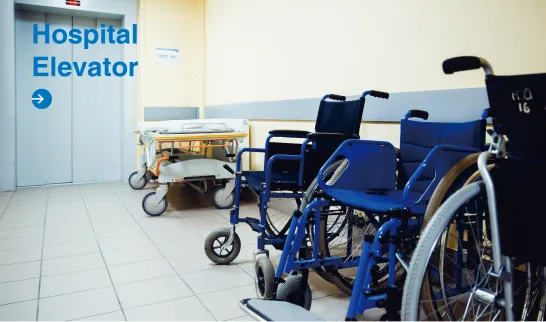
When we think about hospitals, we usually picture doctors, medical equipment, and patient rooms. But there's a silent workhorse that keeps everything moving - literally. Hospital elevators aren't just about moving people between floors; they're lifesaving infrastructure that forms the circulatory system of any medical facility. Imagine a busy ER floor during an emergency situation – that's where these specialized elevators prove their worth by enabling rapid, safe vertical movement of everything from critical care teams to mobile ICUs.
Chinese manufacturers have stepped up to meet these demanding requirements with elevators designed specifically for healthcare settings. These aren't your typical building lifts but precision-engineered systems that balance speed, safety, and reliability under pressure. The best part? China's approach blends innovative technology with cost-effectiveness, giving hospitals worldwide access to premium vertical transit solutions without bankrupting their budgets.
"For medical facilities, every second counts during emergencies. Our hospital elevators are designed to operate with the precision of surgical instruments while handling the demands of round-the-clock medical operations." - Delfar Engineering Team
Ever wonder what makes a hospital elevator different from a hotel or office elevator? It starts with dimensions. Hospital elevators feature oversized cabs to accommodate gurneys, medical equipment, and medical teams working during patient transport. While a standard passenger elevator might be designed for 10 people, hospital lifts prioritize width and clearance – sometimes sacrificing passenger capacity to ensure medical trolleys can turn around inside the cab.
Today's medical elevators understand that environment affects healing. Many Chinese manufacturers now incorporate therapeutic design elements like calming color palettes and soft indirect lighting. Some even feature specially engineered acoustic panels that absorb sounds while maintaining cleanable surfaces. For high-end installations, you'll find high-performance decorative stone accents that are both hygienic and soothing to patients. This blending of aesthetics and utility creates environments that reduce patient anxiety while meeting strict sanitation standards.
Chinese elevator manufacturers have transformed healthcare vertical transportation through three key advantages:
The Chinese supply chain ecosystem allows for unprecedented manufacturing integration. Control systems, cab components, and safety mechanisms all come from specialized regional suppliers who've perfected their niche. This modular approach gives manufacturers the flexibility to customize elevators without slowing production – essential when hospitals need replacements within strict downtime windows.
Having serviced markets from Singaporean hospitals to Swiss clinics, Chinese manufacturers have developed extraordinary adaptiveness. A Shanghai factory might produce identical elevator models with 15-20% dimensional variations to accommodate local building codes across different markets. This flexibility means that whether you're retrofitting a 1920s London hospital or equipping a new Qatar medical tower, there's a tailored solution available.
Smart technologies fundamentally change how medical elevators are maintained. IoT sensors in key components constantly feed data to central monitoring stations, predicting service needs before failures occur. Technicians arrive knowing exactly what parts to replace – no more diagnostic downtime cutting into crucial hospital operations. This predictive maintenance extends equipment lifespan while preventing 85% of unexpected downtime events in modern hospital lifts.
What sets Delfar apart is their surgical-grade approach to elevator engineering. Their Bed Elevator series features three-sided handrails and recessed control panels that don't protrude into patient space. During testing phases, they brought in actual hospital trolleys and crash teams to replicate emergency scenarios. The result? Elevators with wider doors, smoother acceleration profiles, and intuitive controls that nurses can operate without breaking their stride during patient transfers.
This joint venture excels at large-scale implementations. Their panoramic hospital elevators feature reinforced glass that withstands impact while providing orientation cues for patients. The proprietary VVVF traction system delivers butter-smooth starts and stops that prevent sudden shifts for critically injured patients. Currently installed in 37 major hospitals across Asia, their models feature modular components that hospitals can upgrade incrementally as technology evolves.
With infection control as their driving principle, Shengxun's models feature patented NanoSilver coating on all surfaces - tested to eliminate 99.7% of pathogens within 2 hours. Their isolation protocol modes create negative pressure environments for infectious disease transport while HEPA filtration systems continuously cleanse air. Especially valuable in intensive care towers, these models have shown measurable impact on reducing hospital-acquired infection rates in peer-reviewed studies.
Choosing the right hospital elevator involves balancing multiple factors:
"When selecting hospital elevators, we don't just look at load capacity. We create full simulations with actual medical teams moving crash carts to test turn-around space. This 'real world testing' prevents expensive design oversights." - Hospital Architect, Singapore General Hospital
Next-generation elevators are evolving into traffic management hubs. Using predictive algorithms that monitor hospital activity systems, they'll proactively position elevators before surge demands occur. An AI might detect multiple trauma alerts activating in the ER and stage elevators near emergency departments before being summoned.
Imagine elevators becoming extension platforms for ICU monitoring. Vital sign sensors in cabin walls could maintain continuous telemetry during transport, transmitting real-time data to receiving medical teams. Some prototypes already feature integrated displays for video consultations during transport - essentially creating mobile telemedicine stations.
Regenerative drive systems capture elevator descent energy to power hospital lighting circuits, with some facilities seeing 25-30% energy savings. Waterless sanitation technologies using UV-C sterilization eliminate chemical cleaners. These sustainability advances now figure into hospital facility green certifications, creating financial incentives beyond energy bills alone.
While China offers remarkable value, navigating manufacturing complexities requires careful strategy:
The Chinese hospital elevator sector exemplifies how specialized manufacturing creates solutions tailored to healthcare's unique demands. By combining rigorous engineering standards with patient-centered design, these factories deliver systems that truly become integral to modern medical ecosystems. As technology evolves, expect even deeper integration between elevators and healthcare delivery systems.
Recommend Products












