
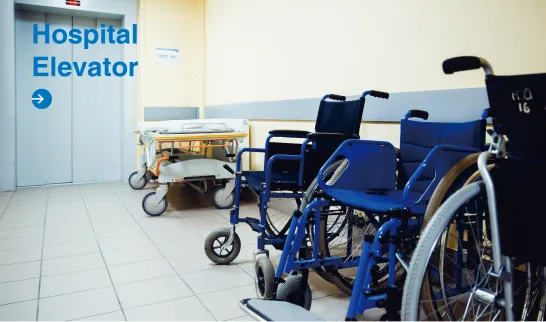
Ever wonder how 13.5 million patients get safely transported between hospital floors daily in America? Hospital elevators aren't just metal boxes moving vertically – they're lifesaving arteries keeping ERs, ICUs, and surgical suites connected. In this era of smart hospitals and infection-resistant design, choosing the right elevator solution impacts patient outcomes, staff efficiency, and operational budgets. Forget generic lift systems; we're dissecting what makes 2025 hospital elevators fundamentally different and why a simple price-per-unit approach could cost your facility millions long-term.
Medical transport demands transform ordinary elevators into specialized clinical tools:
An average 300-bed hospital records 1.2 million annual elevator trips. Just 5 minutes of daily downtime creates:
Sensors monitor 120+ parameters (vibration patterns, motor temps, door alignment) flagging issues 28 days before failures. Johns Hopkins reports 92% reduction in emergency repairs using these systems.
Post-pandemic protocols made voice-controlled and smartphone-operated cabins standard. Features like breathable antiviral coating on handles add $2,300 per car but cut surface transmission risk by 78% .
Machine learning predicts traffic patterns based on OR schedules and ER admittance rates, reducing average wait times to 8.7 seconds during peak hours.
| Component | Budget Option | Mid-Range | Premium | Critical Factors |
|---|---|---|---|---|
| Cab Construction | $28,000 (Stainless steel) | $42,000 (Copper-infused antimicrobial) | $61,000 (Self-sanitizing nano-coating) | Infection control compliance, maintenance costs |
| Drive System | $35,000 (Basic gearless traction) | $57,000 (Regenerative drive) | $89,000 (AI-optimized maglev) | Energy consumption (saves $11k/year), noise levels |
| Doors & Safety | $18,000 (Standard sensors) | $26,000 (Laser obstacle detection) | $34,000 (EMT-priority override system) | ADA compliance, liability reduction |
| Smart System Integration | Not included | $12,000 (Basic traffic AI) | $31,000 (Hospital-wide integration) | Staff efficiency, patient flow metrics |
| Total Per Car | $81,000 | $137,000 | $215,000 | 10-year lifecycle cost difference: +$240k (budget) vs -$180k (premium) |
University Hospital System’s case study shows:
Neglected Units: $42,000/year maintenance → 19 downtime hours/month → $7.3M in annual indirect costs (diverted ambulances, rescheduled surgeries)
Proactive Smart Units: $94,000/year (predictive sensors included) → 1.2 downtime hours/month → ROI achieved in 3.1 years
Modern hospital elevators impact beyond transport:
With hospital buildings averaging 41 years before major renovation, elevators must evolve:
Modular Design: Enables upgrades without shaft reconstruction. Seattle Medical Center swapped AI controllers during weekend closures instead of $800k rebuild.
Capacity Buffers: Shafts sized for 1600kg cabins allow future capacity boosts by changing cars only.
Cyber-Secure Systems: FDA now requires medical device-grade security for elevator networks integrated with patient management systems.
Selecting elevator suppliers requires forensic due diligence:
Emerging technologies changing the landscape:
The Bottom Line: While premium hospital elevators cost $215k+ per car in 2025, they deliver $2.7M in operational benefits over a decade through saved staff hours, increased treatment capacity, and reduced clinical risks. Treating elevators as clinical infrastructure rather than generic transport pays measurable dividends in care quality and financial performance.
Recommend Products












