
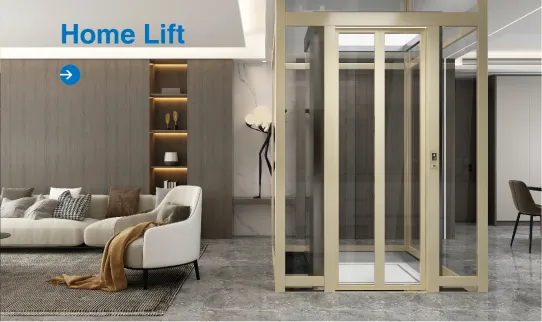
Everything you need to know before investing in a residential elevator for your home or villa project
Adding a home lift to a residential property is no longer a luxury reserved for high-end mansions. As populations age and multi-story living becomes more common, more homeowners and developers are recognizing the practical and financial value of installing a residential elevator. Whether you are planning a new villa, retrofitting an existing home, or designing a residential development, choosing the right home lift supplier is a decision that impacts safety, comfort, and property value for decades.
A well-chosen home lift improves accessibility for elderly residents and people with mobility challenges, makes daily life more convenient for everyone in the household, and can significantly increase the resale value of a property. The key is to select a solution that matches the specific needs of the building and its occupants.
When you work with a reliable elevators supplier, you will typically encounter several lift types designed for different residential settings. Understanding the differences helps you make an informed choice.
| Lift Type | Best For | Key Features |
|---|---|---|
| Home Lift | Private residences, villas | Compact design, low noise, customizable interiors |
| Freight Lift | Homes with heavy goods, service areas | High load capacity, durable construction |
| Hospital Elevator | Medical facilities, care homes | Bed-compatible, smooth operation, infection control |
| Car Lift | Residential garages, stacked parking | Vehicle capacity, space-saving parking |
Home lifts are specifically designed for private residences. They differ from commercial passenger elevators in several ways: they run at lower speeds, require less shaft space, and offer more decorative customization options to match interior design schemes. Modern home lifts come in various drive systems, each with its own advantages depending on the building structure and budget.
Selecting the right supplier is just as important as choosing the right lift model. Here are the critical factors to consider before you commit.
Safety is non-negotiable when it comes to elevators. A reputable supplier should be able to provide documentation of compliance with international safety standards. Look for evidence of quality management systems, factory inspection records, and testing certifications. A trustworthy supplier will be transparent about their manufacturing processes and safety features, including emergency stop buttons, backup power systems, door interlocks, and overload protection.
Every home is different, and a one-size-fits-all approach rarely works. A good supplier offers a range of options in terms of capacity, size, speed, drive system, and interior finishes. Whether you need a compact lift for a narrow shaft or a panoramic glass elevator as a design statement, the supplier should be able to accommodate your specific requirements. Customization can extend to cabin materials, lighting, handrails, flooring, and control panel design.
A home lift is only as good as its installation. The supplier should provide professional site assessment, detailed technical drawings, and an experienced installation team. For new construction projects, it is best to involve the lift supplier during the architectural planning phase so that the shaft dimensions, pit depth, and headroom are optimized from the start. For retrofits, the supplier should demonstrate experience working within existing structural constraints.
An elevator is a long-term investment that requires regular maintenance to ensure safety and reliability. Before you buy, ask about the supplier's maintenance program, response time for service calls, and availability of spare parts. A supplier with a strong service network and a track record of supporting their products long after installation will give you peace of mind for years to come.
Working with a one-stop architectural solution provider rather than sourcing each building element separately offers significant advantages, especially for residential projects that involve multiple systems.
When you source your home lift alongside other building materials from a single supplier, you simplify project management, reduce coordination costs, and ensure that all components arrive on schedule.
For a complete residential build or renovation, a one-stop provider can supply not only elevators but also walls, flooring, sanitary fixtures, customized furniture, doors, windows, lighting, and more. This integrated approach means you deal with one point of contact, one quality standard, and one delivery schedule. It also simplifies after-sales support because you know exactly who to call if anything needs attention.
Many first-time buyers make predictable mistakes when selecting a home lift. Awareness of these pitfalls can help you avoid costly regrets.
Before making a final decision, make sure you get clear answers to these questions:
Ready to explore home lift options for your project?
COLORIA GROUP offers a comprehensive range of residential and commercial elevators, along with a full catalog of building materials for complete project solutions. Based in Foshan, China, with an established agent in Saudi Arabia and a global client base, the company brings decades of industry experience to every project.
Visit their website to learn more about home lift solutions and discuss your specific requirements with their expert team.
Recommend Products












