
The Ultimate Guide to Making Smart Piping System Decisions
Picture walking through a modern industrial facility. What catches your eye first? For many professionals, it's the intricate network of piping systems snaking through the space—especially those crystalline PVC pipelines where you can actually see fluids flowing like liquid light. This isn't just about aesthetics; it's the evolution of functional design meeting practical needs.
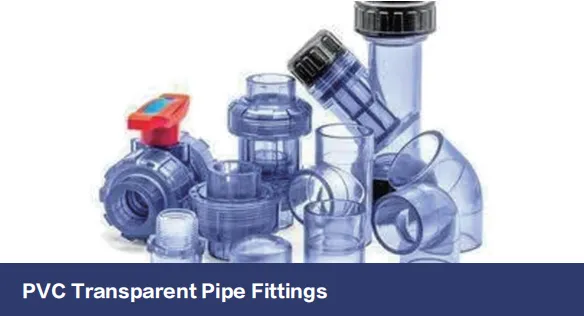
Transparent PVC pipe fittings have quietly revolutionized how we monitor, maintain, and manage fluid systems. But knowing when to invest in higher-grade transparent PVC—beyond the basic specs—can save you thousands in operational headaches. After all, what good is seeing your fluid flow if the pipes can't withstand what's flowing through them?
The critical insight? Clarity alone doesn't cut it when dealing with high-pressure chemicals or extreme temperatures. That's where high-performance variants enter the equation.
Basic clear PVC pipes give you visual access—a huge upgrade from traditional opaque systems. You can spot contamination, verify flow direction, and identify bubbles or blockages. But here's where standard solutions fall short:
A craft brewery installed standard transparent PVC for their wort transfer lines. They loved watching the amber liquid flow—until cleaning day. When they pumped 180°F caustic cleaner through the system, pipes became cloudy and brittle. Within months, hairline fractures developed at joints. The takeaway? Visual access means nothing if materials can't handle operational demands.
This is precisely why premium-grade transparent PVC like Clear-Guard™ High Pressure systems exist. They marry crucial engineering specs with visibility:
How do you know your current system isn't cutting it? Watch for these red flags:
Notice white blush marks near fittings? That's stress whitening —where polymer chains stretch under pressure. Like a warning light on your car's dashboard, it signals your pipes are operating beyond their happy zone.
When your pristine pipes start looking like frosted glass, chemical interactions or plasticizer migration is degrading the material. This cloudiness isn't just visual pollution—it precedes brittleness and cracks.
How often do operators jump back when touching pipes? If surface temperatures require gloves for routine contact, basic PVC may not handle thermal loads long-term.
Lab Safety Near-Miss: A pharmaceutical plant used standard transparent PVC for solvent transfers. Technicians noticed minor swelling at joints but continued operations. During a shutdown, a joint failed and sprayed acetone across equipment. The upgrade to chemical-resistant CPVC transparent fittings eliminated this risk.
When FDA auditors scrutinize your CIP (Clean-in-Place) systems, standard PVC won't suffice. Upgrade when:
Basic transparent PVC becomes dangerous when:
The chlorine content in municipal water varies wildly. Upgrade if:
Tomorrow's piping systems won't just allow visual checks—they'll automate diagnostics. We're already seeing these integrations:
The future of piping isn't just clear—it's perceptive. But without investing in the proper foundation of high-specification materials, these advanced systems will never reach their potential. Like building a sports car on bicycle tires, the most sophisticated monitoring won't compensate for material shortcomings.
Still debating whether to upgrade? Ask these critical questions:
If a $3,000 pipe upgrade prevents $30,000/hour of production loss, payback comes quickly. Calculate failure economics before deciding.
Opaque joints and valves defeat transparency's purpose. Map every component where flow visibility matters—partial clarity delivers partial value.
A treatment facility upgraded only their anaerobic digestor sight glasses to high-clarity CPVC. Result? Operators spotted grit accumulation early, preventing a $92,000 pump failure. The $7,500 investment paid for itself in 5 weeks.
After repeated failures with standard PVC during their 190°F caustic washes, a Seattle brewery installed Clear-Guard™ Schedule 80 transparent fittings. Six months in:
A vaccine manufacturer struggled with particulate validation in their WFI (Water for Injection) system. By implementing visual flow pipeline fittings at critical sampling points:
Manufacturer brochures overwhelm with technical data. Focus on these practical factors:
Paradoxically, high-visibility systems reveal more than fluid flow—they expose maintenance gaps and design flaws. Facilities using transparent PVC report:
One chemical plant quantified savings after upgrading their reactor feed lines:
| Metric | Before Upgrade | After High-Spec PVC |
|---|---|---|
| Unplanned Reactor Stops | 14/month | 3/month |
| Catalyst Waste | $18,000/month | $6,500/month |
| Maintenance Labor | 120 hours/week | 75 hours/week |
| Material Costs | $42,000/year | $63,000/year |
Note: Higher material costs yielded 11-month ROI via operational savings
Investing in high-spec transparent PVC isn't about buying expensive pipes—it's purchasing certainty . Certainty you'll detect problems early. Certainty materials withstand process extremes. Certainty regulators won't flag visibility gaps.
The most successful installations combine three elements: engineering-appropriate materials, full-system visibility, and trained operators leveraging what transparency reveals. Omit any piece, and you'll only see half the picture.
As technologies evolve—from AR-assisted maintenance to AI flow analysis—premium transparent PVC positions facilities for future innovation. Because in industrial systems, seeing truly is believing... and preventing.
Recommend Products












