
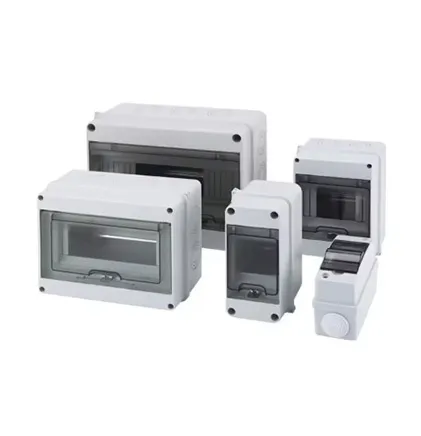
Imagine a commercial building in Riyadh, where the air conditioning hums nonstop to battle the 45°C heat outside. Inside, doctors rush between patients, teachers lead classes, and office workers crunch deadlines—all relying on a steady flow of electricity. But what if that flow suddenly stops? More often than not, the culprit isn't a power outage, but a small, unassuming metal box tucked away in a utility room: the distribution box. This unglamorous yet critical component acts as the "traffic controller" of a building's electrical system, directing power to lights, appliances, and life-saving equipment. In extreme environments, its reliability isn't just a matter of convenience—it's a matter of safety, efficiency, and trust.
For decades, Coloría has stood as a trusted Saudi Arabia building materials supplier , deeply rooted in the Middle East's unique challenges and opportunities. As a one-stop architectural solution provider , we don't just sell building materials—we craft solutions that thrive where others falter. Our distribution boxes, part of our comprehensive engineering equipment lineup, are born from a simple belief: in regions like Saudi Arabia, "good enough" is never enough. Let's dive into how we design, test, and deliver distribution boxes that laugh in the face of extreme conditions.
Walk into any hardware store, and you'll find distribution boxes labeled "industrial-grade" or "weatherproof." But in places like the Arabian Peninsula, these labels often ring hollow. Here's why:
1. The Scorching Furnace of High Temperatures
In Saudi Arabia, summer days aren't just hot—they're relentless. Temperatures regularly climb above 50°C, and direct sunlight can bake metal surfaces to 70°C or more. Ordinary plastic components in distribution boxes warp like melted chocolate, while electrical contacts weaken, leading to arcing (sparks) and short circuits. A study by the Saudi Electricity Company found that 35% of electrical failures in commercial buildings trace back to heat-stressed distribution boxes.
2. The Silent Abrasive: Sand and Dust
When a (sandstorm) hits, it's not just a dramatic weather event—it's a mechanical assault. Fine sand particles, carried by winds up to 60 km/h, seep into tiny gaps in distribution boxes, grinding against internal components like sandpaper. Over time, this wears down insulation, clogs cooling vents, and creates electrical resistance. In Jeddah, a coastal city prone to "shamal" winds, maintenance teams report spending 20% of their time just cleaning dust out of electrical enclosures.
3. The Stealthy Corrosive: Humidity and Salt
While the Middle East is known for aridity, coastal areas like Dammam or Yanbu face a different threat: salt-laden humidity. Sea spray drifts inland, coating metal parts with a invisible layer of salt that accelerates rust and corrosion. Even inland, sudden winter rains (yes, Saudi Arabia gets rain!) create condensation inside boxes, leading to mold growth and electrical leakage. One hospital in Riyadh once had to replace an entire wing's distribution system after just 3 years—all because of hidden corrosion.
4. The Unseen Pressure: Fire Safety
In crowded spaces like schools or hospitals, fire resistance isn't optional—it's a lifeline. Ordinary distribution boxes, made with low-grade plastics or untreated metals, can melt or ignite in a fire, turning a small incident into a catastrophic electrical failure. This is where
fire-resistant building materials
aren't just a selling point; they're a moral obligation.
At Coloría, we don't design for average conditions—we design for the worst-case scenario. Our approach blends decades of Middle East market experience, cutting-edge materials science, and a relentless focus on real-world performance. Here's how we do it:
1. Materials That Defy Physics (Almost)
Forget flimsy plastic or generic steel. Our distribution boxes start with a core of Class A fireproof CPL inorganic board—a material so tough, it's used in hospitals and schools across Saudi Arabia. This board resists temperatures up to 1200°C, ensuring even in a fire, the box maintains structural integrity. For the outer casing, we use marine-grade aluminum alloy treated with a special anti-corrosion coating, inspired by shipbuilding technology, to repel salt and sand.
But we didn't stop there. The gaskets sealing the box? They're made from silicone rubber rated for -40°C to 200°C—so whether it's a cold desert night or a scorching afternoon, they stay flexible, keeping dust and moisture out. Even the screws are stainless steel with anti-seize coating, because we've seen too many maintenance crews struggle with rusted bolts in the field.
2. Testing That's More Extreme Than the Desert Itself
Talk is cheap. To prove our distribution boxes can handle Saudi Arabia's worst, we put them through a battery of tests that make industry standards look tame. Here's a snapshot of our "torture chamber" results:
| Test Condition | Industry Standard | Coloría's Performance | Difference |
|---|---|---|---|
| Continuous High Temperature | 40°C for 1000 hours | 55°C for 2000 hours | 15°C hotter, twice as long |
| Sand & Dust Ingress | IP54 (limited dust protection) | IP66 (dust-tight, water jet-resistant) | No visible dust inside after 500 hours of sandblasting |
| Salt Spray Corrosion | 500 hours (mild corrosion allowed) | 1000 hours (no corrosion detected) | Double the resistance to coastal salt |
| Fire Resistance | 30-minute fire rating | 2-hour fire rating | 4x longer protection for evacuation |
"We once had a client in Riyadh who was skeptical. They installed our distribution box next to a competitor's in their warehouse, then forgot about them for two years. When they checked, the competitor's box had rusted shut, and the internal wiring was frayed from dust buildup. Ours? We opened it up, and it looked like it had just come off the production line. That's the Coloría difference." — Ahmed, Coloría's Regional Sales Manager for Saudi Arabia
3. Local Expertise, Global Standards
As a
Saudi Arabia building materials supplier
with a local office in Riyadh, we don't just ship products—we listen. Our team includes engineers who've worked on projects from Mecca's high-rises to Medina's heritage sites, understanding the nuances of local building codes and climate patterns. For example, we know that in the Asir region, where humidity spikes during monsoon season, distribution boxes need extra drainage holes and moisture sensors. In the Empty Quarter, where sandstorms can last for days, we add secondary dust filters and pressure equalization valves to prevent "vacuum effect" (where wind creates suction that pulls dust into the box).
This (localization) isn't just about selling—it's about partnership. We're proud to align with Saudi Arabia's Vision 2030, which emphasizes sustainable development and local manufacturing. By training Saudi engineers and sourcing materials locally where possible, we're not just building better distribution boxes—we're building a stronger, more resilient community.
A distribution box doesn't exist in isolation. It's part of a larger ecosystem of electrical systems, from cables to circuit breakers to lighting. As a one-stop architectural solution provider , we understand this interconnectedness better than anyone. When you work with Coloría, you're not just getting a distribution box—you're getting a team that can design, supply, and integrate every piece of your electrical puzzle.
Take, for example, a recent project: a 10-story hospital in Jeddah. The client needed distribution boxes, but they also needed fire-resistant wiring, energy-efficient LED lighting, and backup generators. Instead of coordinating with five different suppliers (and dealing with mismatched specs and delayed deliveries), they turned to us. Our team designed a system where the distribution box "talks" to the lighting controls, automatically reducing power usage during peak hours. The result? A 15% lower electricity bill and a system that's easier to maintain—all from a single partner.
This integration is especially critical for sustainable building solutions . As the world moves toward "net-zero" goals, buildings need to be more than just energy users—they need to be energy managers. Our distribution boxes, paired with solar panels (another of our core products), can store excess solar energy during the day and release it at night, reducing reliance on the grid. In Riyadh's King Abdullah Economic City, one of our commercial clients cut their carbon footprint by 22% using this exact setup.
Numbers and tests are impressive, but nothing speaks louder than real results. Here are two stories that make us proud:
The Desert Warehouse That Never Skipped a Beat
A logistics company in Al Khobar runs a massive warehouse storing pharmaceuticals—products that need strict temperature control. In 2023, a record-breaking heatwave hit, with temperatures hitting 52°C for three straight weeks. Their old distribution box, from a European supplier, failed twice, costing them $100,000 in spoiled vaccines. They switched to Coloría's IP66-rated boxes, and since then? Not a single outage. "We used to have a technician check the box daily," said the warehouse manager. "Now, we check it once a month. It's like having a silent bodyguard for our electricity."
The Coastal Hotel That Laughed at Salt
A luxury resort in Yanbu, right on the Red Sea, was struggling with corrosion. Their original distribution boxes, installed just two years prior, had rusted so badly that the doors wouldn't close. Coloría replaced them with our marine-grade aluminum boxes, and five years later, they still look new. "We get salt spray here almost daily," the resort engineer told us. "These boxes? They just don't care. It's like they're wearing a suit of armor."
The building industry is evolving, and so are we. As Saudi Arabia pushes toward Vision 2030, and the world embraces sustainable building solutions , distribution boxes will play an even bigger role. Here's what we're working on next:
Smart Monitoring : Imagine a distribution box that texts your maintenance team before it fails. Our next-gen boxes will include sensors that track temperature, humidity, and electrical load in real time, sending alerts via app if something seems off. No more "surprise" outages—just proactive care.
Circular Design : We're exploring ways to make our boxes 100% recyclable, using recycled aluminum and biodegradable insulation. Because sustainability shouldn't end when a building is torn down.
AI Integration : Pairing distribution boxes with artificial intelligence to predict power needs. For example, in a school, the system could automatically boost power to classrooms during exam week and reduce it during holidays—saving energy without sacrificing performance.
At the end of the day, choosing a distribution box manufacturer is about trust. Can they deliver when the heat is on? Will they stand by their product when sandstorms rage? For us, trust is built not just on quality, but on partnership. We're not here to sell you a box and disappear. We're here to grow with you, to solve your problems before they arise, and to prove—every single day—that we're worthy of being your Saudi Arabia building materials supplier .
So, whether you're building a hospital in Riyadh, a hotel in Jeddah, or a school in Dammam, remember: the right distribution box isn't just a component. It's the quiet promise that, no matter what the environment throws at you, your building will keep running. And at Coloría, we take that promise seriously.
Ready to build something that lasts? Let's talk. Your extreme environment deserves nothing less than extreme reliability.
Recommend Products












