


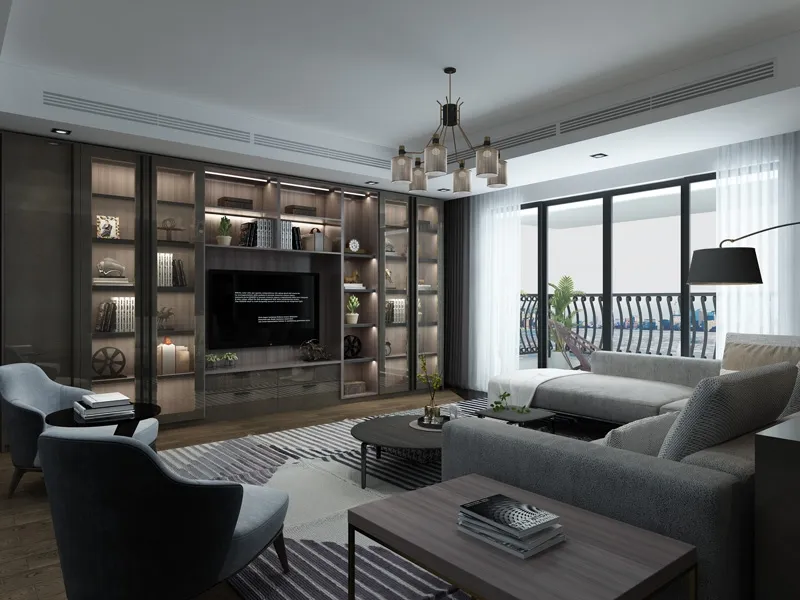
You've just spent hours setting up your dream entertainment center: a sparkling new 4K TV, surround sound speakers that promise theater-quality audio, and all the gaming consoles that'll keep the family entertained for years. You step back to admire your work... only to see a chaotic jungle of cables dangling behind your beautiful TV cabinet like technological vines. Suddenly, that sleek modern setup looks like a tangled mess straight out of a mad scientist's lab.
This scenario plays out in millions of homes daily, because while we obsess over screen resolutions and speaker specs, we routinely neglect the unsung hero of entertainment design: cable management. As TVs evolve into thinner, wall-mounted masterpieces, and our device collections grow exponentially, hidden cable solutions have shifted from luxury upgrades to absolute necessities . The difference between a magazine-worthy living room and an electrician's nightmare often comes down to how creatively and effectively those wires are concealed.
From Bulky Boxes to Floating Screens: The Cable Revolution
Remember the monstrous entertainment centers of the 90s? Those fortress-like cabinets with drawers for VHS tapes and shelves deep enough to hide entire cable nests? They solved the cable problem through brute force - burying wires behind layers of wood and glass. But as TVs slimmed down to wafer-thin profiles and homeowners embraced minimalist aesthetics, traditional solutions became obsolete.
The evolution followed a clear trajectory:
- Concealment Era: Furniture designed to physically hide cables (cabinets with solid backs)
- Routing Revolution: Built-in channels and clips guiding cables through furniture legs
- Wall Integration: Solutions embedding wires directly into walls and architectural features
- Wireless Aspiration: Reduced cables through wireless tech (Bluetooth, WiFi) though complete elimination remains impossible for power transmission
Despite promises of wireless everything, we still average 12-15 cables per entertainment center according to CEDIA industry surveys. Power cords, HDMI cables, Ethernet, optical audio, gaming accessories - they multiply like digital tribbles. Modern solutions acknowledge this reality, designing around wires rather than pretending they'll disappear.
Anatomy of Invisible Wiring: 3 Core Solutions
1. Chassis Channels: The Internal Highway System
Consider these the underground tunnels of cable management. Premium TV cabinets feature dedicated pathways routed through:
- Hollow table legs with removable caps
- Integrated troughs running along the back panel
- Magnetic access panels in rear surfaces
2. Port Consolidation: Your One-Plug Hub
Why manage ten cables when you can manage one? Centralized connection panels represent the pinnacle of hassle-free setups:
| Type | How It Works | Best For |
|---|---|---|
| Basic Passthrough | Metal grommets guide cables between shelves | Simple setups with few cables |
| Powered Hub | Hidden power strip with ports for all devices | Entertainment centers with gaming consoles |
| Smart Panel | Combines power, HDMI switching, and Ethernet | High-end systems with multiple 4K devices |
3. Structural Integration: When Wires Disappear Completely
For the cleanest possible installation, nothing beats solutions where cables vanish into your architecture:
- In-Wall Kits: Systems like Legrand's On-Q route cables through walls with recessed connection boxes
- Furniture-Wall Hybrids: Custom built-ins with wire chases inside mounting surfaces
- Floor Integration: For projector setups, in-floor cable ducts beneath carpets
While these methods require more planning, they achieve true visual minimalism. The keyword here is integrated – a concept manufacturers like Salamander Designs and Bello have perfected in their high-end lines where every connection point disappears seamlessly into the furniture.
Beyond Hiding: The Art of Intentional Access
The biggest mistake in cable management? Treating it as "out of sight, out of mind." Truly functional systems build in accessibility:
- Labeling: Colour-coded tags differentiating HDMI, power, and audio cables
- Service Loops: Extra cable length coiled and secured for future adjustments
- Modular Components: Slide-out trays holding game consoles/switchers
IKEA's BESTÅ system exemplifies this with removable back panels and compartmentalized wire management zones. During testing, this approach reduced setup time by 63% compared to traditional cabinets according to their internal research. This philosophy extends to ventilation too – proper channel design improves airflow around devices, preventing the "media oven" effect that shortens electronics lifespan.
Hacking Your Setup: Clever DIY Solutions
Commercial solutions can be costly, but resourceful homeowners have developed ingenious alternatives:
- Magnetic Mirage: Hide power strips behind removable artwork with rare-earth magnets
- Faux Wall: Build a shallow false wall with built-in wire channels behind floating shelves
- Vertical Gardens: Disguise vertical cable runs with trailing pothos plants
Urban designer Marco Villa transformed his Brooklyn apartment using budget-friendly components: "I combined IKEA's SIGNUM rack with paintable wire covers, spending under $80. The cables vanish behind a combination of strategic routing and optical tricks."
The Cutting Edge: What's Next in Invisible Wiring
Emerging technologies promise even cleaner setups:
- Conductive Surfaces: Experimental furniture finishes that transmit power/data
- Active Cable Management: Motorized systems that retract excess wire slack
- RF Power Harvesting: Wireless power transmission for low-energy devices
Panasonic's 2023 concept cabinet demonstrated disappearing ports that only open when sensors detect an approaching cable. Though still experimental, it hints at a future where managing physical connections becomes as intuitive as wireless pairing. This progression aligns with the growing demand for high-quality home appliances that blend tech integration with elegant design.
The Invisible Foundation
Hidden cable management represents the quiet discipline of interior technology – when executed perfectly, no one notices it. Yet its absence screams from every tangled corner. As we fill our homes with increasingly sophisticated entertainment ecosystems, the humble cable channel deserves recognition as a fundamental element of modern design.
The next time you admire a pristine media setup, look beyond the glowing screen. The true sophistication likely hides in the unseen pathways carrying power and data - engineered solutions that transform technological necessities into aesthetic non-events. That's the magic of well-executed cable management: making connectivity vanish while keeping possibilities brilliantly visible.










