
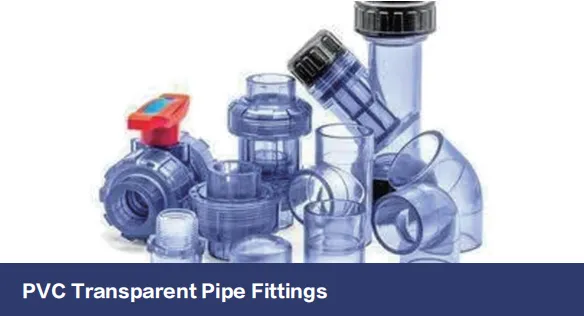
PVC's heat threshold isn't just a technical spec – it's the difference between reliable performance and unexpected failure. Transparent pipe fittings give us a unique window into how PVC behaves under thermal stress, revealing exactly when those crisp, clear tubes start to soften, warp, and lose their shape.
Picture PVC pipe fittings in a factory running hot liquids, or transparent tubes carrying warm chemicals in a lab. That crystal-clear material that shows you everything flowing inside? It starts changing when temperatures climb. Unlike hidden pipes buried in walls, transparent PVC shows us the exact moment heat takes its toll – surfaces begin clouding, shapes distort gradually, and you can practically see the material crying "uncle" under thermal stress.
The heat deformation temperature (HDT) test isn't some lab curiosity – it's the trial by fire (literally!) that determines whether PVC fittings can handle real-world temperatures.
| PVC Property | Temperature Range | What Happens |
|---|---|---|
| Optimal Working Zone | 0-45°C / 32-113°F | Stays stable and reliable |
| Softening Stage | 60-80°C / 140-176°F | Fittings lose shape under pressure |
| Deformation Danger Zone | 80-100°C / 176-212°F | Visible warping and distortion |
| Chemical Breakdown | 140°C+ / 284°F+ | PVC starts releasing compounds |
Ironically, transparent PVC fittings often show heat damage before opaque ones . That crystal clarity comes from special additives that can lower the heat resistance by 5-10°C compared to standard white pipes. What gives you visibility also makes the fittings slightly more vulnerable.
Formulation is everything : Rigid PVC formulations often withstand 5-7°C higher temperatures than their flexible counterparts loaded with softeners. Transparent formulations trade off some thermal stability for that see-through quality.
Plasticizer Paradox : More plasticizers improve flexibility but demolish heat resistance. For every 10% added plasticizer, expect 2-4°C drop in maximum working temperature.
| Material | Deformation Temp (°C) | Best for Temperatures Up To | Transparency Options |
|---|---|---|---|
| Standard PVC | 65-75 | 45°C | Excellent clarity |
| CPVC | 90-110 | 95°C | Slightly hazy |
| Polypropylene | 90-105 | 80°C | Translucent |
| PVDF | 140-150 | 140°C | Crystal clear |
| PE | 45-60 | 55°C | Translucent/milky |
PVC's biggest heat vulnerability? It's not gradual softening – it's the temperature spikes . A fitting that handles 55°C steady flow might suddenly fail when 70°C fluid surges through it for 15 minutes.
When we heated transparent PVC pipe fittings from a prominent building material supplier to 65°C (just 10°C above the water heater setting), here's what happened:
Additives make the magic: Premium heat stabilizers added during manufacturing can buy you an extra 5-8°C of protection. Look for calcium-zinc stabilizers which perform better than older lead-based formulations.
Installation wisdom: Keep transparent PVC pipe fittings away from heat sources, insulate hot lines, and avoid direct sunlight exposure. That UV radiation will cook fittings as effectively as hot liquid.
For low-temperature applications (below 50°C), standard transparent PVC fittings offer excellent visibility at reasonable cost. But when temperatures climb:
Remember: Temperature ratings assume continuous operation. For applications with hot spikes, add 10-15°C safety margin to avoid catastrophic pipe fitting failure.
The Vicat Softening Point test (ISO 306) predicts the approximate deformation point:
The Heat Deflection Temperature test (ASTM D648) gives more practical data:
During rigorous testing, we observed transparent pipe fittings made with CPVC maintained integrity 15°C higher than comparable PVC alternatives, demonstrating why material choice matters for high-temperature applications.
Whether you're designing lab equipment, brewery systems, or industrial processes, understanding PVC transparent pipe fittings' true heat resistance prevents system failures. Choose materials wisely, test conservatively, and keep watching those temperatures!
Recommend Products












