
Walk into any industrial facility, wastewater treatment plant, or coastal manufacturing site, and you'll likely find an invisible battle raging—one that costs businesses billions annually and threatens safety, efficiency, and profitability. It's the battle against corrosion. From the pungent fumes of chemical processing plants to the salt-laden air of coastal refineries, corrosive environments eat away at infrastructure, turning sturdy metal valves into brittle, leak-prone liabilities. For decades, facility managers and engineers have grappled with this problem, often resorting to frequent replacements, costly maintenance, and crossed fingers. But what if there was a solution that could stand up to these harsh conditions without breaking the bank or sacrificing performance? Enter plastic valve systems—and the specialist suppliers who make them work.
Corrosion isn't just about unsightly rust stains. In industrial settings, it's a silent saboteur. Imagine a mid-sized chemical plant in Louisiana, where metal valves controlling sulfuric acid flow start to degrade after just 18 months. Each replacement requires shutting down a production line, costing $15,000 in lost output per day. Multiply that by four valve replacements a year, and suddenly corrosion is eating up $60,000 in downtime alone—not to mention the $8,000 in parts and labor for each swap. "We were stuck in a cycle," says Mark, a plant engineer with 15 years of experience. "Every time we thought we'd solved it with a 'more durable' metal alloy, the chemicals would find a way to eat through. It was exhausting."
Coastal areas face a different villain: saltwater. In a wastewater treatment plant near Miami, stainless steel valves intended to resist corrosion began pitting within two years, leading to leaks that contaminated surrounding soil. "Stainless steel was supposed to be the answer," recalls Elena, the facility's operations manager. "But the salt air and hydrogen sulfide in the water proved too much. We were spending $30,000 a year on valve repairs, and the environmental risk of leaks kept me up at night."
These stories aren't outliers. According to the National Association of Corrosion Engineers (NACE), the global cost of corrosion exceeds $2.5 trillion annually—equivalent to 3.4% of the world's GDP. For many businesses, this isn't just a line item on a budget; it's a threat to viability. So why do traditional materials like iron, steel, and even stainless steel fail so spectacularly in these environments?
Metals, by their nature, are reactive. When exposed to corrosive elements—acids, bases, salt, moisture, or even certain gases—they undergo chemical reactions that break down their structure. Iron-based metals rust when oxygen and water react to form iron oxide, a flaky substance that weakens the material. Stainless steel, while more resistant, relies on a chromium oxide layer to protect it. In highly acidic or chloride-rich environments, that layer dissolves, leaving the steel vulnerable. Brass and copper fare better in some scenarios but corrode quickly in ammonia or sulfuric acid environments.
The result? Valves that stick, leak, or fail entirely. A stuck valve in a chemical plant can cause pressure buildup, leading to explosions. A leak in a water treatment facility can contaminate drinking water sources. And even minor corrosion can disrupt flow control, reducing efficiency and increasing energy costs. For engineers like Mark and Elena, the message was clear: relying on metal in corrosive environments was a losing game.
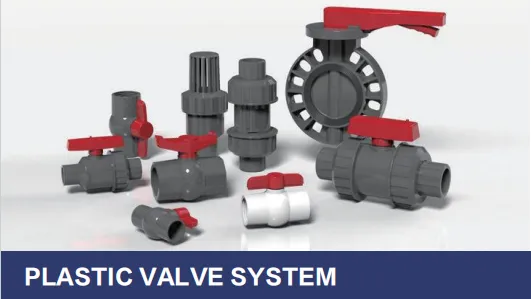
Enter plastic valve systems—engineered to thrive where metal fears to tread. Made from materials like PVC (polyvinyl chloride), CPVC (chlorinated polyvinyl chloride), PPR (polypropylene random copolymer), and PVDF (polyvinylidene fluoride), these valves are non-reactive, meaning they don't corrode, rust, or degrade when exposed to most chemicals, saltwater, or harsh weather. But they're more than just "plastic"—they're precision-engineered solutions designed to meet the rigorous demands of industrial, commercial, and municipal applications.
Take PVC valves, for example. Lightweight yet durable, they're resistant to acids, alkalis, and salt, making them ideal for wastewater treatment, swimming pool systems, and chemical processing. CPVC valves, with their higher temperature tolerance (up to 200°F), work in hot water systems and industrial processes where heat and chemicals collide. PVDF valves, though pricier, handle extreme chemicals like sulfuric acid and chlorine, making them a staple in pharmaceutical and semiconductor manufacturing. And PPR valves? They're the go-to for plumbing systems in residential and commercial buildings, offering flexibility and resistance to scaling.
But what truly sets these systems apart is their longevity. In non-corrosive environments, plastic valves can last 20–30 years; in corrosive ones, they often outlive metal counterparts by 5–10 times. For Elena's Miami wastewater plant, switching to PVC valves meant replacing a $30,000 annual repair bill with a one-time installation cost and minimal upkeep. "We haven't touched those valves in five years," she says. "No leaks, no sticking, no late-night emergency calls. It's been transformative."
Corrosion resistance is just the starting point. Plastic valve systems offer a host of advantages that make them a smart choice even in less harsh environments:
At first glance, plastic valves might seem cheaper than their metal counterparts, but the real savings lie in their lifecycle cost. A stainless steel valve might cost $200 upfront, but if it needs replacement every 2 years, that's $1,000 over a decade. A comparable PVC valve, costing $80, could last 15 years—saving $920 over the same period. Add in reduced maintenance (no painting, no rust removal) and lower installation costs (plastic is lighter, requiring less labor to lift and fit), and the savings stack up quickly.
Metal valves are heavy. A 4-inch stainless steel gate valve can weigh 50 pounds or more, requiring cranes or multiple workers to install. Plastic valves of the same size? Often under 10 pounds. This light weight reduces installation time, lowers labor costs, and minimizes the risk of workplace injuries. For contractors working in tight spaces—like underground utility tunnels or rooftop HVAC units—this is a game-changer.
Plastic valves have smooth inner surfaces that minimize friction, allowing fluids to flow more freely than through metal valves, which can develop rough, corroded interiors over time. This reduced friction lowers pump energy costs—a boon for facilities with large-scale fluid handling systems. A study by the Plastics Pipe Institute found that plastic piping systems (including valves) can reduce pumping energy use by up to 20% compared to metal systems in certain applications.
Whether you're handling drinking water, industrial chemicals, or wastewater, there's a plastic valve system designed for the job. Need a valve that can withstand high pressure? PVC-U SCH40 pressure piping systems are rated for up to 150 psi, making them suitable for municipal water distribution. Working with hot, chlorinated water? CPVC valves handle temperatures up to 200°F, perfect for commercial HVAC systems. And for ultra-pure applications like semiconductor manufacturing, PVDF valves ensure zero contamination.
Not all plastic valves are the same, though. Walk into a hardware store and you might find cheap, generic plastic valves that warp under heat or crack under pressure. These are fine for a home garden hose, but they won't cut it in a chemical plant or wastewater treatment facility. That's where specialist suppliers come in. A reputable plastic valve system supplier doesn't just sell parts—they deliver plastic valve system solutions tailored to the unique challenges of your environment.
So what makes a supplier "specialist"? It starts with expertise. These suppliers understand the nuances of corrosive environments, from the pH levels of industrial chemicals to the salt concentration in coastal air. They don't just hand you a catalog; they ask questions: What fluids will the valve handle? What's the temperature range? What pressure rating do you need? Then, they recommend the right material, design, and size for the job.
Quality is another hallmark. Specialist suppliers source valves from manufacturers that adhere to strict standards, like ASTM (American Society for Testing and Materials), ISO (International Organization for Standardization), and NSF (National Sanitation Foundation) for potable water applications. They conduct rigorous testing—pressure testing, chemical resistance testing, long-term durability testing—to ensure the valves perform as promised. For example, a plastic valve system supplier serving the pharmaceutical industry might only offer PVDF valves certified to USP Class VI, ensuring they won't leach harmful substances into sensitive products.
Technical support is equally critical. Installing a plastic valve system isn't as simple as swapping out a metal valve. Factors like proper jointing (solvent cement, fusion welding, or mechanical connections), alignment, and compatibility with existing piping systems matter. Specialist suppliers provide on-site support, training for installation teams, and troubleshooting help if issues arise. "When we first switched to plastic valves, I was nervous about installation," admits Mark, the Louisiana chemical plant engineer. "But our supplier sent a technician to walk our team through the process, and even checked in a month later to make sure everything was running smoothly. That level of support made all the difference."
To understand the impact of working with a specialist plastic valve system supplier, consider the case of a coastal refinery in Texas. For years, the refinery struggled with corrosion in its seawater cooling system, which used metal valves to circulate saltwater through heat exchangers. The saltwater, combined with hydrogen sulfide from the refining process, corroded the valves so quickly that they needed replacement every 18 months. Each replacement required shutting down a cooling loop, reducing production capacity and costing $25,000 per shutdown.
Frustrated, the refinery's maintenance manager reached out to a plastic valve system supplier specializing in industrial applications. After analyzing the environment—high salinity, moderate temperatures (80–100°F), and low pressure—the supplier recommended PVC-U SCH40 ball valves with EPDM seals. These valves were corrosion-resistant, lightweight, and rated for the refinery's pressure and temperature needs.
The installation took two days (instead of the usual five for metal valves), and the refinery avoided a full shutdown by using a bypass system. Five years later, the valves are still in operation, with no signs of corrosion or leaks. The refinery has saved over $300,000 in replacement costs and downtime—and the maintenance team has shifted its focus from reactive repairs to proactive improvements.
| Factor | Traditional Metal Valves (Steel/Stainless Steel) | Plastic Valve Systems (PVC/CPVC/PVDF) |
|---|---|---|
| Corrosion Resistance | Prone to rust, pitting, and degradation in acids, saltwater, and chemicals | Non-reactive; resists acids, alkalis, saltwater, and most industrial chemicals |
| Lifespan in Corrosive Environments | 1–5 years (depending on severity) | 10–30 years (often longer with proper installation) |
| Installation Cost | Higher (heavy, requires specialized tools/labor) | Lower (lightweight, easy to install with standard tools) |
| Maintenance Requirements | Frequent (painting, lubrication, repairs) | Minimal (no painting, self-lubricating seals) |
| Flow Efficiency | Decreases over time (corrosion creates rough inner surfaces) | Consistent (smooth inner surfaces, no corrosion buildup) |
| Cost Over 10 Years | Higher (replacement, maintenance, downtime) | Lower (one-time installation, minimal upkeep) |
| Safety Risks | Higher (leaks, failures, contamination risks) | Lower (durable, non-toxic, leak-resistant) |
Choosing the right supplier is as important as choosing the right valve. Here are key questions to ask when evaluating potential partners:
A supplier that focuses on municipal water systems might not understand the unique needs of a chemical plant. Look for suppliers with experience in your sector—whether it's oil and gas, food processing, or wastewater treatment.
Off-the-shelf valves work for standard applications, but corrosive environments often require custom designs. Does the supplier offer modified port sizes, specialized seals, or unique connection types? Can they engineer a system that integrates with your existing piping?
For potable water systems, look for NSF/ANSI 61 certification. For industrial applications, check for ASTM or ISO compliance. A reputable supplier will readily share test reports and certification documents.
Installation guidance, material selection advice, and post-installation troubleshooting are critical. Avoid suppliers that sell you a valve and disappear—look for those that provide ongoing support.
The future of plastic valve systems is bright, with innovations that promise even better performance and sustainability. One trend is the development of "smart" valves, equipped with sensors that monitor flow, pressure, and temperature in real time. These valves can alert operators to potential issues (like a stuck actuator) before they lead to failures, reducing downtime and improving safety. Specialist suppliers are already integrating these smart technologies into their product lines, offering turnkey solutions for IoT-enabled facilities.
Another trend is sustainability. As businesses focus on reducing their environmental footprint, suppliers are developing valves made from recycled plastics and biodegradable materials (for non-critical applications). Some are also designing systems that require less energy to manufacture and transport, thanks to their lightweight nature.
Finally, material science is advancing, with new polymers that offer higher temperature resistance, better impact strength, and improved chemical compatibility. For example, new grades of PVDF can now handle temperatures up to 300°F, expanding their use in high-heat industrial processes.
Corrosive environments will always be a challenge, but they don't have to be a financial drain or a safety risk. Plastic valve systems, when sourced from specialist suppliers, offer a durable, cost-effective, and reliable solution that stands up to the harshest conditions. They're not just a replacement for metal—they're an upgrade, delivering longer lifespans, lower maintenance, and peace of mind.
For facility managers, engineers, and business owners, the message is clear: It's time to stop fighting corrosion and start working with it. By partnering with a plastic valve system supplier that understands your needs, you can transform your operations from reactive to proactive, reduce costs, and focus on what really matters—growing your business. After all, in the battle against corrosion, the best offense is a good defense—and plastic valve systems are leading the charge.
Recommend Products












