
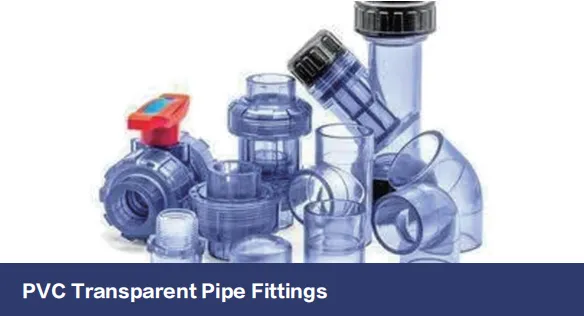
Hey there! If you're working on projects where safety isn't just a checkbox but a matter of life and death – like chemical labs, hospitals, or confined public spaces – this guide is for you. Today we're diving deep into why clear PVC pipe fittings need to be halogen-free, and how to choose the right ones without getting lost in technical jargon. Think of it like choosing a car: safety ratings matter more than shiny features when you're driving through hazardous conditions.
Picture this: A small electrical fire starts in an equipment room. With traditional PVC pipes, that smoke filling the hallway isn't just smoke – it's a toxic cocktail of hydrochloric acid, chlorine gas, and other nasty chemicals. Halogen-free materials, on the other hand, act like a good neighbor: even in bad situations, they won't release harmful toxins that turn a manageable emergency into a catastrophe.
Halogens (fluorine, chlorine, bromine) turn dangerous when heated. Like a bad relationship, they become volatile and release:
This matters most in places with vulnerable populations – schools, hospitals, subways – where evacuation takes time.
I know, standards documents can be drier than desert sand. Let's break down what actually matters:
This is your foundational standard covering conduit systems. For transparent halogen-free fittings, focus on:
| Property | Standard Test | What Matters for Transparent Fittings |
|---|---|---|
| Fire Resistance | IEC 60695-2-11 Glow-wire | Must not ignite & self-extinguish quickly |
| Smoke Emission | IEC 61034-2 | Low smoke density keeps exit paths visible |
| Toxic Gas Emission | IEC 60754-1 | Critical! Must have zero-halogen certification |
| Transparency Maintenance | ISO 4589-2 LOI Test | Remains clear after chemical/environmental exposure |
For lab applications or chemical plants, visual flow monitoring is crucial. But cheap clear PVC yellows over time like old newspaper. Look for:
That perfect-fitting coupling? It might melt if exposed to solvents or cleaning agents. Always:
Avoid leaks: Transparent pipes show every flaw. Ensure fittings have:
Remember: You'll be visually inspecting these. Poor installation looks unprofessional and compromises safety.
Imagine reactive chemical transfers in research labs. Here, clear piping allows visual monitoring without opening systems. Halogen-free certification prevents toxic gas formation during sterilization processes using heat.
In medical gas systems or dialysis centers, transparent pipes let technicians spot contamination or flow issues instantly. Plus, halogen-free materials protect vulnerable patients during fire incidents by minimizing toxic smoke.
| Application | Critical Needs | Special Considerations |
|---|---|---|
| Chemical Plants |
Corrosion resistance
Chemical compatibility |
Requires frequent visual checks for leaks/degradation |
| Public Transportation |
Fire safety
Low smoke emission |
Meets strict building codes for confined spaces |
| Semiconductor Manufacturing |
Ultra-clean systems
PPE compatibility |
Avoids outgassing contamination in clean rooms |
You wouldn't buy a parachute without test reports, right? Apply the same rigor:
Red flag: If a supplier avoids giving test samples or says "we comply" without showing certificates, walk away. Transparency in materials should mean transparency in their documentation too!
As regulations tighten globally, halogen-free is becoming the norm, not the exception. What seems like a premium today will be standard tomorrow. Choosing these materials:
Selecting clear PVC fittings requires looking beyond just clarity and price tags. It's about understanding how these materials will perform in your specific environment - especially when things go wrong. By prioritizing these selection criteria:
...you're not just buying components – you're building safety and reliability into your infrastructure.
Recommend Products












