
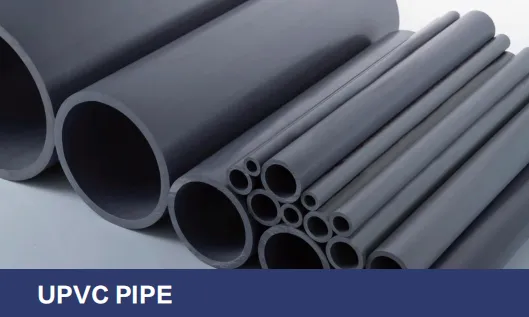
Walk onto any construction site today, and you'll likely spot a familiar sight: stacks of white or gray pipes, neatly bundled and ready to be installed. For project managers like Ali, who's overseeing a new residential complex in Riyadh, these pipes are more than just building materials—they're the silent backbone of the entire structure. "Last year, we used subpar pipes for a commercial building, and within six months, there were leaks in three units," he recalls, shaking his head. "This time, I'm not taking chances. The team and I spent weeks researching upvc pipe solutions , comparing suppliers, and testing samples. Turns out, the right choice isn't just about cost—it's about reliability, longevity, and how well the pipes fit the project's unique needs."
Ali's experience isn't uncommon. In an era where infrastructure demands are soaring, and construction timelines are tighter than ever, the role of UPVC (Unplasticized Polyvinyl Chloride) pipes has become indispensable. From carrying cold water in high-rises to channeling wastewater in hospitals, UPVC pipes have quietly revolutionized how we build, maintain, and sustain modern spaces. As we step into 2025, the global market for upvc pipe solutions is poised for unprecedented growth, driven by urbanization, sustainability goals, and a relentless focus on efficiency. Let's dive into the trends shaping this industry, the challenges it faces, and why the choice of a trusted upvc pipe supplier can make or break a project.
To understand where UPVC pipes are headed, it helps to look back at where they came from. Decades ago, construction relied heavily on metal pipes—cast iron for drainage, copper for water supply. But these materials had flaws: iron corroded, copper was expensive, and both were heavy to transport and install. Enter UPVC in the 1960s: a lightweight, corrosion-resistant alternative that could be mass-produced at a fraction of the cost. By the 1990s, it had become a staple in plumbing, and today, it's hard to imagine a construction project without it.
Fast forward to 2025, and the global UPVC pipe market is a behemoth. Valued at approximately $28 billion in 2024, it's projected to grow at a compound annual growth rate (CAGR) of 6.2% over the next five years, crossing $40 billion by 2030. This growth isn't just numbers on a spreadsheet—it's a reflection of how UPVC has adapted to changing needs. Early UPVC pipes were basic, but modern upvc pipe solutions now include reinforced variants for high-pressure systems, antimicrobial coatings for healthcare facilities, and even smart versions with built-in sensors. "We've come a long way from the one-size-fits-all pipes of the past," says Maria, a materials engineer at a leading upvc pipe supplier in Europe. "Today, if a client needs a pipe that can withstand desert heat in Saudi Arabia or freezing temperatures in Scandinavia, we can tailor a solution for that."
What's fueling this rapid growth? Let's break it down into four critical factors:
By 2050, 68% of the global population will live in urban areas, according to the UN. This means more skyscrapers, more housing complexes, and more demand for plumbing and drainage systems. UPVC pipes are the go-to here. They're lightweight, making them easier to transport to upper floors of high-rises, and their smooth inner surface reduces friction, allowing water to flow more efficiently than traditional metal pipes. In cities like Dubai, where construction never seems to slow down, upvc pipe suppliers are struggling to keep up with orders. "We used to supply 50,000 meters of UPVC pipes a month to Dubai projects," says Ahmed, a regional manager at a Saudi Arabia-based building materials supplier . "Now, it's closer to 80,000—and we're still getting calls for more."
Sustainability isn't just a buzzword anymore; it's a requirement. Governments worldwide are tightening regulations on carbon footprints, and construction companies are under pressure to choose eco-friendly materials. UPVC pipes check several boxes here. For starters, they're 100% recyclable—old pipes can be melted down and repurposed into new ones, reducing waste. They also require less energy to produce than copper or iron pipes. "We recently worked with a school in Riyadh that wanted LEED certification," says Lina, who leads sustainability initiatives at a pipes fittings supplier in the Middle East. "Their architect specified UPVC for all cold-water systems because it saved 30% on carbon emissions compared to copper. Plus, the upvc pipe solutions we offered included low-VOC (volatile organic compound) fittings, which helped them meet indoor air quality standards."
Let's talk numbers. A meter of standard UPVC pipe costs between $1.50 and $3.00, while copper pipes can run $5.00 to $10.00 per meter. Multiply that by the thousands of meters needed for a large project, and the savings add up fast. But the cost advantage doesn't stop at purchase. UPVC is easy to install: it doesn't require welding (unlike metal) or specialized tools. A team of two can install 50 meters of UPVC pipe in a day, compared to 30 meters of copper. "For our hospital project last year, switching to UPVC cut installation time by 25%," says Raj, a contractor in Mumbai. "That meant we finished the plumbing phase a week early, which saved us $15,000 in labor costs alone."
Regulations are also playing a role. Organizations like ASTM International and ISO have set strict standards for UPVC pipes, covering everything from thickness to pressure resistance. In the Middle East, for example, the Saudi Standards, Metrology, and Quality Organization (SASO) mandates that all plumbing pipes meet specific durability and safety criteria—something reputable upvc pipe suppliers prioritize. "Five years ago, you could find uncertified UPVC pipes in local markets for half the price," says Ali, the project manager from Riyadh. "Now, contractors won't touch them. SASO inspections are stricter, and clients ask for certification documents before even considering a upvc pipe solution . It's raised the bar for everyone."
The global UPVC pipe market isn't uniform—it varies dramatically by region, shaped by local infrastructure needs, economic conditions, and cultural preferences. Let's take a closer look at the hotspots:
Asia-Pacific leads the pack, accounting for 45% of the global UPVC pipe market. Countries like China and India are driving this growth, with governments investing billions in smart cities and rural infrastructure. In India, the "Housing for All" scheme alone requires over 20 million new homes by 2025, each needing plumbing systems. Here, upvc pipe solutions are favored for their affordability and resistance to the region's humid climate. "In coastal areas like Mumbai, metal pipes corrode within 10 years because of the salt air," explains Priya, an engineer at a leading upvc pipe supplier in India. "UPVC? We've had pipes in Chennai that are 25 years old and still going strong."
The Middle East is a close second, thanks to mega-projects like Saudi Arabia's Vision 2030, which includes building new cities (Neom), airports, and hospitals. In this region, upvc pipe suppliers are thriving, but they face unique challenges. "Temperatures here can hit 50°C in summer, so pipes need to withstand extreme heat without warping," says Ahmed from the Saudi building materials supplier . "We've developed specialized UPVC blends that can handle up to 60°C, which is why our upvc pipe solutions are popular for outdoor projects like parks and stadiums." The UAE and Qatar are also big markets, with the 2022 FIFA World Cup legacy driving demand for durable drainage systems (often using pvc dwv pipe solutions for wastewater management).
In Europe, the focus is on sustainability. The EU's Circular Economy Action Plan has pushed upvc pipe suppliers to develop more eco-friendly products. Many now use recycled PVC resin in their pipes, and some offer take-back programs for old pipes. Germany, in particular, is a leader in green construction, with UPVC pipes accounting for 60% of all plumbing installations in new homes. "Clients here ask about carbon footprints before prices," says Klaus, a sales director at a European pipes fittings supplier . "Our upvc pipe solutions now come with a 'green certificate' that details energy used in production and recyclability rates. It's become a key selling point."
North America is a mature market, but renovation projects are keeping upvc pipe suppliers busy. Many older homes in the US and Canada still use galvanized steel pipes, which are prone to rust. Homeowners are increasingly replacing them with UPVC for its longevity. In Latin America, infrastructure projects in Brazil and Mexico are driving demand, with governments prioritizing affordable housing and water supply systems. "In Mexico City, we're seeing a surge in pvc dwv pipe supplier orders for high-rise apartments," notes Carlos, a distributor based in Mexico City. "The city's aging drainage system can't handle the population growth, so new buildings are required to install modern, high-capacity DWV pipes. UPVC is the obvious choice here—it's cheap, easy to install, and meets the city's strict drainage codes."
The UPVC pipe industry isn't standing still. Innovations are reshaping how pipes are designed, produced, and used. Here are the trends to watch:
Imagine a pipe that can alert you to a leak before it becomes a flood. That's the promise of smart UPVC pipes, which are embedded with sensors that monitor pressure, temperature, and flow. These sensors send real-time data to a mobile app, allowing maintenance teams to spot issues early. "We installed smart UPVC pipes in a hospital in Riyadh last year," says Lina from the pipes fittings supplier . "A sensor detected a small crack in a pipe near the ICU, and we fixed it overnight—before any water damage occurred. The hospital saved over $100,000 in repairs and downtime. Clients are now asking for these upvc pipe solutions as a standard, not an add-on."
Gone are the days of one-size-fits-all pipes. Today, upvc pipe suppliers offer custom solutions, from varying diameters (as small as 16mm for residential use to 630mm for industrial projects) to specialized coatings. For example, hospitals often require antimicrobial UPVC pipes to prevent the spread of bacteria, while chemical plants need pipes resistant to corrosive fluids. "We recently worked with a food processing plant in Dubai that needed pipes that could handle high-pressure water and frequent cleaning with harsh detergents," explains Ahmed. "We developed a UPVC blend with added UV stabilizers and a smooth, non-porous inner layer that resists bacteria buildup. It took three months of testing, but the client was thrilled. Customization is where the future is."
Sustainability isn't just about the product—it's about the process. Leading upvc pipe suppliers are now using renewable energy in production (solar power, wind energy) and reducing waste by recycling excess materials during manufacturing. Some are even experimenting with bio-based additives to reduce reliance on petroleum-based PVC resin. "Our factory in Germany runs entirely on solar energy," says Klaus. "We also recycle 95% of our production waste—scraps are melted down and reused to make new pipes. Clients love this; it helps them meet their own sustainability goals."
Pipes are only as good as their fittings. A poorly designed elbow or joint can cause leaks, no matter how durable the pipe. That's why upvc pipe suppliers are now offering integrated pipes fittings solutions , ensuring that pipes and fittings are designed to work seamlessly together. "We used to source pipes from one supplier and fittings from another," says Raj, the contractor in Mumbai. "Now, we buy both from the same company. The fittings are engineered to fit the pipes perfectly, which reduces installation time and the risk of leaks. It's a small change, but it makes a big difference."
UPVC pipes aren't the only game in town. They compete with materials like PPR (Polypropylene Random Copolymer), PEX (Cross-Linked Polyethylene), and even traditional PVC DWV (Drain, Waste, Vent) pipes. How do they compare? Let's break it down:
| Material | Cost (per meter) | Durability (Years) | Max Temperature Resistance | Best For | Eco-Friendliness |
|---|---|---|---|---|---|
| UPVC | $1.50 - $3.00 | 50+ | 60°C (cold water) | Cold water supply, drainage, industrial piping | Recyclable, low carbon footprint |
| PPR | $2.00 - $4.50 | 40-50 | 95°C (hot water) | Hot & cold water systems, residential plumbing | Recyclable, higher production energy |
| PVC DWV | $1.00 - $2.50 | 40-50 | 60°C | Wastewater, venting, storm drainage | Recyclable, similar to UPVC |
| PEX | $3.00 - $6.00 | 40-50 | 95°C | Residential hot water, radiant heating | Not easily recyclable |
As the table shows, UPVC excels in cost, durability, and eco-friendliness for cold water and drainage applications. PPR and PEX are better for hot water, but they come with a higher price tag. PVC DWV, while cheaper, is less versatile—it's designed specifically for drainage, not water supply. "For most projects, UPVC is the sweet spot," says Ali. "Unless you need hot water pipes, it's hard to beat the combination of cost, durability, and availability. And with pvc dwv pipe solutions for drainage, you can stick with the same material family, which simplifies sourcing and installation."
Despite its growth, the UPVC pipe industry faces hurdles. Let's address the elephant in the room:
UPVC pipes are made from PVC resin, which is derived from petroleum. When oil prices spike, so does the cost of resin. "In 2022, resin prices jumped 30% in three months," says Ahmed from the Saudi building materials supplier . "We had to raise our prices, and some clients switched to cheaper alternatives like PVC DWV for non-critical applications. It was a tough year. We're now investing in long-term resin contracts to stabilize costs, but it's a constant challenge."
PPR and PEX pipes are gaining ground, especially in residential projects where hot water systems are common. "Homeowners in Europe often prioritize PEX for underfloor heating because it's flexible and can handle high temperatures," says Klaus. "We're responding by developing hybrid solutions—UPVC for cold water, PPR for hot water—so clients can still get the best of both worlds from a single upvc pipe supplier ."
UPVC pipes require specific installation techniques, like solvent welding (using adhesive to join pipes and fittings). If done incorrectly, joints can leak. "We've seen cases where untrained installers skip sanding the pipe edges before welding, or use expired adhesive," says Lina. "The result? Leaks within months. To fix this, we now offer free training sessions for contractors, teaching them best practices for installing our upvc pipe solutions . It's an investment, but it reduces callbacks and builds trust."
Counterfeit UPVC pipes are still a problem in some regions, especially in developing countries. These pipes are often made from recycled plastic waste, which weakens their structure and makes them prone to cracking. "Last year, a contractor in Egypt bought 10,000 meters of counterfeit UPVC pipes from an uncertified supplier," says Ahmed. "When they tested the pressure resistance, the pipes burst at half the rated capacity. The project was delayed by three months, and the contractor lost his reputation. It's why we emphasize certification—genuine upvc pipe suppliers will always provide SASO, ISO, or ASTM certificates."
The UPVC pipe market is crowded, with hundreds of suppliers vying for business. So, what sets the leaders apart? Here are the strategies top upvc pipe suppliers use:
Reputable suppliers invest in testing labs to ensure their pipes meet global standards. For example, a leading upvc pipe supplier in China has a state-of-the-art lab where every batch of pipes is tested for pressure resistance, impact strength, and chemical stability. "We reject 2-3% of our production because they don't meet our internal standards," says a quality control manager at the company. "It costs us money, but it's worth it—our clients know they can trust our upvc pipe solutions ."
Top suppliers offer more than just basic UPVC pipes. They provide a full suite of products, including pvc dwv pipe solutions , fittings, valves, and even custom components. This one-stop-shop approach saves clients time and money. "We used to source pipes from one supplier, fittings from another, and valves from a third," says Raj, the contractor. "Now, we work with a supplier that offers everything. If there's an issue, we only have one point of contact—it simplifies problem-solving."
In the Middle East, where construction timelines are tight, delivery speed is critical. Leading upvc pipe suppliers have warehouses across the region, ensuring that clients can get pipes within 24-48 hours. "We have warehouses in Riyadh, Dubai, and Kuwait," says Ahmed. "When a client in Jeddah needs 500 meters of UPVC pipe urgently, we can deliver it the next day. That kind of responsiveness wins projects."
The relationship doesn't end after delivery. Top suppliers offer technical support, installation guidance, and even warranty programs. "We provide a 10-year warranty on our UPVC pipes," says Lina. "If a pipe fails due to manufacturing defects within 10 years, we replace it for free. Clients love this—it gives them peace of mind."
As we look ahead to 2025 and beyond, one thing is clear: UPVC pipes will continue to play a vital role in shaping our built environment. From the skyscrapers of Dubai to the hospitals of Mumbai, they're the quiet heroes ensuring that water flows, waste is removed, and buildings stand the test of time. For project managers like Ali, the choice is simple: "I've learned that cutting corners on pipes isn't worth it. The right upvc pipe solution —backed by a reliable supplier—saves time, money, and headaches in the long run. It's not just about building structures; it's about building trust."
So, the next time you walk past a construction site, take a moment to appreciate those stacks of pipes. They're more than materials—they're the foundation of our modern world. And with innovations like smart sensors, eco-friendly production, and customized solutions, the future of UPVC pipes looks brighter than ever.
Recommend Products












