
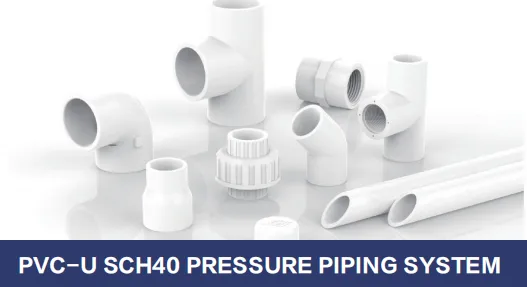
In the bustling world of construction, where every beam, panel, and pipe plays a silent yet critical role, there's one component that often goes unnoticed until something goes wrong: the pressure piping system. From the water that flows into your morning shower to the industrial fluids powering manufacturing plants, from the sterile water supply in hospitals to the climate control systems in schools—pressure piping is the invisible backbone that keeps modern buildings functional, safe, and efficient. But behind every reliable piping system lies a global supply chain that's as complex as it is vital. Today, we're diving into the world of pressure piping, the challenges of sourcing these essential materials, and how a trusted PVC-U SCH40 pressure piping system supplier is redefining speed, quality, and reliability in the industry.
Picture this: A construction team in Riyadh is racing to finish a 50-story residential tower. The deadline is tight, the budget is fixed, and every stakeholder is counting on the project to open on schedule. Then, a critical shipment of pressure piping gets held up at a port for weeks due to logistics bottlenecks. Suddenly, the plumbing team is idled, subcontractors are demanding overtime pay, and the developer is staring down costly delays. Sound familiar? In today's post-pandemic world, stories like this have become all too common.
The global supply chain for building materials has never been more strained. Raw material shortages, rising energy costs, labor disputes, and unpredictable geopolitical events have turned "just-in-time" inventory models into high-risk gambles. For pressure piping systems—components that are often ordered months in advance and tailored to specific project requirements—these disruptions can be catastrophic. A single week of delay can domino into missed deadlines, penalty fees, and damaged reputations. That's why, more than ever, construction professionals are prioritizing suppliers who don't just deliver quality products, but deliver them fast .
Not all pressure piping is created equal. When it comes to balancing durability, cost-effectiveness, and versatility, few materials stand out like PVC-U SCH40. Short for Unplasticized Polyvinyl Chloride (PVC-U) with a Schedule 40 wall thickness, this piping system is engineered to handle moderate to high pressure applications—making it a staple in residential, commercial, and light industrial projects.
What makes PVC-U SCH40 so popular? For starters, it's incredibly resistant to corrosion, chemicals, and rust—unlike metal pipes, which can degrade over time when exposed to water or harsh substances. This resistance translates to longer lifespans (often 50+ years) and lower maintenance costs, a huge win for building owners. Its smooth inner surface also minimizes friction, allowing for efficient water flow and reducing the risk of clogs. And let's not forget installation: PVC-U SCH40 pipes are lightweight, easy to cut, and simple to join with solvent cement, which speeds up on-site work compared to heavier materials like steel or copper.
But perhaps most importantly, PVC-U SCH40 is designed to meet strict pressure ratings. With a typical working pressure of 450 psi at 73°F (depending on diameter), it's more than capable of handling the demands of potable water distribution, irrigation systems, and even some industrial fluid transfer applications. For a PVC-U SCH40 pressure piping system supplier, these attributes aren't just selling points—they're the foundation of trust with clients who can't afford to compromise on safety or performance.
While PVC-U SCH40 is a star player, the best suppliers know that construction projects rarely rely on a single type of pipe. That's why leading providers have expanded their offerings to include a full spectrum of piping solutions, ensuring clients can source everything they need from one trusted partner. Let's take a closer look at some of these complementary products:
Unplasticized Polyvinyl Chloride (UPVC) pipes are the unsung heroes of low-pressure applications. Think drainage systems, ventilation ducts, and underground wiring conduits. As a dedicated UPVC pipe supplier, the focus is on delivering pipes that are not only affordable but also resistant to weathering, impact, and chemical corrosion. UPVC's lightweight nature makes it easy to transport and install, while its smooth surface ensures efficient flow—whether you're moving rainwater away from a commercial building or routing cables through a residential complex. For projects where cost and versatility matter most, UPVC is often the go-to choice.
When it comes to hot water systems—think hospitals, schools, and residential buildings with on-demand heating—Polypropylene Random Copolymer (PPR) pipes and fittings shine. As a PPR pipe and fitting supplier, the emphasis is on heat resistance: PPR can handle temperatures up to 203°F (95°C) and pressures up to 116 psi, making it ideal for hot water distribution. What's more, PPR pipes are joined using heat fusion, creating a seamless, leak-proof bond that eliminates the risk of joint failure over time. This reliability is why PPR is a staple in healthcare facilities, where even a small leak could compromise sterility, and in schools, where safety and low maintenance are non-negotiable.
Cross-linked Polyethylene (PEX) pipes have revolutionized residential and light commercial plumbing with their flexibility and durability. As a PEX pipe and fitting supplier, the advantage lies in PEX's ability to bend around corners without the need for elbow fittings, reducing installation time and the risk of leaks. PEX is also highly resistant to freezing (it can expand and contract without cracking) and chemical corrosion, making it perfect for radiant floor heating systems, potable water lines, and even snow melting applications. Its lightweight design and easy connection methods (crimp, clamp, or push-fit) have made it a favorite among contractors working on tight schedules.
In an industry where time is money, "fast lead times" aren't just a selling point—they're a lifeline. But how do top suppliers manage to deliver quality pipes in weeks, not months, when global supply chains are still reeling from disruptions? The answer lies in a combination of strategic planning, investments in infrastructure, and a relentless focus on efficiency.
First, it starts with local manufacturing and warehousing. By maintaining production facilities and stockpiles in key regions—from the Middle East to Europe and beyond—suppliers can drastically reduce shipping times. For example, a PVC-U SCH40 pressure piping system supplier with a factory in Saudi Arabia can deliver orders to local construction sites in Riyadh or Jeddah in days, not weeks. Similarly, warehouses stocked with UPVC pipes, PPR fittings, and PEX coils in strategic hubs ensure that even custom orders can be fulfilled quickly by leveraging existing inventory.
Second, technology plays a pivotal role. Advanced ERP (Enterprise Resource Planning) systems allow suppliers to track inventory in real time, forecast demand based on historical data, and automate reordering—preventing stockouts before they happen. Digital platforms also streamline communication between clients, sales teams, and production facilities, reducing the risk of errors and delays. Imagine a contractor in Dubai needing a last-minute batch of PPR pipe and fittings for a hospital project: with a few clicks, they can check stock availability, place an order, and track its delivery in real time—all from their smartphone.
Finally, strong relationships with raw material suppliers are non-negotiable. By partnering with trusted providers of PVC resin, polypropylene, and cross-linking agents, piping suppliers can secure preferential pricing and priority access to materials—even during shortages. This vertical integration ensures that production lines keep running, and clients aren't left waiting when the market gets tight.
A leading construction firm in Saudi Arabia was tasked with building a 300-bed hospital in Riyadh, with a strict deadline to open in time for the peak flu season. Mid-project, their original piping supplier informed them of a 12-week delay in delivering critical PVC-U SCH40 pressure pipes for the water supply system. Facing penalties of $50,000 per week for missed deadlines, the firm switched to a local PVC-U SCH40 pressure piping system supplier with a reputation for fast lead times. The new supplier not only delivered the full order in 3 weeks but also provided on-site technical support to ensure proper installation. The hospital opened on schedule, and the contractor avoided over $600,000 in potential penalties.
Choosing the right piping system depends on a variety of factors: pressure requirements, temperature, application, and budget. To help you make an informed decision, we've compiled a comparison of the most popular options:
| Pipe Type | Material | Pressure Rating (PSI) | Temperature Range (°F) | Key Applications | Typical Lead Time (Weeks) |
|---|---|---|---|---|---|
| PVC-U SCH40 | Unplasticized Polyvinyl Chloride | 450 (at 73°F) | 33–140 | Potable water, irrigation, industrial fluids | 2–4 |
| UPVC | Unplasticized Polyvinyl Chloride | 150–300 (varies by size) | 33–140 | Drainage, ventilation, cable conduits | 1–3 |
| PPR | Polypropylene Random Copolymer | 116 (at 176°F) | 33–203 | Hot water systems, hospitals, schools | 3–5 |
| PEX | Cross-linked Polyethylene | 160 (at 73°F) | 33–203 | Radiant heating, potable water, snow melting | 2–4 |
Fast lead times mean nothing if the product fails to meet standards. That's why reputable suppliers prioritize quality control at every stage of the manufacturing process. From raw material inspection to final product testing, no detail is overlooked.
For example, PVC-U SCH40 pipes undergo rigorous pressure testing to ensure they can handle their rated psi without cracking or deforming. PPR fittings are checked for dimensional accuracy to ensure a tight, leak-proof seal when fused. PEX pipes are subjected to long-term heat aging tests to verify their performance over decades. All products are also certified to international standards, such as ASTM D1785 for PVC-U, DIN 8077/8078 for PPR, and ASTM F876 for PEX—giving clients peace of mind that their piping systems meet the highest safety and performance benchmarks.
In sensitive environments like hospitals and schools, quality is even more critical. That's why leading suppliers also offer specialized products, such as Class A fireproof CPL inorganic boards, which are designed to resist fire and inhibit the spread of flames—protecting lives and property in the event of an emergency. While not a piping product, this commitment to safety across all building materials underscores the supplier's dedication to holistic project success.
As the construction industry evolves, so too do the demands on piping suppliers. The future will see a greater focus on sustainability, with more suppliers investing in recycled materials and energy-efficient manufacturing processes. Imagine PVC-U pipes made from 30% recycled resin, or PPR production facilities powered entirely by solar energy—these innovations are already in the works.
Digitalization will also play a bigger role, with the rise of AI-driven demand forecasting and blockchain technology to track materials from raw supplier to end client. This level of transparency will further reduce delays and build trust between suppliers and contractors.
Perhaps most importantly, the trend toward "one-stop shopping" will continue to grow. Clients don't just want a PVC-U SCH40 pressure piping system supplier—they want a partner who can provide everything from UPVC pipes to PEX fittings, from technical support to on-time delivery. By offering a comprehensive range of solutions, suppliers can simplify the procurement process, reduce coordination headaches, and become an integral part of their clients' success.
In the fast-paced world of construction, where every decision impacts timelines, budgets, and safety, choosing the right piping supplier is more than a transaction—it's a strategic partnership. Whether you're building a residential tower in Saudi Arabia, a hospital in Europe, or a school in Asia, the right supplier will deliver quality products, fast lead times, and the peace of mind that comes with knowing your piping system is built to last.
As a leading PVC-U SCH40 pressure piping system supplier, with a full range of complementary products like UPVC pipes, PPR fittings, and PEX solutions, the focus is clear: to be the partner that construction professionals can rely on, no matter the challenge. In a global supply chain fraught with uncertainty, speed, quality, and reliability aren't just promises—they're the foundation of every project we help build.
Recommend Products












