
Picture this: A shipment of mission-critical electrical equipment leaves a factory at dawn. By sunset, it's cleared customs on another continent. By tomorrow afternoon, local technicians are installing it with hyperlocal expertise. This seamless dance between global reach and neighborhood know-how isn't magic – it's the beating heart of modern distribution box supply chains. And in our increasingly connected world where infrastructure gaps can mean the difference between thriving communities and dark neighborhoods, this global-local synergy has never mattered more.
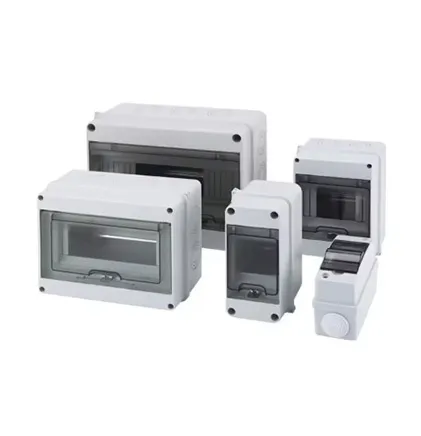
Distribution boxes – those unassuming metal cabinets humming quietly at street corners and construction sites – are the unsung heroes of modern infrastructure. They're the silent guardians channeling power to our hospitals, keeping data flowing through our networks, and ensuring water treatment plants never miss a beat. Without these critical nodes, our digital age would grind to a halt.
But here's what most people don't realize: The journey of these crucial components reveals a fascinating story about globalization's evolution. We've moved beyond mere cost-driven offshoring to sophisticated networks balancing worldwide efficiencies with neighborhood responsiveness. Leading suppliers now operate fluid ecosystems where container ships and cargo planes coordinate with local vans and hometown technicians in a perfectly synchronized ballet.
"The most resilient supply chains aren't just global or local – they're
glocal
. They combine planetary-scale efficiencies with community-level agility."
- Supply Chain Director, Global Infrastructure Council
Modern manufacturers aren't just building products; they're choreographing global ballets. Take Singapore-based Megabox Solutions, whose production modules sail between facilities in Vietnam, Mexico, and Poland on specialized cargo vessels. Components are assembled progressively during transit – what industry insiders call "floating factories." By the time ships dock, products are 85% complete, slashing delivery times by up to 60%.
Meanwhile, digital twin technology creates virtual replicas of shipments in transit. Sensors monitor temperature, humidity, and shocks in real-time, while predictive algorithms reroute containers around brewing storms or congested ports. "It's like having a crystal ball for logistics," shares Lin Wei, CTO of Pacific Circuit Systems. "We prevented three potential delays last quarter by redirecting shipments days before weather systems developed."
Gone are the days of containers languishing for weeks in customs purgatory. Pioneering suppliers invest in dedicated border-hopping SWAT teams whose sole mission is cutting through bureaucratic tape. These multilingual specialists live and breathe customs codes, developing personal relationships with officials across 150+ jurisdictions.
Consider ElectroFlow Global's "Golden Channel" program. By pre-screening components against destination countries' regulatory databases and using blockchain-authenticated compliance documents, they've achieved a staggering 92% same-day customs clearance rate. "Paperwork delays used to cost us $8 million annually," reveals COO Samantha Reyes. "Now, that money funds R&D for faster installation systems."
Static regional warehouses are becoming relics. Next-gen distributors position "anticipation stock" in temporary urban hubs based on algorithmic forecasting. These pop-up depots materialize in leased spaces near predicted demand hotspots – before clients even place orders.
Dutch innovator PowerHubs reduced emergency delivery times by 76% using AI that analyzes weather patterns, infrastructure projects, and even satellite imagery of construction progress. "We had components waiting within 20 miles of a transformer fire in Birmingham," recounts logistics manager Arjun Patel. "Technicians were on-site replacing damaged units before the smoke cleared."
Brilliant logistics mean nothing without local expertise. Savvy suppliers cultivate neighborhood knowledge with the same rigor as they engineer distribution networks. Because when a monsoon floods Manila or a deep freeze paralyzes Toronto, global playbooks need local interpreters.
Top providers maintain rosters of locally based specialists who understand regional quirks – from seismic requirements in earthquake zones to coastal corrosion countermeasures. These aren't just technicians; they're infrastructure anthropologists studying how communities actually use equipment.
In Brazil, VoltSafe employs retired utility workers as local consultants. Their insight helped redesign enclosure mounting systems after realizing existing brackets interfered with carnival float routes. "Global designs assume standard urban landscapes," notes Rio-based supervisor Carlos Silva. "But our alleys dance to different rhythms."
Rather than shipping finished products worldwide, leaders establish micro-facilities for last-mile customization. A distribution box headed for Norwegian fjords gets anti-icing modifications in Oslo. Units bound for Dubai's desert heat receive specialized cooling in Sharjah.
These adaptation centers double as training hubs where local technicians master new technologies. When Zambia's power authority upgraded its grid, regional supplier ElecTech ran "mobile masterclasses" from converted shipping containers. Over 300 local electricians became certified installers without leaving their provinces.
Truly local support understands unwritten codes. Southeast Asian suppliers include Buddhist shrine space specifications in substation designs. Middle Eastern producers incorporate prayer-time scheduling into maintenance planning. Scandinavian providers design snow-melting entryways for housing estate cabinets.
These cultural accommodations create extraordinary loyalty. When typhoons crippled Vietnam's central coast, regional supplier Danang Circuit prioritized boxes for fish sauce producers before hospitals – knowing the fermented condiment was essential for both commerce and community morale. "Losing electricity meant losing entire fermentation batches – generations of flavor," explains cultural liaison Minh Tran. "Sometimes, keeping lights on means preserving souls."
"Distribution isn't just moving boxes anymore; it's orchestrating certainty in an uncertain world."
- Global Logistics Report 2024
Several fundamental shifts are reshaping how suppliers balance global scale with local presence:
Forward-thinkers now blend local partnerships in a single solution. European innovator GridCore's Canadian deployment combines indigenous-owned logistics for northern territories, French-Canadian technicians in Quebec, and metropolitan specialists in Toronto – all under unified digital oversight.
AI has evolved from predicting failures to prescribing pre-emptive actions. Smart boxes now self-diagnose issues and automatically trigger part shipments before failures occur. During California's wildfire season, system cabinets detect abnormal heat signatures and request replacement components before inspectors even arrive.
Pandemic disruptions taught hard lessons about lean inventories. Now, strategic buffer stockpiles coexist alongside efficient logistics. Suppliers maintain "evergreen reserves" of critical components distributed globally but untouched unless needed, effectively creating industry-wide insurance pools.
Carbon accountability reshapes routing decisions. Leaders choose slower ocean transport over air freight when timelines allow, calculate precise emissions per shipment, and partner with reforestation initiatives. GreenBox Alliance offsets 110% of emissions by supporting mangrove restoration – which conveniently also protects coastal substations from storm surges.
As urban populations explode and climate volatility intensifies, tomorrow's distribution systems face unprecedented tests. The trailblazers are already adapting:
During flood emergencies when roads become rivers, aerial resupply proves vital. Asian suppliers are pioneering waterproof drone containers that can deliver 50kg replacement parts directly to technicians waist-deep in floodwaters, cutting response times from days to hours.
Standardized component systems allow in-field customization. Distribution boxes now feature Lego-like interfaces where local technicians can snap together pre-certified modules to create custom configurations without factory involvement. Spanish innovator ModuElec reduced bespoke orders from six weeks to six hours using this approach.
Savvy suppliers train neighborhood watch groups as early-warning systems. Barcelona residents near power cabinets received QR code stickers to quickly report abnormalities. Similar programs in Nairobi slums create economic opportunities while enhancing equipment security.
Counterfeit parts plague developing markets. Smart contracts now verify authenticity at every handoff. Indian supplier PowerShield reduced fake component incidents by 97% using encrypted seals that technicians validate via smartphone before installation.
Behind all this technology lies an enduring truth: distribution depends on human relationships. Veteran supplier Raymond Chou tells a revealing story:
"During the Texas ice storms, our Houston warehouse manager recognized a nurse's personal plea on social media. She needed a specialized medical distribution unit for her neighborhood clinic. Our system showed zero availability globally. So he drove through the ice to a Chicago-bound truck that hadn't yet left town, pulled the specific part from its carefully orchestrated shipment, and personally delivered it. It broke every logistics protocol – and saved seventeen lives that week."
This captures today's distribution reality: Algorithm-perfect global systems tempered by human-judgment local actions. Whether through blockchain-enabled parts verification or simply reading social media with compassionate attention, tomorrow's leading suppliers will master both scales.
"Technology achieves scale; humanity achieves resonance. The winning suppliers master both."
- MIT Supply Chain Innovation Report 2025
The distribution box sector's transformation mirrors broader economic evolution – from disconnected globalization to integrated glocalization. Winning suppliers don't just operate globally while supporting locally; they engineer systems where these functions enhance each other.
Global logistics enable neighborhood responsiveness by delivering sophisticated materials anywhere within days. Local expertise, in turn, refines global designs with real-world insights that improve reliability everywhere. The Vietnamese technician's trick for monsoons becomes German engineering's next-gen gasket standard. The Chilean desert's thermal solution informs Norwegian Arctic adaptations. This virtuous cycle elevates entire industries.
As climate volatility accelerates and urban populations swell, this dual-capability becomes civilization-critical. When hurricanes topple Caribbean power grids or African cities double in size overnight, the suppliers who can deliver globally and support locally won't just profit – they'll prevent disasters.
The quiet cabinets on our street corners now represent something greater than electrical management systems. They embody humanity's growing ability to connect planetary resources with community needs – to coordinate worldwide expertise for hometown solutions. And that connection may ultimately prove as important as the power flowing through those boxes.
Recommend Products












