


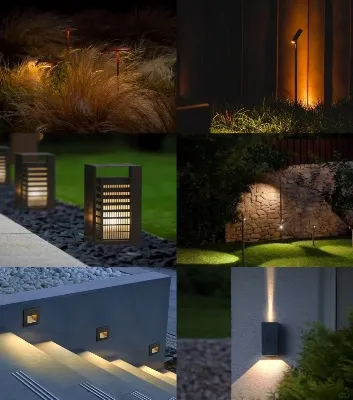
Hey there, fellow garden lover! Have you ever wandered through your backyard as dusk settles, wishing those shadowy corners had a warm glow? Or maybe you've stood in the lighting aisle feeling completely overwhelmed by options? You're not alone. Choosing garden lighting is about way more than just brightening pathways – it sets the mood, showcases your favorite plants, and extends those precious outdoor hours.
I remember helping my neighbor Clara last summer. She'd installed beautiful solar path lights only to discover they barely lasted through dinner. "I wanted magic," she sighed, "but got flickers." Meanwhile, across the street, Mark's wired spotlights turned his prized rose garden into a harsh interrogation scene. Getting this right matters, folks. Let's navigate this together.
The Heart of Garden Lighting
Great garden lighting feels intentional, not accidental. Before we dive into technical stuff, let's talk purpose:
Mood Magic : Soft uplighting on that Japanese maple? Instant serenity. Twinkly fairy lights in the pergola? Pure romance.
️ Safety First : Tripping on dark garden steps ruins evenings faster than mosquitoes.
Highlight Reels : Your prize-winning dahlias deserve their moment after sunset.
Expanding Horizons : Why retreat indoors when your patio can become a moonlit oasis?
Your garden's personality should guide every choice. Formal estate? Go for structured elegance. Cottage garden? Let things feel loose and whimsical. The lights are supporting actors to your botanical stars.
Solar vs Mains Electricity: The Power Play
Solar Lighting
How it works : Sun charges panels → stores energy in batteries → powers LEDs at night. Simple physics, zero wiring.
Perks :
- Install anywhere instantly
- Zero electricity bills
- Eco-warrior friendly
- No tripping hazards
Realities :
- Moody in cloudy regions
- Dimness intensifies as batteries age
- Limited placement (sun exposure needed)
- Fewer lumen options
Best for : Path markers, decorative accents in sun-drenched zones, temporary setups, eco-conscious gardeners.
Mains Electricity
How it works : Hardwired to your home's electrical system. Transformer steps down voltage for safety.
Perks :
- Steady, powerful illumination
- Works in shaded areas or dense plantings
- Advanced controls (timers, dimmers)
- Professional installation possible
Realities :
- Installation costs ($500-$3000+)
- Trench digging for wires
- Electrician often needed
- Permitting headaches sometimes
Best for : Task lighting, feature illumination, all-weather reliability, tech-savvy systems, permanent installations.
Sarah, a client in rainy Portland, learned this the hard way: "My solar lanterns were cute paperweights by November." She later hybridized – solar for meadow accents, wired lights for cooking and seating areas. Brilliant compromise!
LED vs Traditional: The Bulb Battle
LED Lighting
Modern garden superheroes using semiconductors to produce light. Shockingly efficient.
Perks :
- Sips energy (75-90% less than halogen)
- Lifespan measured in decades (25,000-50,000 hrs)
- Zero heat emission on plants
- Instant full brightness
- RGB color-changing options
Realities :
- Higher upfront cost per bulb
- Complex electronics can fail prematurely
- Glare control crucial with bright LEDs
Traditional Lighting
Incandescent, halogen, fluorescent – the old guard heating filaments or gas to glow.
Perks :
- Cheap initial bulb cost
- Warm, familiar light quality
- Simple technology
Realities :
- Energy guzzlers (especially halogen)
- Burns hot – fire risk near foliage
- Frequent bulb replacements
- Shorter lifespan (1,000-4,000 hrs)
"But the warmth!" traditionalists argue. Modern LEDs now achieve 2700K color temperatures – that same cozy golden glow. The tech gap has nearly closed.
Creating Your Nighttime Masterpiece
Your garden at night should feel like a new discovery, not the same space with lights slapped on. Try these techniques:
Layering Like a Pro
Just like interior lighting, gardens need layers:
- Ambient : Overall gentle glow (moonlight effect)
- Task : Grill areas, reading nooks (higher lumen)
- Accent : Sculptures, specimen trees, water features
Direction Matters
How you aim lights transforms drama:
- Uplighting : Grazes trunks → gothic drama
- Downlighting : Mounted high → mimics moonlight
- Cross-lighting : Multiple angles → eliminates harsh shadows
Garden Zones & Lighting Pairings
Entrances & Pathways
Goals : Safe navigation without runway intensity
Solutions :
- Low-voltage LED bollards (15-20 lumens)
- Recessed stair lights
- Solar marker lights every 4-6 feet
Pro Tip : Angle lights downward to avoid blinding visitors!
Dining & Lounge Areas
Goals : Intimate yet functional
Solutions :
- String lights overhead (warm white LEDs)
- Dimmable wall washers
- Flickering candle-style LEDs
- Under-table uplights
Pro Tip : Avoid overhead spots – creates raccoon eyes!
Weather Warriors & Maintenance
Garden lights take abuse. Protection isn't optional:
- IP Ratings : Look for IP65+ (dust-tight & water jets)
- Materials : Powder-coated aluminum, stainless steel
- Winter Care : Clear snow off solar panels, protect wires from rodents
Monthly TLC prevents failures:
- Wipe solar panels
- Check for corrosion or loose fittings
- Prune overgrown plants blocking light
Brilliant Choices for Different Gardens
Small Urban Gardens
Challenges : Space limits, proximity to neighbors
Solutions :
- Low-wattage solar string lights
- Vertical illumination techniques
- Adjustable plug-in spotlights
Large Rural Properties
Challenges : Coverage distance, wildlife interaction
Solutions :
- High-output LED floodlights
- Motion-sensor security zones
- Integrated solar/main systems
Smart Tech Meets Garden Lighting
Welcome to the future! Today's lighting is brainy:
- Wi-Fi Controls : Change scenes from your phone
- Motion Sensors : Welcome guests while conserving energy
- Dawn/Dusk Automation : Sync with nature's rhythms
- Voice Integration : "Hey Google, turn on water feature lights!"
Even decorative profiles have evolved – now integrating LED strips seamlessly into landscape elements. Lighting isn't just functional; it's experiential design.
Your Journey to Perfect Garden Lighting
Remember Clara's flickery solar lights? She kept some as twinkly accents but added low-voltage LED path lights for reliability. Mark traded his interrogation spots for softer grazing lights that made roses glow without bleaching petals. Solutions exist.
Think long-term. That extra $20 for commercial-grade LEDs pays for itself in 3 years. An electrician's fee for proper wiring? Cheaper than re-digging trenches annually.
Start small: illuminate one favorite tree or pathway. See how it makes you feel. Does it draw you outside? Does it make you smile? That's the magic we're chasing. Your garden deserves more than daytime appreciation. Light it thoughtfully, and nights become adventures.
Lighting Truth Bomb : Gardens shouldn't look like airport runways or stadiums. Subtlety reveals beauty. Shadows are as important as the light. Let darkness remain where mystery lives.










