
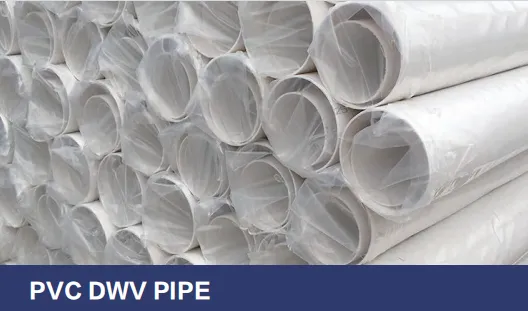
Think about the last time you turned on a sink, flushed a toilet, or took a shower. Chances are, you didn't spare a second thought about what happens to the water after it disappears down the drain. But behind that seemingly simple act lies a complex system that's quietly keeping our homes, offices, and cities healthy, hygienic, and functional: the Drain-Waste-Vent (DWV) system. These networks of pipes and fittings are the unsung heroes of modern infrastructure, responsible for carrying wastewater away from buildings and ensuring proper ventilation to prevent dangerous gas buildup. And in recent years, one material has revolutionized this critical system: Polyvinyl Chloride (PVC), specifically in the form of PVC DWV pipes. Today, we're diving deep into how advancements in PVC DWV pipe technology are shaping the future of plumbing—making systems more durable, efficient, and sustainable than ever before.
Before we get into the tech, let's take a moment to appreciate just how vital DWV systems are. Imagine a world without them: wastewater pooling in basements, noxious sewer gases seeping into living spaces, and the constant risk of waterborne diseases. Not exactly a pretty picture. DWV systems solve these problems by doing three key things: draining wastewater from fixtures (sinks, toilets, showers), removing solid waste, and venting gases to the outside. They're the silent guardians of our daily comfort and health.
For decades, plumbers and builders relied on materials like cast iron, clay, and galvanized steel for DWV pipes. These materials had their merits—cast iron, for example, was durable and muffled noise well—but they also came with significant downsides. Cast iron was heavy, making installation labor-intensive and costly. Clay pipes were brittle and prone to cracking, especially in freezing temperatures. Galvanized steel corroded over time, leading to clogs and leaks. As cities grew and buildings became more complex, the need for a better solution became clear. Enter PVC.
PVC first emerged as a plumbing material in the mid-20th century, but it wasn't until the 1970s and 80s that it started gaining traction for DWV systems. Why? Because it addressed nearly every shortcoming of traditional materials. PVC is lightweight, resistant to corrosion, and affordable. Early PVC DWV pipes were a game-changer, but like any technology, they've continued to evolve. Today's PVC DWV pipes are a far cry from their predecessors, thanks to decades of innovation in material science, manufacturing, and design. And at the heart of this evolution are forward-thinking PVC DWV pipe suppliers and pipes fittings suppliers, who collaborate to push the boundaries of what these systems can do.
Let's start with the basics: What exactly is a PVC DWV pipe? DWV stands for Drain-Waste-Vent, so these pipes are specifically designed for non-pressurized applications—meaning they carry wastewater and vent gases, not the high-pressure water that flows through your home's supply lines (that's where materials like copper or PEX come in). PVC, a synthetic plastic polymer, is ideal for this job because it's inert (it doesn't react with the chemicals in wastewater), smooth (so waste flows easily), and strong enough to handle the demands of daily use.
But what truly sets modern PVC DWV pipes apart is the advancements in their formulation and construction. Today's pipes aren't just "plastic tubes"—they're engineered products, refined to deliver better performance, longer lifespans, and greater sustainability. Let's break down the key innovations driving this progress.
The future of plumbing isn't about reinventing the wheel—it's about perfecting it. Over the past decade, PVC DWV pipe technology has seen breakthroughs in three critical areas: material science, manufacturing precision, and design optimization. Let's explore each one.
Gone are the days of one-size-fits-all PVC. Today's PVC DWV pipes are made with custom-blended resins that enhance specific properties. For example, additives like impact modifiers make pipes more flexible, reducing the risk of cracking during installation or in freezing temperatures. Stabilizers protect against UV radiation, ensuring pipes installed outdoors (like in vent stacks) don't degrade over time. Even the way PVC is polymerized has improved: modern processes create longer molecular chains, resulting in pipes with higher tensile strength and better resistance to wear and tear.
One of the most exciting developments is the use of recycled PVC in pipe production. Reputable PVC DWV pipe suppliers are now incorporating post-consumer recycled (PCR) content into their pipes without sacrificing performance. This not only reduces waste but also lowers the carbon footprint of manufacturing—a win for both builders and the planet. Imagine a pipe that's just as strong as a virgin PVC pipe but gives new life to plastic that would otherwise end up in landfills. That's the future in action.
You can have the best materials in the world, but if the manufacturing process is flawed, the end product will suffer. That's why leading PVC DWV pipe suppliers have invested heavily in advanced extrusion technology. Modern extrusion lines use computerized controls to maintain precise temperatures, pressure, and speed, ensuring uniform wall thickness and consistent dimensions. This level of precision is critical: even a tiny variation in wall thickness can weaken a pipe or disrupt water flow.
Quality control has also gone high-tech. Many suppliers now use automated inspection systems, including cameras and sensors, to detect defects like air bubbles, cracks, or uneven surfaces in real time. If a flaw is detected, the system alerts operators immediately, reducing waste and ensuring only top-quality pipes reach the market. Some suppliers even use laser measurement tools to verify pipe diameter and roundness, ensuring a perfect fit with fittings—a detail that makes a world of difference for plumbers in the field.
Beyond materials and manufacturing, the design of PVC DWV pipes has evolved to maximize performance. One key improvement is the interior surface: modern pipes have an ultra-smooth finish, with a roughness coefficient (a measure of how easily fluid flows) lower than traditional materials like cast iron. This smoothness reduces friction, allowing wastewater to flow faster and reducing the risk of clogs. Think of it like comparing a bumpy country road to a freshly paved highway—water (and waste) just moves better.
Another design innovation is the development of leak-proof joint systems. Early PVC pipes relied on solvent cement, which worked well but required careful application. Today, many PVC DWV pipe solutions include push-fit or gasketed joints that seal instantly, reducing installation time and the risk of human error. Some suppliers even offer fittings with built-in features like weep holes (to prevent water from pooling in traps) or offset adapters (to accommodate uneven framing), making it easier for plumbers to navigate the unique challenges of each job site.
| Feature | Traditional Materials (Cast Iron/Clay) | Advanced PVC DWV Pipes |
|---|---|---|
| Weight | Heavy (50-100 lbs per 10ft pipe) | Lightweight (5-15 lbs per 10ft pipe) |
| Installation Time | Slow (requires specialized tools and labor) | Fast (easy to cut, join, and handle) |
| Corrosion Resistance | Poor (cast iron rusts; clay erodes) | Excellent (resistant to chemicals and rust) |
| Flow Efficiency | Low (rough interior causes friction) | High (smooth interior reduces clogs) |
| Cost Over Lifetime | High (frequent repairs, replacement) | Low (minimal maintenance, 50+ year lifespan) |
| Environmental Impact | High (energy-intensive production, heavy transportation) | Low (recyclable, lower carbon footprint) |
Technology alone isn't enough to transform plumbing—it takes collaboration. Today's leading PVC DWV pipe suppliers aren't just manufacturers; they're partners in building better systems. They work closely with plumbers, contractors, and engineers to understand the unique needs of different projects, from residential homes to large commercial buildings. For example, a high-rise apartment complex might require pipes with extra structural support, while a hospital needs systems that meet strict hygiene standards. A reputable supplier will offer tailored PVC DWV pipe solutions, including custom lengths, specialized fittings, and even technical support to ensure the system is designed and installed correctly.
Pipes and fittings go hand in hand, which is why many PVC DWV pipe suppliers also partner with pipes fittings suppliers to create cohesive systems. This collaboration ensures that pipes and fittings are perfectly compatible, reducing the risk of leaks or performance issues down the line. Imagine trying to fit a square peg into a round hole—without coordination between pipe and fitting manufacturers, plumbers would face similar frustrations. By working together, these suppliers make the plumber's job easier, which ultimately translates to better outcomes for homeowners and building owners.
Let's take a look at how advanced PVC DWV pipes made a real difference on a recent project. In 2023, a construction firm in Riyadh, Saudi Arabia, was tasked with building a 12-story apartment complex with 150 units. The project had a tight deadline, and the team was looking for ways to streamline the plumbing installation process. Initially, they considered using traditional cast iron for the DWV system, but after consulting with a local PVC DWV pipe supplier, they decided to switch to advanced PVC DWV pipes.
The results were striking. Because PVC pipes are lightweight, the installation crew could carry and position them without heavy machinery, cutting down on labor costs. The smooth interior of the pipes also meant fewer clogs during testing, reducing the need for rework. Perhaps most importantly, the project finished two weeks ahead of schedule—a huge win in the fast-paced world of construction. "We were skeptical at first," said the site foreman, "but the PVC pipes were easier to work with than we ever imagined. And knowing they'll last for decades without rusting or corroding gives us peace of mind for the building's future."
In an era where sustainability is top of mind for builders, architects, and homeowners alike, PVC DWV pipes are stepping up to the plate. Contrary to outdated myths, modern PVC is a surprisingly eco-friendly choice—especially when compared to traditional materials. Let's break down why:
Producing PVC requires less energy than manufacturing cast iron or clay pipes. For example, the energy used to make one ton of PVC is roughly half that needed to make one ton of cast iron. Plus, PVC pipes are lightweight, so transporting them uses less fuel—reducing greenhouse gas emissions from delivery trucks. When you add it all up, choosing PVC DWV pipes can lower a building's carbon footprint from the start.
The average lifespan of a PVC DWV pipe is 50-100 years, compared to 20-30 years for cast iron. That means fewer replacements over the life of a building, which translates to less waste in landfills and fewer resources used in manufacturing new pipes. For homeowners, this longevity also means lower maintenance costs—no more unexpected bills for pipe repairs or replacements.
While PVC wasn't always easy to recycle, the industry has made great strides in recent years. Many PVC DWV pipe suppliers now offer take-back programs, where scrap pipes and fittings are collected, cleaned, and repurposed into new products. Some even use recycled PVC resin in their manufacturing process, closing the loop on the material's lifecycle. It's a far cry from the "single-use plastic" stigma—PVC DWV pipes are built to last, and when they finally reach the end of their life, they can be given a second chance.
So, where do we go from here? The future of PVC DWV pipe technology is bright, with innovations on the horizon that promise to make systems even smarter, more efficient, and more sustainable. Here are a few trends to watch:
Imagine a DWV system that can alert you to a leak before it causes water damage. That's the promise of smart PVC pipes. Some manufacturers are experimenting with embedding sensors into pipes that detect changes in temperature, pressure, or moisture. These sensors send real-time data to a smartphone app or building management system, allowing homeowners or facility managers to address issues before they escalate. For example, a sensor might detect a slow leak in a bathroom pipe, giving the homeowner time to fix it before it leads to mold or rot.
While PVC is currently made from petroleum-based resins, researchers are exploring the use of bio-based feedstocks, like plant-based oils or sugars. Early tests show that bio-based PVC can match the performance of traditional PVC, with the added benefit of reducing reliance on fossil fuels. If scaled up, this could make PVC DWV pipes even more sustainable in the years to come.
As green building certifications like LEED (Leadership in Energy and Environmental Design) become more mainstream, PVC DWV pipe suppliers are working to ensure their products meet these rigorous standards. This includes improving energy efficiency in manufacturing, using more recycled content, and developing pipes that contribute to a building's overall water conservation goals. For example, some suppliers now offer pipes with insulation properties that reduce heat loss in hot water systems, helping buildings meet LEED's energy efficiency requirements.
Plumbing might not be the most glamorous topic, but it's the backbone of modern civilization. And at the heart of that backbone lies the DWV system—quietly working to keep our buildings safe and functional. Thanks to advancements in PVC DWV pipe technology, this critical system is better than ever: stronger, lighter, easier to install, and more sustainable. From material science breakthroughs to smart design innovations, PVC DWV pipes are proving that the future of plumbing is bright.
But none of this would be possible without the dedication of PVC DWV pipe suppliers and pipes fittings suppliers, who continue to push the boundaries of what's possible. By collaborating with plumbers, contractors, and engineers, they're not just selling pipes—they're building solutions that meet the unique needs of each project. Whether it's a small home renovation or a sprawling commercial complex, advanced PVC DWV pipes are helping to create buildings that are safer, more efficient, and built to last.
So the next time you flush a toilet or drain a sink, take a moment to appreciate the technology working behind the scenes. The future of plumbing is here, and it's made of PVC DWV pipes—strong, smart, and ready to handle whatever the future throws at them.
Recommend Products












