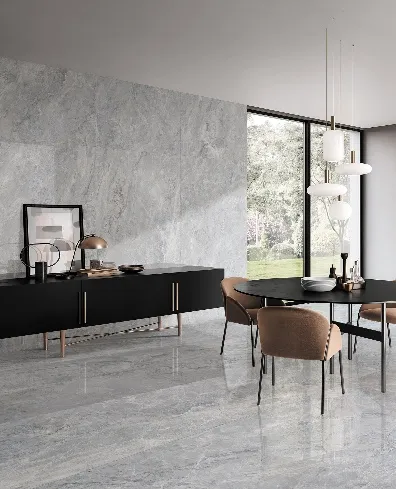
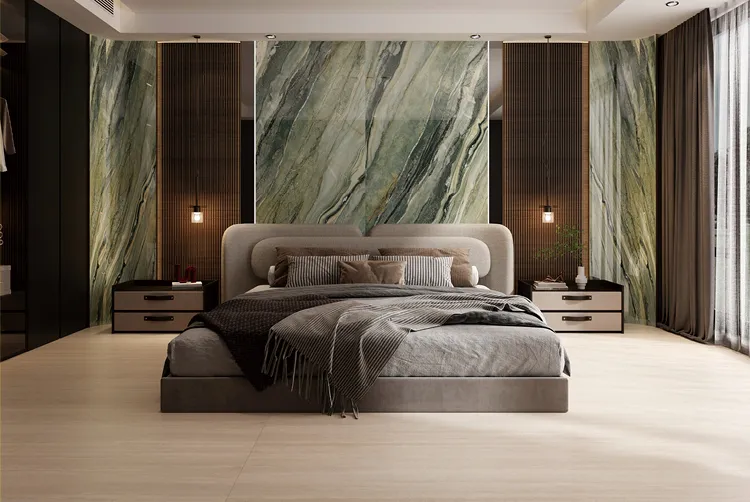
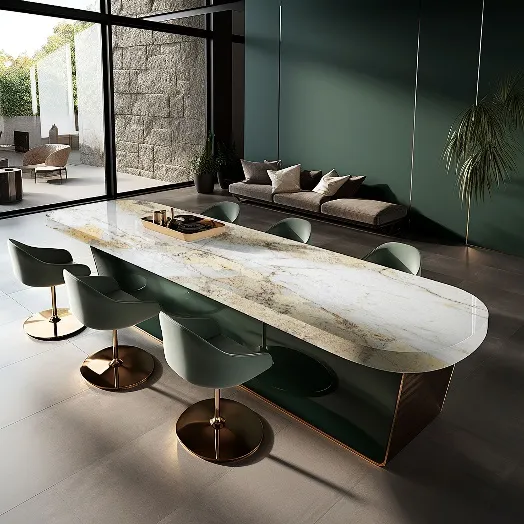
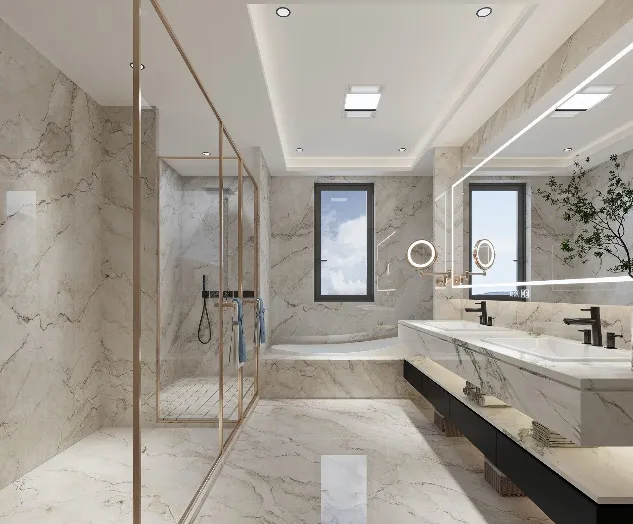
The success of porcelain slab tiles isn't just due to their inherent properties—it's driven by the relentless innovation of leading suppliers. These companies are not content to rest on the laurels of a good product; instead, they're investing in research, technology, and design to push the boundaries of what's possible. Here are some of the key innovations shaping the industry today:
1. Ultra-Large Format and Thin-Cut Technology
Gone are the days of small, disjointed tiles. Today's porcelain slab tile for wall solutions include slabs as large as 160cm x 320cm—big enough to cover an entire wall with minimal grout lines. This "seamless" look creates a sense of spaciousness and elegance, particularly in modern and minimalist designs. But size isn't the only breakthrough; suppliers are also producing thinner slabs (as thin as 3mm) that reduce weight without compromising strength. This makes installation easier, cuts transportation costs, and opens up new applications, such as cladding for high-rise buildings or retrofitting existing walls without adding structural load.
2. Digital Printing and Customization
Advancements in digital printing technology have revolutionized tile design. Using high-resolution inkjet printers, suppliers can now reproduce intricate patterns, textures, and even custom images on porcelain slabs with pixel-perfect precision. Want a wall that looks like it's covered in 100-year-old oak? Or a backsplash that features a commissioned artwork? A top porcelain slab tile for wall supplier can make it happen. This level of customization is a game-changer for designers, who can now create truly unique spaces that reflect a client's personality or a brand's identity. It also allows for greater consistency across large projects—no more worrying about mismatched batches of natural stone.
3. Sustainability at the Core
Sustainability is no longer a buzzword in construction—it's a requirement. Leading suppliers are responding by reimagining their production processes to minimize environmental impact. Many now use recycled materials (such as post-consumer glass or industrial waste) in their tile formulations, reducing the need for virgin resources. They're also investing in energy-efficient kilns and water recycling systems, cutting down on carbon emissions and water usage. Additionally, porcelain slab tiles are inherently sustainable over their lifecycle: they don't off-gas harmful chemicals, they can be recycled at the end of their life, and their durability means fewer replacements, reducing waste. For eco-conscious developers and homeowners, this makes them a far more attractive option than resource-intensive natural stone or short-lived wood products.
4. Enhanced Performance Features
Beyond the basics, suppliers are adding specialized features to meet specific project needs. For example, some porcelain slab tile for wall solutions now include anti-slip coatings for wet areas, fire-resistant properties for commercial buildings, or even antibacterial surfaces for healthcare facilities. In schools and hospitals, where hygiene and safety are paramount, these tiles are becoming a go-to choice, often integrated with other specialized materials as part of a one-stop architectural solution. Imagine a hospital corridor where walls are not just beautiful, but also resistant to mold, easy to disinfect, and capable of withstanding heavy traffic—this is the reality that innovative suppliers are making possible.