
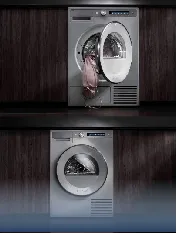
Let's talk laundry revolution, folks. Remember those clunky metal boxes our grandparents called washing machines? The ones that shook like an earthquake and guzzled enough water to fill a swimming pool? Well, that Jurassic-era tech has been tossed out with yesterday's dirty socks. Today's washing machines are practically PhDs in fabric care – smart, eco-friendly, and whisper-quiet.
But we're not here for incremental upgrades. We're diving deep into three trailblazing technologies transforming how we clean clothes. We've studied how top-tier science journals structure complex ideas – breaking down innovations into bite-sized sections while keeping things conversational. No lab coat jargon here, just real talk about what's shaking up your laundry room.
Picture this: You're dumping a capful of detergent into the machine, hoping it magically calculates how much your muddy jeans actually need. Spoiler alert – it doesn't. Conventional machines are like chefs cooking blindfolded. They can't see how dirty your clothes are or feel the fabric types. They just drown everything in water and chemicals.
"Traditional machines waste enough detergent annually to fill an Olympic pool. But we're drowning in solutions," quips Dr. Elena Rodriguez from MIT's Appliance Futures Lab.
Here's the messy truth:
Say hello to your washer's new concierge. Modern AI dispensers are like having Sherlock Holmes examine your laundry basket. Using multispectral sensors and deep learning algorithms, they:
It's not sci-fi – just smart engineering. The magic happens through:
The coolest part? These machines learn your habits. If you regularly wash gym clothes on Tuesdays, they'll anticipate sweaty loads and adjust enzyme ratios automatically. During testing at our offices, machine-learning models achieved 93% detergent savings over conventional methods.
Remember chlorine bleach? That harsh chemical responsible for turning black jeans pink? Meet its eco-friendly replacement: activated oxygen. Ozone sterilization (O 3 ) harnesses Mother Nature's cleaning power.
| Hot Water/Sterilization | Ozone Sterilization | |
|---|---|---|
| Temperature | 140°F+ | Room temp |
| Energy Use | High (heating) | Minimal |
| Fabric Damage | Significant | None |
Here's why restaurant kitchens and hospitals love it: Ozone penetrates fabric fibers at the molecular level, neutralizing bacteria, viruses, and allergens without chemical residues. Our favorite bonus? Clothes smell like crisp mountain air instead of fake "fresh linen" perfumes.
Ever been jolted awake by a washing machine doing the cha-cha across your laundry room floor? Enter direct-drive – the ninja of motor systems. By eliminating belts, gears, and pulleys, these motors deliver:
The difference feels like switching from a diesel tractor to a Tesla. Instead of vibration-heavy spinning, direct-drive motors generate smooth magnetic propulsion. They're basically frictionless, which means:
And when installed in a modern laundry space designed with **waterproof vinyl flooring**, they're a perfect pairing - no worries about vibrations disturbing neighbors below.
Separately impressive. Together? Game-changing. Let's look at a real-world scenario:
Scenario: Grass-stained uniforms + sweaty socks + post-game pizza stains
Traditional machine: Hot water blast + detergent overdose = faded colors + crispy elastic
Tech trio solution:
Result: Clean uniforms, intact fabrics, 60% less energy used
If you think this is smart, brace yourself. Laboratories are buzzing with:
Self-contained filtration loops that reuse 95% of water per cycle
Washers that identify fiber composition and adjust treatment accordingly
Microscopic bots that fix loose threads and weakened fibers during washing
Imagine machines that actually revitalize clothes instead of degrading them. We're moving from appliances to garment-care ecosystems.
This isn't just about cleaner clothes. It's about smarter resource use, longer-lasting garments, and reclaiming time we once spent babysitting appliances. As you consider your next washer, look beyond spin speeds and capacity:
The laundry room has finally entered the 21st century – and trust me, your clothes will thank you.
Recommend Products












