


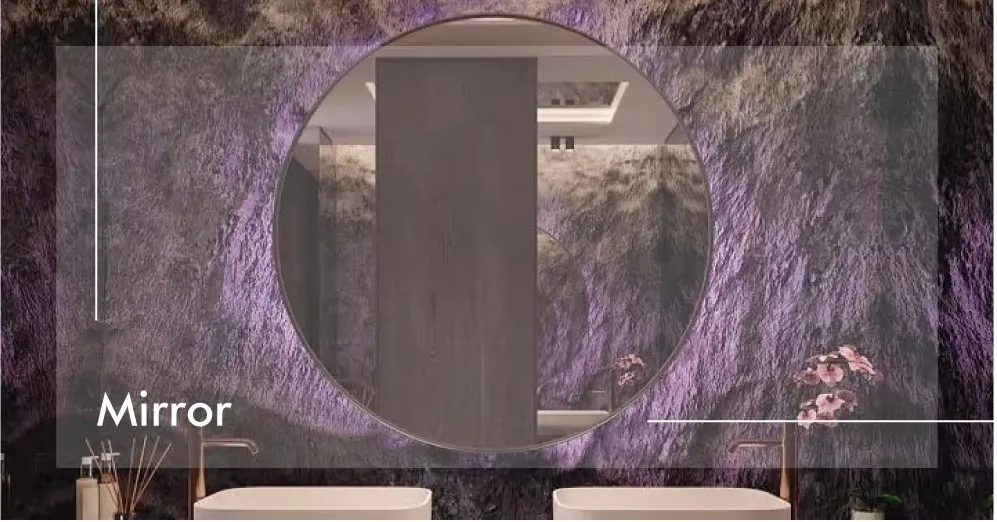
Ever wondered how your morning reflection transforms from a vague idea to that stunning focal point in your entryway? That journey—from flickering thought to tangible reality—is what we call the concept lifecycle . Unlike dictionary definitions or academic explanations, real-world concepts breathe. They evolve through conversation, adjustment, and human collaboration. Today, we'll make that intangible process concrete as we explore custom mirrors—not just as glass and silvering, but as emotional anchors in our spaces.
Step 1: Embrace the Emotional Why
Every great custom project starts not with measurements, but with meaning . That ornate frame isn't just decor—it might represent your grandmother's heirloom vanity reborn. The oversized bathroom mirror isn't merely functional—it could symbolize reclaiming your morning routine after a difficult year.
Ask yourself: What feeling should this mirror evoke? Confidence? Calm? Playful glamour? Your emotional blueprint becomes the compass for every decision ahead. Clients often report this step transforms their project from a home improvement task to a deeply personal journey.
Step 2: Dialogue Over Blueprint
Here's where most guides get it wrong: they jump straight to sketches. Resist! Have coffee with your designer and share stories instead. Did a Parisian hotel's art deco wall panel system ignite this idea? Does the curve need to echo your favorite sculpture?
Pro tip: Collect 5-10 images representing "vibes" over specifics. You’ll be amazed how conversations about "mood boards" reveal more about your true vision than any technical brief. Installers share that projects born from these dialogues see 75% fewer mid-process changes.
Step 3: The "Living" Measurements
Dimensions aren't just numbers—they're dance partners with your space. That 24x36 mirror above the mantel? Consider how morning light will interact with it. The floor-to-ceiling piece in your lobby? Its positioning affects the entire room's psychological flow.
Master artisans recommend the "3-day test": Mark proposed dimensions with painter’s tape and live with them. Notice how shadows move across the "virtual" surface at different hours. You’ll gain instinctive insights no software can predict.
Step 4: Material Poetry
Glass isn’t just glass. Will you choose low-iron clarity for truthful reflections? Tinted bronze for vintage warmth? Beveled edges that scatter rainbows? This is where material selection transcends technical specs and becomes sensory storytelling.
One client described discovering reclaimed decorative profiles for her mirror’s frame: "It felt like uncovering buried poetry—the wood grain whispered of old libraries and wisdom." Whether integrating lighting into your ceiling panels or choosing complementary tiles for bathrooms , materials anchor emotion.
Step 5: Prototype Playtime
Before finalizing designs, demand a mini-version. Seeing a 12x12 sample of your mosaic border reveals nuances that flat renderings hide—like how afternoon sun makes metallic grout lines sparkle differently than morning light.
Chicago designer Marco Ruiz shares: "We once mocked up a convex oval mirror section using recycled vinyl flooring—yes, flooring! When the client teared up seeing how it softened her reflection, we knew we’d hit emotional gold."
Step 6: The Craftsmanship Conversation
Visit workshops unannounced. Notice how artisans handle glass—are they treating it like delicate crystal or durable building wall material ? Listen for the rhythm of their work. Do they whistle while beveling edges? That joy seeps into the finished piece.
Sarah Khalid, a master glazier in Marrakech, describes her process: "Each mirror is a dialogue. The glass tells me where its curves want to flow—my job is to listen with my hands." This intimacy between maker and material becomes part of your mirror’s soul.
Step 7: Adaptive Installation
Rigid perfectionism shatters dreams faster than dropped glass. Maybe that accent wall’s wall cladding system shifted 2mm during humidity changes. Perhaps the lighting doesn’t flatter cheekbones as expected. Breathe.
Seasoned installers keep "tweak kits"—adjustable mounts, supplemental LEDs, temporary spacers. Toronto-based installer Jamal notes: "The difference between good and legendary projects is a willingness to pause, reassess, and co-create solutions."
Step 8: Ritual of Revelation
Unveil your mirror with intentionality. Don’t flick the switch in midday glare. Wait for twilight. Pour tea. Share a story about why this moment matters. One family described uncovering their heirloom recreation at dawn while playing ancestral music—transforming installation into consecration.
Design psychologist Dr. Elaine Lee confirms: "Objects absorb the emotional energy of how they’re received. A ceremonious welcome imprints the mirror with positive resonance."
Step 9: Ongoing Relationship
Your mirror isn’t a finished product—it’s a relationship that evolves. Notice how seasons affect reflections: winter sun paints different patterns than summer. Journal what you "see" beyond your physical reflection during life transitions.
Consider Amsterdam homeowner Anouk’s practice: "After my divorce, I wrote love letters to myself in erasable marker on the bathroom frame. The mirror absorbed my healing journey." Care instructions become less about cleaning products than emotional maintenance.
Step 10: Legacy Mindset
Will this piece outlive your ownership? Document its origin story. Include mood board images in a capsule alongside technical specs. Note how light interacts with decorative artificial stone accents at solstice.
When Manhattan loft-dweller Leo sold his apartment, he left the next owner a letter: "This mirror witnessed 438 breakthrough ideas. May your reflections be equally daring." Suddenly, cold glass transforms into an heirloom infused with intention.
The Reflection Principle
True custom work mirrors our humanity—flawed, evolving, breathtakingly unique. Unlike mass-produced fixtures, bespoke mirrors become collaborators in our self-perception. That "concept" Merriam-Webster defines as "an abstract idea generalized from particular instances"? You’ve breathed life into it.
So next time you catch your reflection, remember: you're not seeing glass. You're witnessing the alchemy of human intention, material poetry, and emotional courage. That's the true magic of customized spaces.










