
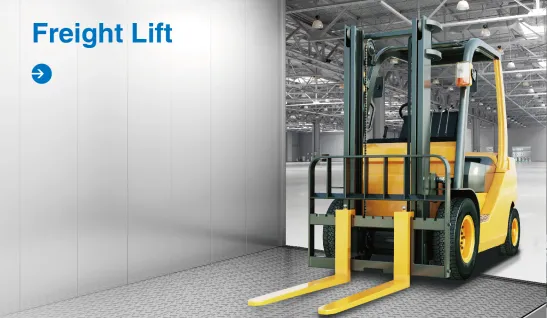
In any warehouse, factory, or commercial facility, moving heavy goods between floors efficiently is a daily challenge. Forklifts, manual labor, and conveyor belts each have their place — but when vertical transport of bulky loads is a core operation, nothing matches the reliability and throughput of a well-designed freight lift. Yet many facility managers and project developers struggle to identify what type of lift they actually need, what specifications matter most, and where to source equipment that balances cost with long-term durability.
This guide walks through the essentials of freight lift solutions — from understanding the main types and their applications, to evaluating suppliers and integrating lifts into a broader construction or renovation project.
A freight lift (also called a goods lift or cargo elevator) is a heavy-duty vertical transport system designed specifically to carry materials, equipment, and merchandise — not people. Unlike passenger elevators, which prioritize ride comfort, interior finish, and speed regulation, freight lifts are engineered around three core priorities: load capacity, structural rigidity, and operational durability.
Key differences include:
Selecting the right freight lift starts with understanding which category fits your operational needs. Most commercial and industrial installations fall into one of the following types:
Powered by a hydraulic cylinder and pump system, these lifts are ideal for low-to-mid-rise buildings (typically 2–6 floors). They offer smooth, powerful lifting, a compact machine room footprint, and lower upfront cost compared to traction systems. Hydraulic lifts are especially popular in warehouses, factories, and retail stockrooms where travel height is modest but load capacity must be high.
Using steel ropes and a counterweight system driven by an electric motor, traction elevators are the go-to choice for mid-rise and high-rise commercial buildings. They offer higher travel speeds, greater energy efficiency over time, and smoother ride quality. Modern gearless traction systems are increasingly adopted for new construction projects requiring reliable vertical logistics.
Compact lifts designed for transporting smaller loads — documents, meals, laundry, medical supplies — between floors. While not built for palletized cargo, these are essential in hotels, restaurants, hospitals, and office buildings where staff efficiency depends on quick, discreet item transfer.
Specialized freight lifts rated and dimensioned for automobiles. Used in parking garages, car showrooms, and automotive service centers, these lifts optimize vertical space utilization in multi-level parking facilities. Car lifts are a rapidly growing segment as urban density increases.
Did you know? A well-specified freight lift can substantially reduce material handling time compared to ramp-and-forklift workflows alone — and significantly lowers the risk of workplace injuries associated with manual lifting or stairway transport.
When evaluating freight lift solutions, facility planners and procurement teams should assess the following factors methodically:
This is the single most important specification. Calculate the maximum weight of the heaviest single load — including the transport vehicle (pallet jack, forklift) that may enter the lift. Always add a safety margin of 20–25% above your peak requirement.
The interior width, depth, and height must accommodate your standard pallet sizes, machinery dimensions, or vehicle footprint — with clearance for maneuvering. Custom cabin sizing is often necessary for facilities with non-standard cargo.
The vertical distance and number of floors served determine the drive system type (hydraulic vs. traction) and guide rail configuration. Hydraulic systems perform well up to approximately 20 meters; beyond that, traction systems become more energy-efficient.
Freight lifts typically operate at 0.3–1.0 m/s. For high-cycle warehouses, faster speeds reduce bottlenecks. However, higher speeds require more sophisticated control systems and cost more upfront — so align speed with actual throughput needs.
Through-type (front and rear doors) allows drive-through loading and unloading — a major efficiency gain in warehouse logistics. Side-opening doors work well when space is constrained. The door's opening width should match the widest load plus clearance.
Consider dust, humidity, temperature extremes, and corrosive substances. Cold storage warehouses, chemical plants, and outdoor installations may require special materials (stainless steel components, sealed electronics, anti-corrosion treatments) that a standard freight lift may not provide.
One of the most common mistakes in commercial construction is treating the freight lift as an afterthought. In reality, the lift shaft, pit depth, overhead clearance, and machine room location all need to be designed into the building structure early in the architectural planning phase.
As a one-stop architectural solution provider, COLORIA GROUP helps clients coordinate elevator specifications alongside other building systems — from sanitary fixtures and bathrooms to electrical fixtures and cables — ensuring that all subsystems are compatible and procurement timelines align. This integrated approach eliminates the common problem where the lift supplier and general contractor work from mismatched specifications.
For renovation projects, where the building shell already exists, freight lift retrofits often require creative engineering. A supplier with strong custom design capability can adapt platform dimensions, door placement, and machine room location to fit within existing structural constraints.
A freight lift is a long-term capital investment that should serve your facility reliably for many years. The quality of engineering, components, and after-sales support directly determines total cost of ownership. Here is what separates a reliable freight lift supplier from the rest:
Off-the-shelf lift models rarely fit perfectly. The best suppliers offer in-house design and engineering teams that can tailor platform size, door configuration, and control logic to match your exact operational workflow. Custom solutions avoid the compromises that lead to inefficient loading sequences or capacity bottlenecks down the road.
Freight lifts are safety-critical equipment. Look for suppliers that use internationally recognized components — Siemens or Schneider electrical systems, certified steel structures, and safety mechanisms compliant with EN 81 or equivalent standards. A supplier that sources globally and integrates premium components delivers a lift that holds up under punishing daily use.
The relationship with your lift supplier should not end at installation. Ongoing maintenance, spare parts availability, and technical support responsiveness are what keep your vertical logistics running without interruption. Suppliers with established international service networks or authorized local partners provide the peace of mind that facility managers need.
For developers and contractors managing multi-category building projects, working with a commercial building materials supplier that covers elevators solutions alongside walls, flooring, pipes and fittings, and lighting consolidates procurement, reduces coordination overhead, and often yields better pricing through bundled contracts.
Different industries impose different demands on freight lift systems. Understanding these nuances helps narrow down the right specification:
High-cycle operation, heavy palletized loads (1,000–5,000 kg typical), wide platform for forklift entry. Through-type door configuration strongly preferred. Speed and durability are top priorities.
May involve irregularly shaped loads, exposure to dust or chemicals, and frequent starts and stops. Heavy-duty hydraulic or traction systems with corrosion-resistant finishes are recommended.
Mixed-use environments where the same lift may carry retail stock, maintenance equipment, and occasionally bulky deliveries. A balance of capacity, aesthetics, and noise control matters more here.
Service lifts for laundry, room service trolleys, and furniture movement. Compact dimensions, quiet operation, and smooth stops are essential. These are often paired with hotel appliances procurement in full-building fit-out projects.
Specialized requirements for moving medical equipment, beds, pharmaceutical supplies, and waste. Hygiene standards, smooth leveling accuracy, and backup power integration are non-negotiable. Dedicated hospital elevators meet these stringent conditions.
Vehicle lifts require extended platform length and width, higher door openings, and precise leveling. Car lifts and car lift solutions are increasingly deployed in dense urban centers where land is scarce.
A freight lift is not a commodity purchase — it is a critical infrastructure component that shapes daily operational efficiency, workplace safety, and long-term maintenance costs. Investing time in proper specification and choosing a supplier with deep engineering capability and comprehensive after-sales support pays dividends across the entire service life of the equipment.
Whether you are outfitting a new warehouse, upgrading an aging factory, or specifying lifts for a large-scale commercial development, the right freight lift solutions provider brings together product quality, custom engineering, and integrated sourcing under one roof.
COLORIA GROUP offers a comprehensive range of elevator solutions — including freight lifts, hospital elevators, home lifts, car lifts, commercial escalators, and moving walks — as part of a broad portfolio covering 13 building material categories. With an overseas agent in Saudi Arabia and sourcing from Foshan, China's manufacturing heartland, COLORIA GROUP delivers engineered solutions backed by international logistics capability.
Contact COLORIA GROUP today to discuss your project requirements and get a tailored quotation.
Recommend Products












