


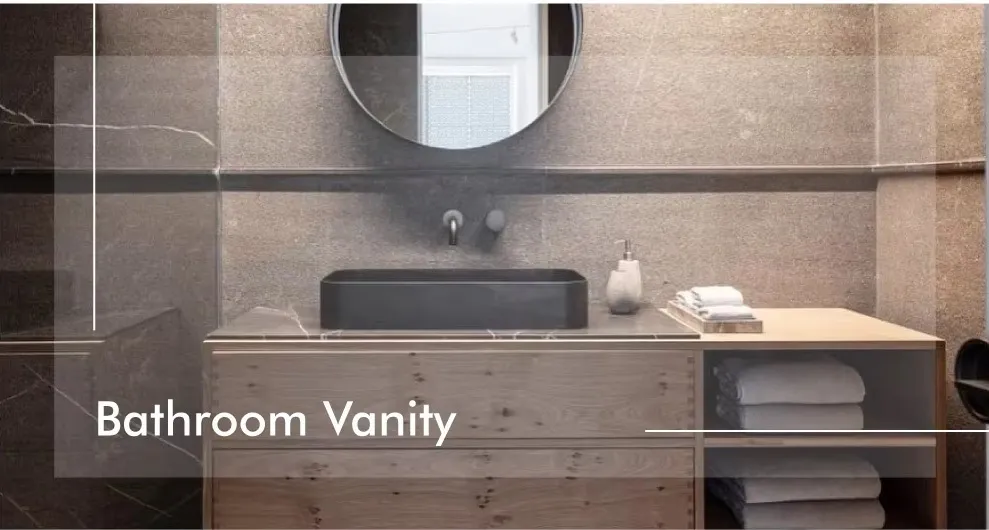
Dealing with hard water? That stubborn limescale buildup doesn't have to ruin your bathroom dreams. Here's how to pick vanities that laugh in the face of mineral deposits.
The Hard Truth About Hard Water
You know the signs - those crusty white rings around faucets, cloudy shower doors that never look clean, and soap scum that laughs at your scrubbing. Hard water isn't just annoying; it's a bathroom bully that attacks surfaces with calcium, magnesium, and lime.
In bathrooms, this mineral cocktail wreaks absolute havoc:
- Surface Sabotage - Leaves permanent etching on vulnerable materials
- Grout Grief - Erodes tile adhesives, leading to loose tiles
- Fixture Fatigue - Clogs faucets and showerheads with rock-hard deposits
- Vanity Violence - Stains and degrades cabinet surfaces over time
But before you resign to a life of vinegar scrubs, there's good news! You can fight back with the right materials that give hard water the cold shoulder.
Material Showdown: What Works Best Against Hard Water
Waterproof Laminate: The Budget Warrior
Surprisingly tough when sealed properly. The secret? Look for high-pressure laminates with waterproof cores. They're like raincoats for your vanity - water beads right off.
Hard Water Grade: B+ (Good resistance with proper sealing)
High-Gloss Acrylic: The Mirror Fighter
That reflective surface isn't just pretty - it gives minerals nothing to grab onto. Wipe away water spots before they become permanent residents.
Hard Water Grade: A (Exceptional stain resistance)
Quartz & Solid Surface: The Heavyweight Champions
Here's your knockout punch against mineral buildup. Non-porous and seamless, these materials practically dare limescale to stick around.
Hard Water Grade: A+ (Top-tier protection)
Glazed Porcelain: The Unexpected Hero
That glass-like coating creates an impermeable barrier. It's like giving your bathroom basin its own force field against mineral attacks.
Hard Water Grade: A (Great for sinks and tile)
Don't Ignore the Bones: Vanity Construction Matters
Choosing the right surface is half the battle. Here's what keeps the whole vanity standing strong:
Avoid MDF Bases
That swollen cabinet corner? Blame MDF - it drinks water like parched desert traveler. Stick with marine-grade plywood frames.
Rust-Free Hardware is Non-Negotiable
Stainless steel hinges and drawer slides won't surrender to corrosion. Your drawers won't stick when minerals come knocking.
️ Full Overlay Doors
Minimal gaps = fewer places for water to sneak in and party. Think sealed borders, not open invitations.
"I recommend wall-mounted vanities for hard water areas. Raising them off the floor means easier cleaning underneath and less standing water contact."
- Interior designer Maria Rodriguez
The 5-Minute Maintenance Ritual (Because You're Busy)
Stop scrubbing for hours! The real pros handle hard water with smart habits:
| When | Task | Pro Tip |
|---|---|---|
| Post-Shower | Squeegee surfaces | Keep one near the shower door |
| Weekly | White vinegar wipe-down | Spray after last shower Friday night |
| Bi-Weekly | Check caulk lines | Keep silicone handy for touch-ups |
| Quarterly | Deep clean faucets | Soak aerators overnight in vinegar |
AVOID abrasive cleaners! They scratch surfaces and create footholds for scale. Microfiber cloths are your secret weapon.
Style That Works: Design Choices That Resist Hard Water
Who said practicality can't be pretty? These design elements make maintenance easier:
Undermount Sinks > drop-In
That dirty rim where water collects? Eliminated! Water flows cleanly into the basin without lingering on edges.
Waterfall Countertops
Vertical surfaces mean minerals can't pool. Plus - hello modern elegance!
Integrated Sinks
One seamless surface means zero crevices for water to hide. Wipe and go - simple.
Problem Setup:
drop-in sink + porous counter + gaps around faucet
Hard Water Solution:
Integrated quartz sink + wall-mounted faucet
Your Hard Water Vanity Questions, Answered
Should I use marble in hard water areas?
"Marble and hard water mix about as well as oil and water. It's porous and etches easily - better reserved for dry areas or homes with whole-house softeners."
How often should I reseal surfaces?
"For non-porous surfaces like quartz? Never. For sealed stone or tile? Test annually - spritz water. If it darkens, it's resealing time."
Do I need special paint?
"Not if you choose cabinet materials wisely! But if painting, use satin-finish enamel - it creates the slickest defense barrier."
Water softener vs. tough materials?
"Ideally both! Softener reduces mineral attacks, resilient materials resist any strays. Like sunscreen under an umbrella - double protection."
Breaking Down Costs: What Protection Actually Costs
Sample ranges for standard 48" vanities. Remember: Cheaper upfront often means more scrubbing time and earlier replacement.
Your Battle Plan Against Hard Water
Living with mineral-rich water doesn't mean surrendering your dream bathroom. The solution is strategic material choices:
Choose non-porous surfaces like quartz or acrylic
Say yes to seamless designs with minimal crevices
Pair surface choices with wall-mounted or waterfall features
Implement the 5-minute maintenance routine
With these defenses in place, you'll spend less time scrubbing and more time enjoying the bathroom you deserve - even when your water has more minerals than a rock collection.










