
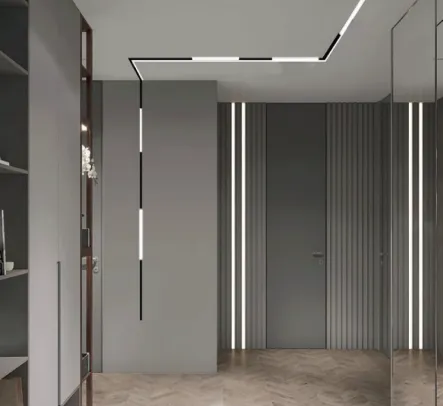
Imagine walking into a room where light perfectly highlights artwork while leaving lounge areas softly illuminated—no dark corners, no harsh glare, just intentional lighting tailored precisely to how you use the space. That's the magic of flexible magnetic track lighting. Unlike rigid lighting systems that lock you into one configuration, magnetic track systems adapt to your changing needs just like the body stretches to accommodate movement.
This flexibility isn't just about aesthetics. Just as dynamic stretching improves muscle responsiveness, adjustable lighting helps you use fewer fixtures strategically , creating tailored illumination while reducing energy consumption by 30-40% compared to traditional setups. Whether it's a living room that transitions from homework zone to entertainment space or a commercial gallery that rotates exhibits, magnetic tracks deliver light where you need it, exactly when you need it.
"Lighting shouldn't be frozen in place—it should breathe with your space. The adjustability of magnetic tracks is like yoga for your lighting design: it helps you adapt without strain."
Just as physical flexibility requires understanding muscles and joints, lighting flexibility starts with three essential components:
1. Modular Fixtures - Magnetic spotlight heads slide and lock anywhere along the track, letting you reposition lights in seconds without tools. Think of them as mobile joints in your lighting anatomy.
2. Directional Range - Fixtures with 350° rotation and 90° tilt angles mean you can light a wall display from overhead or graze light across textured surfaces—dynamic targeting that avoids fixture overload.
3. Smart Layering - Combine ambient tracks with accent heads that highlight features. Studies show layered spaces need 40% fewer total fixtures than uniform lighting grids.
Together, these elements create lighting that bends instead of breaks when your needs change. Retail stores have found they can reduce fixture counts by 25% while improving merchandise visibility just by embracing track flexibility—proof that adaptability creates efficiency.
How does physical adjustment translate to energy reduction? It's all about precision targeting:
Traditional recessed cans scatter light in fixed 45° cones—meaning up to 30% of their output illuminates ceilings or walls where it's not needed. Flexible track heads? They direct >90% of their lumen output exactly where you aim them.
Consider this comparison:
Fixed Layout:
12 recessed LEDs (8W each) consuming 96W to evenly cover a living room
Strategic Track Setup:
7 adjustable heads (8W each) focused on seating/work areas, using 56W
That's nearly 42% less power consumption, not to mention fewer materials manufactured and installed. The numbers add up: over 10 years, this approach saves homeowners $400+ and businesses thousands through reduced HVAC loads.
Energy efficiency in architectural lighting solutions reaches new levels when paired with smart sensors. Motion detectors, daylight harvesters, and dimmers integrate seamlessly with magnetic systems, creating spaces where light responds intuitively to occupancy and natural light like muscles reacting to movement.
Art galleries discovered long ago that tracks outperform fixed lights: when displays change, lights slide to new positions in minutes without rewiring. Try this at home:
This dynamic approach reduces fixtures by focusing light instead of flooding spaces.
In home offices, flexibility prevents "desk islands" surrounded by shadows:
Position tracks perpendicular to windows. Heads slide along the track to compensate for shifting daylight or relocating furniture—no more adding lamps when workstations move. Case studies show desk-specific lighting cuts overhead fixture needs in half.
Living spaces serve multiple functions. Use zoning:
Define task/ambient zones on your track system. Install brighter heads over counters (700 lumens), softer fixtures near seating (400 lumens). With magnetic flexibility, you're not locked into initial placements when room layouts evolve—a powerful advantage for growing families.
Like foam rolling releases muscle tension after exercise, adjusting track heads releases excess lighting energy you were wasting on unused space. It's therapy for your electricity bill.
Magnetic systems maintain flexibility longer with simple care:
Track Maintenance - Dust tracks quarterly to ensure smooth head movement. Occasional contact cleaning prevents connection resistance that causes energy loss.
Component Upgrades - When LED drivers evolve, swap heads without rewiring. Unlike integrated fixtures, tracks let you adopt new technologies incrementally.
Smart Integration - Retrofit wireless modules for voice/app control. Compatibility with systems like Philips Hue extends functionality without infrastructure changes.
This inherent adaptability means magnetic tracks outlast static fixtures by years. Where others become obsolete, flexible systems evolve—earning their place among durable architectural lighting solutions.
Flexibility transforms lighting from static infrastructure to responsive design element. Magnetic track systems prove that fewer, precisely placed lights outperform rigid grids—both aesthetically and economically.
The energy savings speak volumes: targeted illumination cuts consumption while eliminating the costs and waste of redundant fixtures. More importantly, it creates spaces where light enhances life instead of dictating it. In kitchens, light flows where prep work happens; in studios, it follows creative layouts; in galleries, it elevates each exhibit.
So next time you enter a room, notice if light adapts to you—or forces you to adapt to it. That distinction embodies the true power of flexible lighting: not just to illuminate spaces, but to honor how we actually live in them.
Recommend Products












