
Picture this: It’s 2 a.m. in Ashburn, Virginia. You’re sound asleep when suddenly, a faint acrid smell jolts you awake. Flames lick at your basement walls—triggered by something as harmless-looking as potting soil that spontaneously ignited. Sounds unthinkable? It happened. One family lost their home to over $1.6 million in damages because of overlooked fire risks lurking in plain sight.
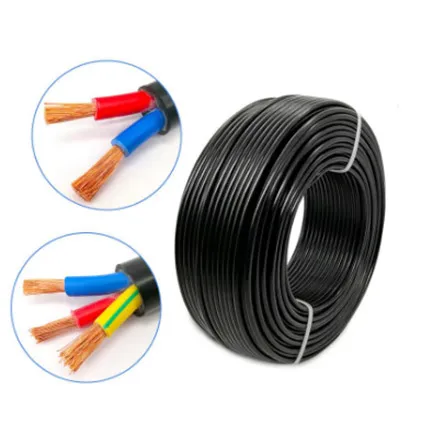
This isn’t just a cautionary tale about potting soil. It’s a wake-up call about the invisible infrastructure that makes modern life possible: electrical cables. Unlike a flaming sofa or faulty wiring, cables don’t grab headlines until it's too late. But when fire breaks out, they become silent killers—releasing toxic smoke and fueling flames behind walls, ceilings, and floors. That’s why innovations like Flame Retardant (FR) and Low Smoke Zero Halogen (LSZH) cables aren’t mere upgrades—they’re lifelines.
Fire is more than heat and light; it’s chemistry in motion. Here’s what most people miss:
"Fire feeds on shortcuts. Every time we choose cost over safety in building materials, we gamble with lives." — Fire Captain Elena Torres, NYC Fire Department
The Ashburn incident reminds us: spontaneous combustion can strike anywhere. But cables? They’re everywhere. In your phone charger, office server room, subway tunnels—even hospitals. Using substandard cables is like installing sprinklers that spray gasoline.
Imagine a cable that fights fire like a firefighter. That’s FR technology. How? Through additives like aluminum hydroxide or magnesium hydroxide that release water vapor when heated. This cools the flame while forming a protective char layer. Translation: fire struggles to spread.
While FR cables resist ignition, they don't solve the smoke problem. Picture a burning FR cable: less flame, but still toxic plumes. That’s why pairing them with LSZH isn’t optional—it’s essential.
Case in point: Las Vegas casinos. After a 1980 MGM Grand fire killed 85 people, Nevada mandated FR+LSZH cables in all entertainment venues. Result? Post-2000, casino fires saw 70% faster evacuation rates thanks to clearer air and reduced toxins.
LSZH cables ditch halogens entirely. Instead, they use materials like polyolefins that produce minimal smoke and zero acidic gases. Let’s break down their superpowers:
| Feature | Standard Cable | LSZH Cable |
|---|---|---|
| Smoke Opacity | Dense, black | Thin, grey |
| Toxic Gas Emission | High (HCl, HBr) | Near zero |
| Visibility Range | <5 feet | >30 feet |
| Corrosive Residue | Damages electronics | Non-corrosive |
Where does this shine? Hospitals. During a 2021 Seoul hospital drill, simulated fire tests proved LSZH cables gave staff 8 extra minutes to move ICU patients. That’s the difference between life and death.
This is why forward-thinking construction firms now specify LSZH as a non-negotiable fireproof requirement—especially in spaces where mobility is compromised.
These aren’t lab fantasies—they’re field-tested lifesavers:
In Dubai's Burj Khalifa, LSZH cables run through elevator shafts and air ducts. Why? A 2015 test showed standard cables filled a 50-story stairwell with smoke in 90 seconds. LSZH bought 6 extra minutes for descent.
London Underground phased in LSZH after King's Cross fire (1987). Today, their tunnels maintain visibility even during electrical fires—critical when evacuating 500 people from a stranded train.
Google’s Dublin facility uses LSZH exclusively. Why? Halogen smoke corrodes servers. A minor fire could mean $2M in hardware damage + data loss. LSZH prevents both.
The irony? Many buildings still use outdated cables to save $0.10/foot. Yet, hospitalizations from smoke inhalation cost insurers $48,000 per victim on average.
Not all "FR" or "LSZH" labels are equal. Follow this cheat sheet:
⚠️ Warning: Some vendors sell "Low Smoke" cables that merely reduce opacity—but still contain halogens. Always verify "Zero Halogen" certification.
As an architect or facilities manager, this is your shield against liability—and your gift to people who trust your spaces.
Building codes are bare minimums. True safety means asking: "If fire strikes here at 3 a.m., what unseen hero protects lives?" That hero is the cable snaking through your walls.
Ashburn’s tragic $1.6M lesson? It started with complacency. Don’t wait for your "potting soil moment." Specify FR and LSZH cables today—not because regulations demand it, but because conscience does.
"We build to outlast us. Shouldn't our materials give people the chance to outlast the fire?" — Marcus Chen, Safety Director, Singapore Urban Development Authority
Recommend Products












