
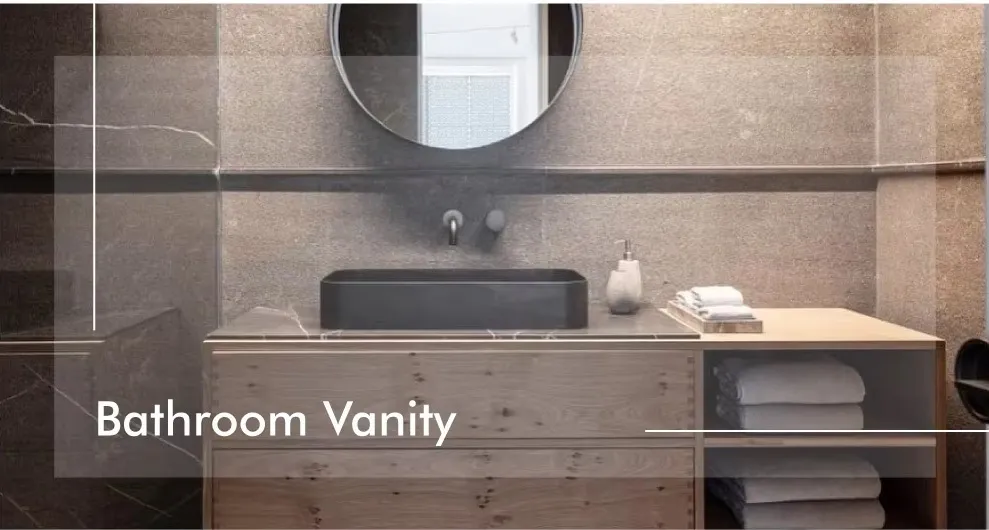
You walk into a commercial restroom and immediately feel a difference. It's not just about how clean it looks or how modern the fixtures appear. There's something deeper at work – a fundamental commitment to safety woven into every design choice. At the heart of this safety-first approach? Fire-rated vanity tops. These aren't just surfaces for sinks; they're carefully engineered guardians against one of the most destructive forces in any building. Let's explore why fire certification isn't some bureaucratic checkbox, but the cornerstone of truly responsible facility management.
Commercial environments have fundamentally transformed over the past decade. Restrooms aren't just functional spaces anymore; they've become extensions of a facility's identity. But with decorative lighting, heated elements, and advanced electronics becoming standard features, the fire risks have multiplied exponentially. The days of treating vanity tops as mere countertops are gone.
Consider this sobering reality: Fires in commercial bathrooms might seem unlikely until they happen. Faulty wiring in automated fixtures, overheated hand dryers, or electrical malfunctions in smart mirrors can create ignition points. When vanity tops lack proper fire resistance, these small incidents can become catastrophic chain reactions.
The best materials shouldn't just resist ignition – they should actively discourage flame spread. High-performance materials like mineral-filled composites create a protective char layer when exposed to high heat. This self-shielding reaction effectively starves flames of fuel, slowing fire progression significantly.
During testing, our lab technicians are always surprised how materials perform differently. Many fire-resistant options actually produce less toxic smoke – a critical factor since smoke inhalation causes more fire-related deaths than flames themselves. This makes material choice vital for safe evacuation.
"What happens when steel supports fail?" I asked a structural engineer recently. Their answer was unsettling. During fires, the greatest danger often comes from collapsing infrastructure. Fire-rated vanity systems maintain integrity through intense heat, preserving escape routes and protecting first responders.
The right material doesn't just resist burning; it keeps the surface cooler. During controlled tests, quality fire-rated tops maintain temperatures nearly 200°F cooler than standard materials at critical moments. This thermal barrier effect protects underlying electrical and plumbing systems.
Here's an unsettling truth: Some fire-resistant treatments contain harmful chemicals that become airborne when heated. Top-tier options now use non-halogenated flame retardants derived from mineral sources, providing safety without creating new hazards.
Navigating the certification landscape feels overwhelming – let's simplify what matters:
What certified installers won't tell you: Not all "Class A" ratings are equal. The class simply indicates performance within a range. Two Class A materials can have dramatically different actual performance numbers. Always ask for the actual Flame Spread Index (FSI) and Smoke Developed Index (SDI) values – they tell the real story.
After evaluating hundreds of commercial projects, clear patterns emerge with successful materials:
You've probably seen these in airports or hotels. Mineral-filled acrylic/polyester blends offer incredible advantages beyond just fire safety. But their true magic happens at the molecular level when heated. The filler material absorbs huge amounts of thermal energy, delaying temperature rise critical for ignition. Plus, seamless installation eliminates vulnerable joints.
The premium choice for high-traffic spaces needing maximum durability. Unlike natural stone, the polymer resins in quartz formulations can be specially engineered with fire-retardant chemistry. This delivers both aesthetics and protection. But buyer beware – not all quartz is fire-rated. Demand manufacturer certification documents.
The quiet champion of high-performance installations. HDPE doesn't just resist flames; its intrinsic properties include remarkable thermal stability. Unlike materials that rely on chemical treatments that degrade over time, HDPE's fire resistance is baked into its molecular structure. Maintenance teams love how its non-porous surface simplifies cleaning while resisting chemical damage.
Often overlooked for vanity tops, modern vitreous china formulas have surprising fire performance. The ceramic sintering process creates an incredibly stable matrix that simply won't combust. For projects needing traditional aesthetics without compromising safety, it's a strong contender.
Specifying fire-rated vanity tops is just the beginning. The real magic happens during integration:
Those neat silicone joints between sections? They're fire-rating weak points. Modern methods use interlocking tongue-and-groove designs with intumescent strips that expand under heat, sealing gaps automatically. It's one of those details that separates adequate from exceptional installations.
Every plumbing penetration creates a potential failure point. Specialty fire collars made of graphite-infused elastomers expand radially when heated, sealing gaps around pipes with tremendous pressure. Watching this material transform in fire tests feels like witnessing engineering alchemy.
The customization potential with fire-rated materials will surprise you. Despite the technical requirements, modern techniques and materials allow for stunning designs that elevate commercial restrooms. I've seen schools with lab-style solid-surface tops that look like science exhibits, and boutique hotels with veined quartz vanity tops that resemble natural stone formations.
Fire protection isn't a "set it and forget it" proposition. During a facility audit last year, we discovered something disturbing: aggressive cleaners had steadily degraded the fire-resistant properties of treated surfaces. The lesson? Maintenance protocols must evolve with your materials.
Modern fire-resistant surfaces thrive with pH-neutral cleaners. The industrial degreasers that seem effective initially can leach out critical fire-retardant compounds. Manufacturers now provide customized cleaning guides – ignoring them literally erodes your safety investment. Training cleaning staff isn't just about aesthetics; it's a safety imperative.
Yes, fire-rated vanity tops help facilities meet codes. But their impact runs much deeper:
Insurance actuaries don't just glance at certificates. When they see documented installation of certified assemblies with redundant protection layers, premiums can decrease by surprising margins. The documentation process matters almost as much as the installation itself.
You can't put a price tag on this. When people notice attention to safety details, it changes their relationship with a space. We've received letters from parents grateful for school bathroom upgrades – not because children comment on fire ratings, but because they sense the meticulous care embedded in the environment.
Looking toward the horizon, fire protection is evolving rapidly:
The most exciting innovations might be nano-coatings that can be applied to existing surfaces. Imagine converting standard countertops to fire-rated assemblies through revolutionary spray applications. Preliminary results from European labs suggest this might be reality within five years.
Choosing fire-rated vanity tops represents a fundamental philosophy shift. It moves beyond viewing bathrooms as functional necessities to seeing them as integrated systems demanding comprehensive safety solutions. When you choose certified materials, you're not just buying surfaces – you're investing in proven protection, peace of mind, and responsible facility stewardship.
The confidence walking through a space knowing every element from floor to ceiling has been consciously selected for maximum protection? That's priceless. Fire-rated vanity tops embody that commitment at the very point where human interaction meets thoughtful engineering.
Recommend Products












