
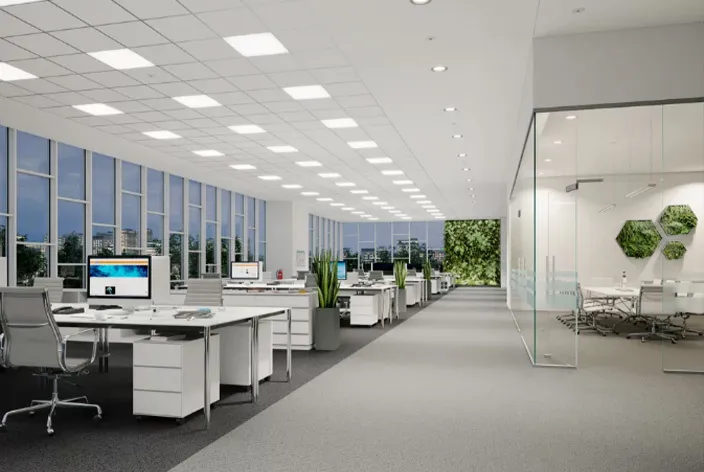
Lighting does more than brighten a room. In an office, it shapes how people work, how they feel, and how visitors perceive the business. A poorly lit workspace can cause eye strain, sap energy, and leave the wrong impression on clients. The right lighting, on the other hand, creates a productive, welcoming environment. But finding a dependable office lighting supplier is where many projects hit a roadblock.
Office lighting is often treated as an afterthought during renovation or construction. Yet it directly affects employee comfort, concentration, and even health. Overhead lighting that is too harsh leads to headaches and fatigue. Lighting that is too dim makes reading documents and screens difficult. The goal is to strike a balance: even illumination, minimal glare, and the flexibility to adapt to different tasks throughout the day.
Beyond the functional side, office lighting also communicates your brand. A modern, well-lit office signals professionalism and attention to detail. Whether you are outfitting a corporate headquarters, a co-working space, or a small business office, the lighting choices you make will influence how both employees and clients experience the space.
Understanding the main categories of office lighting helps you make informed decisions when working with a supplier. Here are the most common types used in commercial settings:
LED Panel Lights
Panel lights are the standard choice for suspended ceilings in offices. They deliver uniform, glare-free illumination and are available in a range of color temperatures. LED panels have largely replaced traditional fluorescent troffers because they use less energy, last longer, and produce better light quality.
Linear Suspended Lights
For open-plan offices, linear suspended fixtures offer both direct and indirect lighting. They hang from the ceiling and can be arranged in continuous runs, creating clean architectural lines. Many models support tunable white technology, allowing the color temperature to shift from cool daylight in the morning to warmer tones in the afternoon.
Track and Spot Lighting
Track lighting is ideal for highlighting specific areas such as reception desks, meeting tables, or artwork. It provides directional control and can be adjusted as the office layout changes over time. Spotlights are often used in corridors, lounge areas, and executive offices to add visual interest.
Task Lighting
Desk lamps and under-cabinet task lights give employees personal control over their immediate workspace. Combined with ambient overhead lighting, task lighting reduces eye strain and allows for individualized comfort levels.
Choosing the right supplier is as important as choosing the right fixtures. A capable office lighting supplier should offer more than just a catalog of products. Here are the factors that separate reliable suppliers from the rest:
Product Range and Quality
A good supplier carries a variety of office lighting fixtures, from LED panels and linear lights to track systems and decorative options. They should source from manufacturers that meet international standards for safety, performance, and energy efficiency. Look for suppliers that can provide technical specifications, lumen output data, and color rendering index (CRI) ratings for each product.
Customization Capability
Every office has unique requirements. A supplier that offers customization options — such as adjustable color temperatures, dimming compatibility, and bespoke fixture lengths — can help you achieve a tailored lighting design rather than settling for off-the-shelf solutions.
One-Stop Sourcing Convenience
Office projects often involve multiple product categories beyond lighting, including ceiling systems, flooring, wall panels, and electrical fixtures. Working with a one-stop architectural solution provider simplifies procurement by consolidating orders with a single supplier. This approach reduces shipping complexity, saves time on communication, and often results in better pricing through bundled purchasing.
International Logistics and Support
For businesses sourcing lighting internationally, the supplier's logistics capability matters. A supplier with established export experience can handle customs documentation, coordinate freight, and ensure timely delivery to your project site. After-sales support, including warranty handling and replacement parts, is equally important for long-term satisfaction.
When searching for a commercial building materials supplier that covers office lighting and more, COLORIA GROUP offers a unique value proposition. Based in Foshan, China — a global hub for building materials and manufacturing — the company serves as a comprehensive sourcing platform for residential and commercial projects around the world.
COLORIA GROUP's lighting category includes a wide range of office-appropriate fixtures:
— Office Lighting: Purpose-built fixtures designed for workplace environments, balancing brightness, uniformity, and visual comfort.
— LED Panel Lights: Energy-efficient panels suitable for suspended ceilings in corporate offices, meeting rooms, and reception areas.
— Track Lighting and Spotlights: Flexible lighting solutions for accent areas, executive suites, and collaborative zones.
— Customized Decorative Lighting: Bespoke fixtures that can be tailored to match your office interior design theme.
Beyond lighting, COLORIA GROUP's product catalog spans 13 categories, including walls, flooring, ceilings, sanitary fixtures, customized furniture, windows and doors, elevators, and solar panels. This breadth means you can coordinate lighting procurement with other building materials from the same supplier, streamlining the entire project.
Key Advantage: COLORIA GROUP maintains an overseas agent in Saudi Arabia, drawing on decades of industry experience to serve clients across the Middle East and beyond. The company's commitment to team development and talent training ensures customers receive knowledgeable support at every stage of the sourcing process.
A successful office lighting project starts with a clear plan. Before approaching a supplier, consider the following steps:
Assess the Space
Measure the dimensions of each area and note the ceiling type, natural light sources, and existing electrical layout. Spaces with large windows may need less artificial light during the day, while interior rooms rely entirely on overhead fixtures.
Define Lighting Zones
Map out different functional zones within the office. Open workstations, private offices, meeting rooms, corridors, and reception areas each have distinct lighting needs. A zoned approach ensures each area receives the appropriate light level and fixture type.
Consider Energy Efficiency
LED technology is the standard for modern office lighting. Beyond LED, consider fixtures with dimming capabilities, occupancy sensors, and daylight harvesting controls. These features reduce energy consumption and can lower operating costs over the life of the installation.
Request Samples and Specifications
A trustworthy supplier will provide product samples, photometric data, and detailed specifications upon request. Reviewing these materials helps you verify that the fixtures meet your project's requirements for brightness, color temperature, and build quality.
Even experienced project managers can stumble when sourcing lighting. Here are pitfalls to avoid:
— Choosing based on price alone: The cheapest fixtures often cost more in the long run through higher energy bills, shorter lifespans, and frequent replacements.
— Ignoring color temperature: Lighting that is too cool (above 5000K) can feel clinical and uncomfortable. For offices, a neutral white between 3500K and 4000K typically works best for concentration and comfort.
— Overlooking glare control: Fixtures without proper diffusers or shielding can create glare on computer screens, causing eye strain and reducing productivity.
— Forgetting about maintenance access: Fixtures installed in hard-to-reach locations become expensive to service. Plan for accessibility when designing the layout.
— Sourcing from multiple disconnected suppliers: Juggling separate vendors for lighting, ceiling panels, wiring, and other materials adds coordination overhead and can delay the project.
Office construction and renovation involve dozens of material categories. The more suppliers you manage, the more complex the project becomes. This is where the one-stop model truly shines.
COLORIA GROUP operates as a one-stop architectural solution provider, covering everything from interior walls and flooring to lighting, electrical fixtures, and customized furniture. This integrated approach means you can source office lighting alongside ceiling systems, switchgear, and even office furniture from a single point of contact. The result is a more coordinated project with fewer logistical headaches.
For international clients, particularly those in the Middle East, Africa, and Southeast Asia, the company's export expertise and established agent network provide additional peace of mind. From initial inquiry to final delivery, you work with a dedicated team that understands both the products and the logistics of cross-border trade.
Ready to illuminate your next office project? Whether you are outfitting a single floor or an entire commercial building, choosing the right office lighting supplier sets the foundation for a successful outcome. Visit the COLORIA GROUP website to explore the full range of office lighting products, request specifications, or speak with a sourcing specialist about your project requirements. With a comprehensive product catalog and a commitment to quality, COLORIA GROUP is equipped to support your vision from concept to completion.
Recommend Products












