
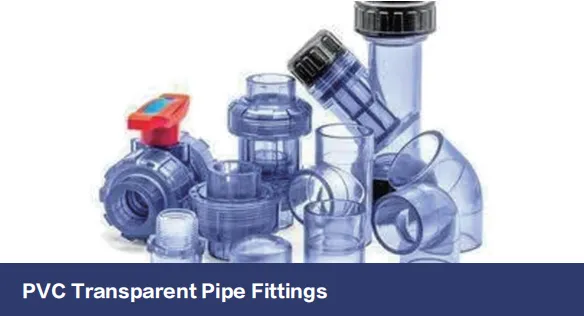
Picture this: You're midway through an important industrial installation when you discover the PVC fittings aren't holding up like they should. Maybe they're cracking under pressure, or perhaps the chemical resistance isn't what you expected. Suddenly, your carefully planned project timeline is crumbling. This scenario happens more often than you'd think when partnerships with suppliers aren't properly vetted.
Finding the right PVC transparent pipe fittings supplier isn't about grabbing the first company that pops up on Google - it's about building a relationship with someone who understands that your success is their success. These fittings are the unsung heroes of countless industrial processes, and your choice of supplier will ripple through your operations long after the initial purchase. Let's explore the top 10 criteria that really matter when vetting potential partners.
Reputation isn't just about a company's marketing materials - it's what people say when they think no one's listening. A supplier's reputation in the industrial plumbing and construction world acts as an early warning system. Don't just skim through testimonials; dig deep into project histories.
Real-world insights: Look for patterns in online reviews. Are there recurring complaints about late deliveries? Consistent praise for customer service problem-solving? This is worth more than any sales brochure.
Make direct contact with several current and previous clients. Ask specifically about:
Certifications are your supplier's resume - they show commitment. Genuine certifications require rigorous testing and consistent quality control. When evaluating suppliers, scrutinize certifications as if they were the blueprints for your project.
The key certs that matter:
Watch out: Some suppliers display outdated certifications. Always ask for current certificates with expiration dates clearly visible. If they hesitate or make excuses, consider that a major red flag.
The phrase "PVC transparent" sounds straightforward, but quality variations are massive. Top suppliers aren't shy about exactly what compounds they use. For industrial applications, this difference becomes critical when chemical resistance, pressure tolerance, and longevity come into play.
Ask potential suppliers these material questions:
Reputable suppliers will openly share material data sheets - it shows they've got nothing to hide. Those who dodge these questions? They might be cutting corners where you can't afford it.
A perfect prototype means nothing if production batches vary. Regular, documented testing separates real manufacturers from resellers with fancy packaging. When visiting facilities (always recommend seeing their operations firsthand), pay close attention to their testing setups.
The tests that matter: Look for evidence of hydrostatic pressure testing, impact resistance checks, hardness tests, surface analysis for stress cracking, and heat reversion testing. Daily production testing beats quarterly lab reports.
Don't underestimate how municipal drainage pipeline system requirements influence industrial fittings - suppliers serving this demanding sector often develop rigorous testing protocols. Ask specifically about their:
The difference between good and great suppliers often shows up when things get complicated. Exceptional suppliers staff engineers who understand not just their product specifications, but how fittings function in different environments.
Test their technical depth with scenario questions:
When they provide detailed answers drawing from practical experience, you know you're dealing with experts. Watch for suppliers who automatically reference their catalogs instead of sharing applied knowledge.
Off-the-shelf solutions work until they don't. Industrial projects often demand special configurations - bend angles, custom threading, or chemical resistance tweaks. Assess a supplier's capacity to create solutions rather than just sell inventory.
Probing questions reveal their flexibility:
While many suppliers claim they offer customization, the proof shows in their examples and process efficiency. Suppliers entrenched in the flexible municipal drainage pipeline system market often develop particular adaptability. They understand standard solutions won't fit every infrastructure challenge, especially when dealing with varying municipal requirements.
Supplier capability isn't just about today's small order - it's about supporting your growth. What happens when your needs double overnight? Can they maintain consistent quality when shifting into high-volume production?
Scaling clues: Notice how much production relies on manual intervention versus automated processes. Check if their equipment appears maintained rather than neglected. Ask how many shifts they operate - one-shift suppliers may struggle with surprise volume surges.
Look for tangible evidence:
Recent years taught us that supply chains are the backbone of reliability. Your supplier's vendors are essentially your extended team. Ask how they handle raw material sourcing volatility - it eventually trickles down to you.
Their answers to these questions matter:
Suppliers experienced with demanding sectors like municipal drainage pipeline system projects often build resilience through dual-sourcing strategies and regional warehouses. This operational sophistication becomes invaluable when inevitable challenges strike.
Price matters, but total cost extends beyond purchase price. Consider these factors:
Look for suppliers offering transparent pricing models without hidden fees. Excellent suppliers often provide:
Watch for red flags like constant price renegotiation or reluctance to put terms in writing. Partnership implies stability.
Modern procurement extends beyond immediate needs. Environmentally conscious manufacturing represents both ethical responsibility and long-term cost security.
Key environmental indicators:
Suppliers engaged with sustainable municipal drainage pipeline system projects often lead in environmental innovation. Their experience with municipal environmental compliance positions them well for forward-thinking manufacturing practices. Ask about material traceability too - sustainable PVC sourcing is becoming a key differentiator.
Selecting PVC transparent pipe fittings suppliers is fundamentally about reducing risk and building capability. Following these ten criteria moves the selection process beyond price tags to strategic partnership assessment. When done thoroughly, you're not just choosing a vendor - you're selecting a collaborator for projects not yet designed.
The perfect supplier probably doesn't ace every category, but understanding where they excel (and where they don't) allows you to compensate appropriately. Maybe their material science expertise outweighs slightly longer lead times. Perhaps their flexible customization team justifies premium pricing for specialized projects.
Prioritize according to your specific application demands. Food processing facilities would naturally emphasize certifications and material safety documentation above all. Mining operations might prioritize impact resistance and custom configurations. Municipal projects will lean heavily on supply chain resilience testing.
Finally, don't let urgency force bad choices. Taking an extra week to properly vet suppliers prevents years of operational headaches. When that next critical project launches, you'll appreciate the careful groundwork that makes everything flow smoothly.
Recommend Products












