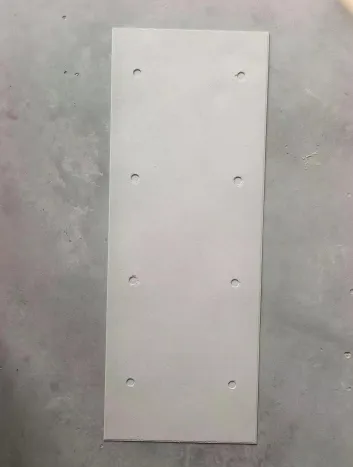
Fair-Faced Concrete Solutions: Redefining Modern Architecture with Raw Elegance
How exposed concrete is transforming contemporary design and why builders are choosing one-stop sourcing for their projects
In the world of modern architecture, few materials command attention quite like fair-faced concrete. Also known as architectural concrete or exposed concrete, this distinctive finish has moved far beyond its industrial origins to become a hallmark of sophisticated design. From the minimalist galleries of Tokyo to the luxury residences of Dubai,
fair-faced concrete solutions are reshaping how architects and builders think about structural aesthetics. Unlike traditional concrete that gets hidden behind cladding, paint, or tiles, fair-faced concrete is left exposed — its raw, unadorned surface becoming the final decorative statement.
What Makes Fair-Faced Concrete Special
Fair-faced concrete is not simply concrete left uncovered. It is a precision-engineered architectural finish that demands exacting standards at every stage — from formwork design and concrete mix formulation to pouring technique and curing conditions. The result is a surface that celebrates the inherent beauty of the material: its subtle tonal variations, the fine grain of the aggregate, and the crisp lines left by quality formwork.
This aesthetic has gained traction across residential, commercial, and institutional projects worldwide. Designers appreciate its versatility — fair-faced concrete can feel warm and organic in a home setting, or stark and monumental in a civic building. The material pairs naturally with glass, steel, and wood, making it a favorite among architects pursuing a contemporary yet timeless look.
Common Challenges with Exposed Concrete
Despite its visual appeal, fair-faced concrete presents several practical challenges that project managers must address:
Moisture absorption and staining: Concrete is inherently porous. Without proper protection, rain and humidity can darken the surface, promote algae growth, and leave unsightly water marks that compromise the intended aesthetic.
Surface defects and color inconsistency: Achieving a uniform appearance across large expanses is notoriously difficult. Variables such as mix design, weather conditions during pouring, and formwork quality can all introduce visible variations, cold joints, and honeycombing.
Long-term durability: Exposed concrete is vulnerable to carbonation — a slow chemical reaction with atmospheric CO2 that gradually neutralizes the concrete's natural alkalinity. Over decades, this can lead to reinforcement corrosion, spalling, and structural weakening.
These challenges explain why sourcing high-quality materials and protective treatments from a reliable supplier is essential. A trusted
one-stop architectural solution provider can help you navigate these complexities by delivering not just the decorative panels but also the complementary products — sealers, formwork accessories, and compatible finishing materials — all from a single source.
The Role of Protective Coatings in Preserving Concrete Beauty
A well-formulated protective system does more than shield concrete from the elements. Modern silane-based penetrating sealers can soak into the substrate, creating a hydrophobic barrier that repels liquid water while allowing water vapor to escape. This breathability is critical — it prevents trapped moisture from causing internal damage while keeping the surface dry and stain-resistant.
For projects where absolute visual consistency is required, color-adjusting primers and matte topcoats can even out minor tonal differences without obscuring the natural concrete texture. The goal is always the same: preserve the authentic look of fair-faced concrete while extending its service life.
Integrating Fair-Faced Concrete into Modern Facade Design
Fair-faced concrete panels are increasingly specified as part of comprehensive
architectural facade solutions. Whether used as a rainscreen cladding system, precast sandwich panels, or site-cast feature walls, fair-faced concrete brings a sense of permanence and material honesty that few other finishes can match.
The latest generation of lightweight fair-faced concrete panels — including those reinforced with aluminum honeycomb cores or fiber composites — offer the same visual impact as traditional cast-in-place concrete at a fraction of the weight. This makes them suitable for retrofitting existing buildings, where structural load limitations would otherwise rule out heavy concrete cladding.
Why COLORIA GROUP for Your Fair-Faced Concrete Needs
COLORIA GROUP, headquartered in Foshan, China — one of the world's largest building materials manufacturing hubs — brings together a comprehensive range of architectural products under one roof. The company's fair-faced concrete decorative panels are manufactured to rigorous quality standards, ensuring consistent color, texture, and dimensional accuracy batch after batch.
Key advantages of sourcing from COLORIA GROUP:
— 13 product categories covering walls, flooring, ceilings, sanitary fixtures, furniture, appliances, doors & windows, decorative profiles, elevators, electrical fixtures, lighting, pipes & fittings, and solar panels
— Over 560 products available from a single supplier
— Dedicated quality control team ensuring every shipment meets international standards
— Overseas agent presence in Saudi Arabia for Middle East project support
— Experience serving clients across residential, commercial, and hospitality sectors globally
The company's one-stop model means you can source fair-faced concrete panels alongside complementary products — decorative profiles, lighting fixtures, sanitary ware, and more — eliminating the logistical headache of coordinating with multiple suppliers. For project developers and contractors managing tight timelines, this consolidated approach translates directly into time and cost savings.
Application Best Practices
Getting the best results from fair-faced concrete requires attention to detail at every phase:
Substrate preparation: The mounting surface must be clean, level, and free of loose material. Any irregularities in the substrate will telegraph through to the visible surface.
Installation conditions: Avoid installation during rain or when relative humidity exceeds 85%. The ideal temperature range is 5–35°C, with substrate temperatures below 45°C.
Sealing and protection: Apply penetrating sealers within four hours of completing surface preparation. For new concrete, allow a minimum curing period of 14 days before sealing unless accelerated curing methods are validated.
Ongoing maintenance: Periodic reapplication of protective coatings will keep fair-faced concrete looking its best for decades. The frequency depends on exposure conditions and the specific sealer product used.
Ready to elevate your next project with fair-faced concrete?
Whether you are designing a luxury villa, a commercial office tower, or a hospitality venue, COLORIA GROUP has the products and expertise to bring your vision to life. From
fair-faced concrete solutions to complete
architectural facade solutions, our team is ready to support your project from concept to completion.
Contact us today at
+86-13630185350 (WhatsApp/WeChat) or visit
www.coloriagroup.net to explore our full product range. Together we build the future.