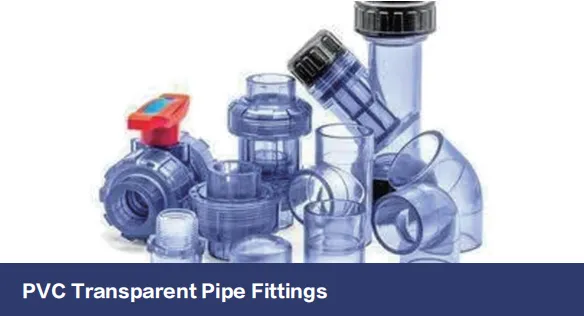
Why PVC Pipe Fittings Deserve Special Attention
Picture walking through a manufacturing facility where industrial-grade PVC fittings are being produced. These aren't just ordinary components - they're the circulatory system of factories, laboratories, and water treatment facilities. Transparent PVC pipes let operators see flow dynamics in real-time, while fittings connect vital pathways in everything from chemical processing plants to pharmaceutical facilities. That transparency we value so much? It ironically reveals every flaw in manufacturing quality.
Unlike opaque alternatives,
industrial pvc drain pipe
systems expose imperfections that could compromise entire operations. A barely visible bubble in a connector? That's not just cosmetic - it's a potential failure point when pressure builds. Slight variations in wall thickness? That could mean catastrophic collapse under heavy loads. That's why audits for these specialized components require an eagle eye for detail beyond standard manufacturing checks.
The Heartbeat of Quality: Your Production Audit Framework
Every quality inspector knows manufacturing spaces have their own rhythm - the hum of extruders, the sharp scent of heated PVC compound, the repetitive motions creating consistent fittings. But beneath this surface harmony hides complexity. Your audit framework needs to synchronize with this rhythm while spotlighting potential discord.
Core Manufacturing Audit Dimensions
Checking business licenses and ISO certificates is just the starting line. For PVC fittings makers, we need to ask:
-
What's their track record with transparent formulations specifically? Translucent PVC has different flow characteristics than standard opaque grades
-
How do they validate material traceability? A single batch of contaminated raw pellets could compromise years of reputation
-
Can they demonstrate scale-up capacity without quality drop-off? Small-batch perfection means nothing if quality crumbles at full production
Transparency isn't magic - it's precise polymer science. Your checklist must verify:
-
Raw material testing protocols - How purity and plasticizer ratios are monitored for consistent optical properties
-
The temperature dance - Extrusion profiles calibrated differently than opaque PVC to prevent crystallization
-
Stabilizer systems - Special formulations preventing UV degradation and chlorine leaching
The Visual Imperative: Transparency-Specific Quality Gates
What makes transparent PVC fittings unique creates their biggest vulnerabilities. Your quality checks need special lenses - literally and figuratively:
Critical Watchpoint:
Optical inspection isn't optional with transparent components. Surface defects visible to the naked eye? They're often just the tip of structural icebergs.
-
Wall thickness mapping using laser micrometers at multiple axis points
-
Thread concentricity verification - Misalignment means leaks under pressure
-
Sealing surface flaw detection - Microscopic scratches become failure points
-
Haze measurement monitoring - Cloudiness indicates moisture contamination
-
Yellowness index tracking - Early warning for thermal degradation
-
Refractive index uniformity - Guarantees distortion-free visual monitoring
Practical Tip:
Train auditors to hold fittings against well-lit backgrounds during walkthroughs. Unexpected rainbows aren't pretty - they signal internal stress patterns that foretell brittle failure.
The Human Element: Operator Protocols That Matter
Machines don't make quality products - skilled people operating well-maintained machines do. Your audit must observe what happens between measurements:
The PVC extrusion temperature window is famously narrow. Audit for:
-
Zone temperature monitoring frequency - Logs shouldn't look too perfect
-
Residence time awareness - Signs operators understand material degradation timelines
-
Emergency cooling protocols - What happens during temperature spikes?
Transparent materials magnify contamination impact. Verify:
-
Air filtration maintenance schedules - Clogged filters equal embedded particles
-
Polymer handling hygiene - How raw materials transfer from silos to machines
-
Mold cleaning procedures - Microscopic residues create surface defects
Beyond the Checklist: Building Continuous Quality
The best audits don't end with a report - they spark dialogue where manufacturers feel proud to showcase excellence and eager to address gaps. When inspecting PVC fitting producers:
-
Frame findings as collaborative opportunities not punitive scores
-
Share best practices from other specialty polymer processors
-
Acknowledge the craftsmanship behind precision transparent components
Your final question shouldn't be "Did they pass?" but "Would we stake our reputation on their fittings?" That's when you know your audit created real value.