
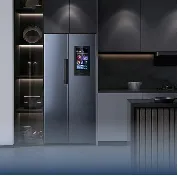
Picture opening a kitchen in Milan or Copenhagen – what you'll likely find isn't just appliances, but carefully curated extensions of living space. For Europeans, appliances aren't just utilitarian boxes; they're design statements whispering sophistication. This obsession with both form and function didn't happen overnight. Decades of energy consciousness, compact urban living, and deep-rooted appreciation for aesthetic harmony shaped this unique mindset.
"It's like an unspoken rule," says Copenhagen-based interior designer Anya Petrova. "Your fridge doesn't just keep food cold – it complements your ceramics collection. Your dishwasher shouldn't just clean plates; it disappears silently into your kitchen landscape when not in use."
This design philosophy echoes what architects call "integrated architectural solutions" – where every element serves multiple purposes. A refrigerator isn't just cooling technology; it’s a modular storage system with customizable compartments that adapt to seasonal cooking. European manufacturers invest heavily in "moisture-proof tiles" technology for refrigerators, preventing internal condensation that compromises food texture.
The minimalist wave isn't about emptiness; it's intentional curation. Parisian chef Élodie Dubois explains: "In my tiny 12m² kitchen, each appliance earns its place. My induction cooktop doubles as extra counter space. My dishwasher opens to reveal integrated dish storage. Nothing exists without purpose."
Forget simple electricity savings – in Europe, efficiency carries cultural weight. It's tied to civic responsibility. Those "A+++" ratings plastered on dishwashers? They signal environmental awareness as much as technical specs.
The numbers speak loudly:
But the real magic lies in the nuances. Take dishwasher water usage: Southern Europeans prioritize models with soil sensors that auto-adjust cycles based on how dirty plates actually are. Mediterranean consumers know every drop counts in drought-prone regions. You'll find "water recycling systems" in premium Spanish models that filter and reuse rinse water – a feature that's become standard across Iberian markets.
"Our customers don't ask 'How fast?' but 'How sustainably?'" notes Berlin appliance dealer Klaus Weber. "The quietest dishwasher used to be luxury. Now it's baseline expectation."
Walk through any Berlin concept store and you'll witness the evolution: gone are shiny surfaces and chrome handles. Today's coveted models feature:
Barcelona designer Marc García explains: "We treat appliances like sculptures. Italian stainless steel refrigerators now feature softly rounded corners inspired by pebbles on Costa Brava beaches. French glass-door models have anti-reflective coatings mimicking museum display cases."
The trend extends to ergonomics. Finnish brands pioneer "gravity shelving" in refrigerators – shelves tilt slightly forward so items never get lost in back corners. Swiss dishwashers feature flexible rack systems that accommodate oversized paella pans as easily as espresso cups.
Scandinavian priorities diverge sharply from Mediterranean needs:
Even within regions, subtle differences emerge: German consumers prioritize engineering precision, with minute-by-minute drying settings. Meanwhile, Danish buyers prefer "set and forget" models with AI that learns cleaning patterns.
Forget flashy apps controlling your fridge from Tahiti – European smart appliances prioritize unobtrusive intelligence. The true innovations:
An interesting paradox emerges: while appliances grow smarter, interfaces grow simpler. Premium models now feature touch-free gesture controls – wave a hand to illuminate interior fridge cameras, or tap countertops above hidden dishwashers to check cycle status. The goal? Technology that serves without demanding attention.
"Smart shouldn't mean complicated," asserts Miele engineer Lena Müller. "Our latest dishwasher has one physical button: start. The AI handles the rest by reading soil levels and load composition."
The materials lab is where European manufacturers truly innovate:
Portuguese brand Viero recently launched a refrigerator using mineral-based cooling systems instead of traditional refrigerants – reducing environmental impact by 83%. Similarly, many European products now incorporate "medical fire wall board" technology borrowed from hospitals, creating fire-resistant insulation without toxic chemicals.
Why does this matter beyond specs? Because European appliances address emotional needs:
Dutch researcher Eva van den Berg explains: "The 'thunk' of a heavy refrigerator door creates subconscious tension. Our biomechanics lab proved dampened pivots lower morning cortisol levels." This obsessive attention to sensory experience transforms chores into rituals – an espresso cup perfectly aligned in a specialized rack feels like daily grace.
Where is the market evolving next? Three fascinating frontiers:
A glimpse at Berlin's IFA tech fair reveals prototypes of dishwashers with ultraviolet sterilization chambers built into top racks, and refrigerators featuring transparent OLED doors displaying recipe suggestions based on interior contents. Meanwhile, a Spanish manufacturer is experimenting with "acoustic mineral ceiling panel" technology to create virtually silent refrigeration units.
"The future isn't about more features," predicts Milan design director Carlo Rossi. "It's about deeper harmony – appliances anticipating needs before they form in your mind, disappearing into your domestic landscape."
As energy regulations tighten across the continent, we'll see innovations like hybrid refrigeration systems leveraging nighttime temperature differentials, and dishwashers incorporating solar thermal technology to preheat water. The "green and environmentally friendly building materials" ethos permeating European architecture now drives appliance material science too.
Europe's preferences aren't staying put. Asian and North American manufacturers increasingly adopt:
Korean brands now license German damping systems while American manufacturers compete with European drawer-style refrigerators. The quiet revolution in appliance psychology – creating emotional comfort through sound engineering and ergonomic design – is becoming global industry practice.
Whether browsing appliances in Stockholm or Seattle, consider these insights:
Ultimately, Europe teaches us that appliances needn't be attention-seeking gadgets. The best disappear into daily life – silent partners creating space for what truly matters: cooking meals, hosting friends, living beautifully in sustainable harmony. The future belongs not to the loudest appliances, but to those speaking the language of effortless elegance.
Recommend Products












