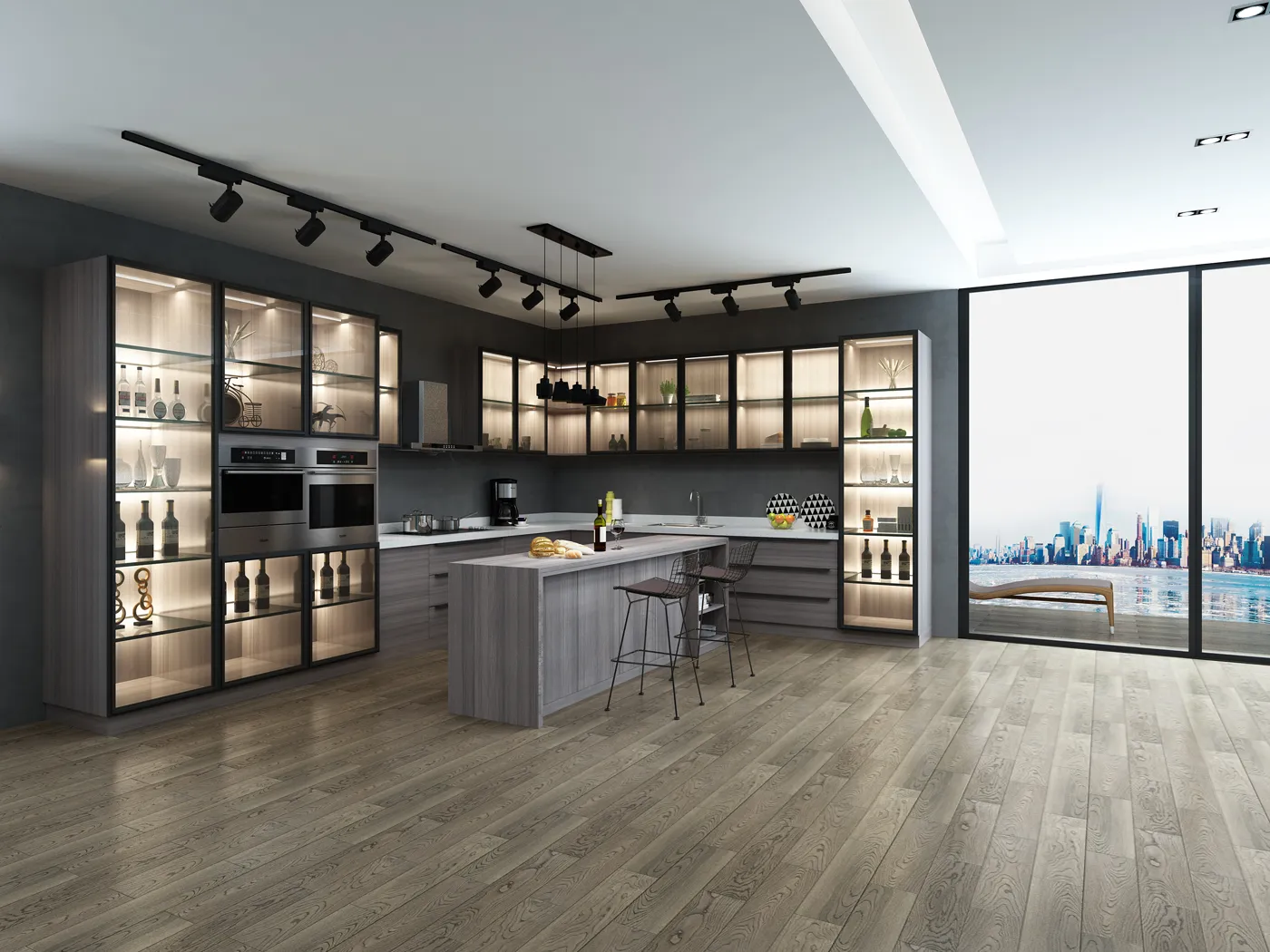
You know that feeling when you walk into a kitchen and it just…
sings
? Like every curve, every wood grain, every shadow is whispering secrets of old-world artisans? That’s the magic of European luxury cabinets. It’s not just cabinetry—it’s heirloom storytelling. Today, we’re pulling back the velvet curtain on how carvings, lines, and material choices turn ordinary kitchens into soul-stirring masterpieces.
The Poetry in Carvings: More Than Just Wood
Picture this: early morning light filtering through a Milanese villa window, catching the delicate acanthus leaves carved into a cherrywood cabinet. Those aren’t decorations—they’re heirlooms breathing. European artisans treat wood like a language. A single rosette might pay homage to Baroque palaces; hidden Celtic knots nod to ancient craftsmanship. This isn’t machine-cut uniformity; it’s the tremble of a chisel guided by generations.
Why Carvings Feel Like Family
It’s in the imperfections—that tiny groove where the artisan’s thumb rested, the slight asymmetry proving human hands shaped this. Unlike sterile modern boxes, these carvings invite touch. Run your fingers along a vine motif and suddenly you’re not just opening a spice cabinet; you’re tracing a legacy. German
Tischler
call it
"gefühl"
—the embodied emotion in crafted things. When your child’s sticky hands brush those carvings someday, they’ll absorb this tactile history.
Lines That Dance: Geometry With Soul
Forget straight lines as mere function. In Italian design, a curve is a comma in a love letter. Notice how French Provincial cabinets sweep upward like ballerinas? Or how Scandinavian minimalism uses clean lines not to erase character, but to frame it? These silhouettes do psychological alchemy: a softly arched handle soothes stress, while bold verticals energize. It’s choreography for daily living.
The Hidden Language of Flow
Ever notice how vintage French kitchens make small spaces feel grand? Secret’s in the
"enfilade"
—lines drawing the eye through rooms like a sonnet’s meter. Modern German engineering nails this too, hiding functional elements seamlessly so beauty dominates. And here’s the kicker: when lines flow naturally, your movements in the kitchen become effortless. No hip-checking corners—just graceful pivots as you dance from sink to stove.
Material Alchemy: Where Earth Meets Art
European masters treat wood like wine—terroir matters. Oak from Poland’s Białowieża Forest has denser rings from harsh winters, resisting scratches from toddler trucks. Swiss stone countertops (our nod to that required keyword!) add geological grandeur, turning meal prep into a tactile ritual. This isn’t just sustainability theatre—it’s reverence for materials that age like ancestors, glowing richer each decade.
Remember Nona’s olive oil splotches on her farmhouse cabinet? Italians call that
"bella patina"
—not stains, but proof of life lived. Unlike wipe-clean laminates screaming "touch nothing!" European luxury whispers,
"Live here. Leave your mark."
The oak remembers your wedding feast spills; the walnut keeps coffee steam secrets. This intimacy is why families linger in these kitchens hours after dessert.
Finishes That Breathe
Observe how Austrian oils seep into oak like stories into memory—no plastic coating shouting "fake!" French liming techniques let grain patterns shine through whitewash like lace. It’s honesty. As cabinets expand and contract with seasons, you hear soft creaks—nature’s lullaby saying, "I’m alive." That’s poles apart from silent laminates feeling like… well, refrigerators.
Crafting Forever Kitchens: Where You Come In
This isn’t about replicating Versailles. It’s planting roots. When choosing carvings, ask:
"Will this design still whisper to my grandchildren?"
select lines that mirror how you move when happy—maybe swaying curves if you’re lyrical, crisp angles if you’re bold. Pick woods with visible grain like life’s map. Because these choices become silent witnesses to midnight snacks and holiday chaos.
There’s a reason Parisian apartments keep 200-year-old cabinets alongside LED lights—they’re soul anchors. Like that German
Tischler
carving his initials where only the family knows, your kitchen becomes a sacred diary. Those knife nicks? First pancake flops? They’re not flaws. They’re your family’s carvings in the story.
So next time you see "European luxury", hear the artisan’s raspy breath on wood. Feel the tremor in a chisel shaping memories. It’s not veneer-deep. It’s heartwood. And slowly, without noticing… your kitchen starts humming Verdi while you chop onions.