
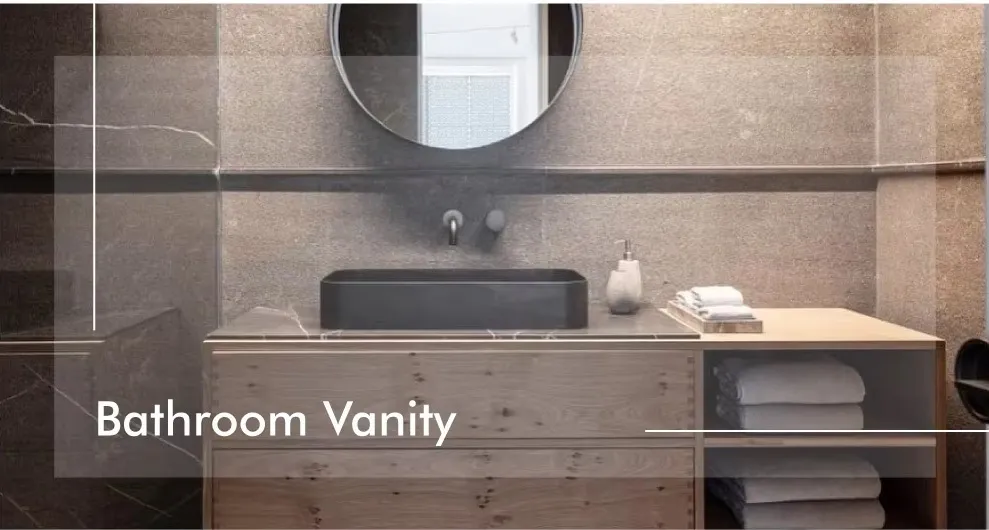
Have you ever stopped to consider the journey behind your bathroom vanity? It’s not just a piece of furniture – it's a story of choices. Choices between cutting corners or protecting forests, between chemical shortcuts or clean energy, between disposable waste or circular solutions. As global demand for sustainable home products skyrockets, the bathroom vanity industry stands at a crossroads where every decision echoes in our waterways, forests, and climate.
Forward-thinking manufacturers are rewriting the rules, transforming vanity production from an environmental liability into a beacon of eco-innovation. Let’s explore how these industry pioneers are turning your daily routine into a force for planetary healing.
Picture this: raw timber arriving at factories not from clear-cut forests, but from landscapes where every harvested tree gets replaced. Leaders like Bamboo Living and Vermont Woods Studios now use GPS-tracked wood shipments to guarantee sustainable origins – a transparency revolution echoing from forest to faucet. Their material mantra? "If it can’t return safely to earth, it doesn’t belong in bathrooms."
The material renaissance goes beyond certification stamps:
These innovations make traditional MDF cabinets look like artifacts from another era.
Step inside Kohler’s Ohio plant where solar-paneled roofs generate 40% of the facility’s power while rainwater harvest systems feed polishing stations. Or visit TOTO’s zero-waste factory in Mexico where biogas from coffee grounds (yes, really!) heats ceramic kilns. This isn’t corporate greenwashing – it’s physics-powered pragmatism.
The numbers tell the real story:
| Energy Solution | Resource Saving | CO2 Reduction |
|---|---|---|
| Industrial Heat Pumps | 65% energy recovery | 200 tons/yr per plant |
| UV-Cured Coatings | Zero solvent emissions | 90% VOC elimination |
| AI-Optimized Kilns | 22% less energy | Equivalent to 300 cars off road |
By embracing these innovations, factories are transforming energy bills into ecological dividends.
While low-flow faucets fill showrooms, revolutionary water management unfolds in manufacturing facilities:
California’s Native Trails factory now filters polishing water through constructed wetlands teeming with reed plants that absorb nickel compounds before water returns cleaner than mountain streams to the watershed.
The paradigm shift transforms water from disposable commodity to infinite loop:
For factory managers like Maria Rodriguez, the change goes beyond stats: "Seeing trout return to our discharge channel – that’s our real certification."
The dusty stereotype of factories surrounded by scrap piles is crumbling. At Duravit’s German facilities, digital eyes scan wood remnants through conveyor belts:
Meanwhile, Laufen’s "Cradle to Cradle" program recycles 100% of packaging into new boxes through consumer return systems. Even sawdust finds glorious second acts as pellet fuel or biochar soil amendments.
Sustainability isn’t just about resources – it’s about lives. Brands like Signature Hardware now invest savings from solar power into doubling worker training budgets. Skilled technicians like Rajiv Kumar share how these initiatives impact communities:
"Our factory’s air filtration didn’t just clear particulate matter – it cleared my son’s asthma. When management installed vertical gardens by assembly lines, productivity jumped 14% because we breathed better."
Beyond fair wages and clean air, governance innovations include blockchain material tracking giving artisans recognition typically reserved for celebrity chefs – because craftsmanship deserves provenance.
At IKEA’s fully regenerative factory in Poland, the boundaries between manufacturing and nature dissolve:
Wildflowers insulate while feeding bees
Mushrooms digest heavy metals
Kinetic art powers LED lighting
Such projects prove manufacturing hubs can regenerate ecosystems rather than deplete them.
As conscious shoppers, our choices echo through supply chains. Look beyond marketing claims to demand:
The most transformative choice? Supporting companies offering lifetime repairs through take-back programs. That modular vanity replacing one drawer instead of the whole piece? That’s radical ecological math.
From Mexican factories growing cacti walls that filter paint fumes to Korean labs developing self-healing bio-resins, vanity production is rewriting industrial ecology. Each moisture-resistant surface and formaldehyde-free joint represents thousands of incremental breakthroughs.
Ultimately, the quiet revolutions inside these factories reflect our collective aspirations – for beautiful spaces that don't compromise Earth’s beauty. Every morning as you brush your teeth before that mirror, remember: you’re not just starting your day. You’re participating in the reimagining of our world.
The sustainable journey continues: Discover the art of longevity with solutions designed for generations.
Recommend Products












