


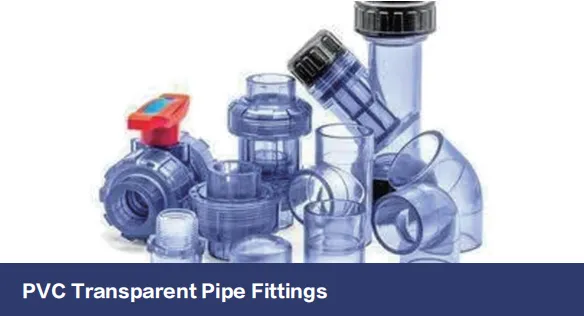
Hey there, eco-conscious builder! If you've ever stared at rows of plumbing materials wondering which ones won't cost the Earth, you're not alone. Today, we're getting down to brass tacks about PVC pipe fittings—especially the transparent ones popping up everywhere—and stacking them against alternatives. No jargon-filled lecture, just straight talk about what really matters for our planet.
You know how plastic gets demonized all the time? Well, it's not that simple. Picture this: that PVC pipe in your shower isn't just some random plastic—it's a carefully engineered material with strengths we haven't fully appreciated. But how does it really compare to metal pipes or newer plastic cousins when we look at the environmental receipts? That's what we're unpacking today.
The Carbon Footprint Showdown
Let's talk numbers. Remember hearing "PVC is terrible for the planet"? Reality check: a 3-meter section of PVC pipe racks up about 67kg of CO₂ emissions during production. Sounds bad? Hold that thought. Ductile iron—the old-school alternative—emits six times more! Suddenly PVC doesn't look so villainous, right?
| Material | Energy Consumption (per 3m section) | CO₂ Emissions | Climate Impact Reduction w/ Recycling |
|---|---|---|---|
| PVC | 223.4 kWh | 67 kg | 36% → 15.5% (using recycled content) |
| Polypropylene | 191 kWh | 61.5 kg | Lowest in ozone depletion |
| Polyethylene | 211 kWh | 58.6 kg | 22% fewer fossil fuels needed |
| Ductile Iron | Not quantified | ≈400 kg | Limited recyclability |
Here's the kicker: PVC pipe fittings require 45% less carbon footprint than reinforced concrete pipes and 35% less than ductile iron pipes. That lightweight nature? It's not just easier on your back—it means fewer trucks on the road during transport.
The Lifecycle Story You Never Hear
Okay, let's zoom out. The real test isn't just manufacturing—it's cradle-to-grave impact. PVC pipes shine here because:
- Longevity : Your PVC pipe will last over 100 years (seriously, some Roman pipes could take notes)
- Recycling : Japan recycles 48% of PVC waste into new pipes—GCC countries barely crack 11%
- Lightweight wins : Lighter pipes = less transport fuel = lower emissions downstream
Think of PVC like that Honda Civic in your driveway—humble-looking but crazy efficient over time. New membrane tech at factories now captures 80% of CO₂ emissions during production, something metal pipe factories struggle with.
What's Special About Transparent PVC?
"Transparent pipes? That's just cosmetic!" Actually, they're game-changers. Seeing flow through pipes means:
- Quick leak detection without demolition
- Easier maintenance spotting buildup
- Less guesswork = fewer unnecessary replacements
During installation, transparent PVC allows architects to maintain sightlines while designers can create stunning visual statements in luxury bathrooms or industrial spaces. The chlorine content in PVC also resists corrosion better than metals, meaning fewer catastrophic failures flooding basements.
Fun fact: PVC contains 57% chlorine from common salt—meaning it uses significantly less petroleum-based feedstock than other polymers like PP or PE. This advantage becomes increasingly important as crude oil prices continue to fluctuate unpredictably.
Recycling – Where the Magic Happens
Here's where PVC transforms from eco-suspect to sustainability partner:
- Using 80% recycled content slashes energy consumption by 75% across PVC, PP, AND PE
- Recycled PVC pipes perform identically to virgin material (unlike compromised recycled metals)
- Japan's closed-loop system repurposes PVC pipes into new pipes
Imagine if GCC countries matched Japan's recycling rates. We'd see not just landfill reduction, but genuine carbon-negative construction through avoided production emissions. Plus, emerging chemical recycling breaks PVC into raw ingredients for infinite reuse—a pipe dream becoming reality.
Deserts vs. Islands: Regional Impact
Climate pressures hit differently around the globe:
Gulf Cooperation Council (GCC) Reality
With punishing heat demanding energy-intensive AC systems, Qatar and neighbors see PVC's lightweight properties saving significant embodied energy. Yet recycling languishes at ≤15%. The solution?
- Invest in localized recycling plants instead of shipping waste overseas
- Modernize municipal waste collection
- Carbon capture in PVC manufacturing plants could offset regional emissions
Japan's Model
Earthquake-prone Japan prioritized PVC piping for decades because it withstands tremors better than brittle alternatives. Their circular economy turns PVC waste into:
- New pipes (50% of recycled PVC)
- Construction panels (30%)
- Electrical insulation (8%)
This isn't just eco-virtue signaling—it's pragmatic resilience against supply chain disruptions. With tensions affecting global material flows, regional recycling equals national security.
Tomorrow's Pipes
Get ready for these game-changers:
- Bio-PVC : Plant-based feedstocks replacing fossil fuels
- Self-healing pipes : Microcapsules repairing minor cracks autonomously
- Solar-reactive PVC : Embedding catalysts to break down pollutants in water
Picture transparent pipes revealing not just flow, but water purity in real-time! Beyond transparency being functional today, these innovations embed sustainability into the material itself—passively cleaning water systems or repairing themselves without excavation crews.
Bottom line? While no material is perfect, PVC transparent pipe fittings—especially when incorporating recycled content—deliver unexpectedly strong environmental performance where it counts most: carbon emissions reduction over their entire lifecycle.
The Verdict
It's time to move beyond simplistic "plastics = bad" narratives. When you examine:
- Carbon footprint across manufacturing → disposal
- Recycling potential and scalability
- Regional adaptation potential
...PVC pipes—especially clever transparent versions—don't just compete environmentally; they often outperform alternatives we assume are "greener." That said, materials like polypropylene offer advantages in specific ozone impact categories. But if you're prioritizing:
- Carbon emissions reduction
- Resource efficiency
- Practical recyclability
...then PVC transparent pipe fittings have earned their place at the sustainability table. As recycling infrastructure improves globally, that position only strengthens—potentially making them the unsung climate heroes of construction.
Next time you specify pipes, look beyond surface assumptions. Sometimes the clearest solutions aren't just transparent—they're genuinely sustainable when you follow their journey from factory to recycling yard to rebirth as tomorrow's infrastructure.










