

In recent years, walking through a bustling construction site or flipping through an architecture magazine, you might've noticed a quiet but powerful shift: buildings are no longer just about bricks, steel, and aesthetics. Today, they're about responsibility . Developers, architects, and even homeowners are asking one critical question before breaking ground: What impact will this building have on our planet?
It's a question that's reshaping the industry from the ground up—starting with the materials that clothe our structures. From the façade that greets visitors to the panels that line our walls, every choice carries weight. And in this era of climate consciousness, one material has emerged as a front-runner for sustainable architectural design: MCM flexible cladding stone wall panels. But what makes them stand out? And how do suppliers ensure they're not just talking the talk, but walking the walk when it comes to sustainability?
As a leading mcm flexible cladding stone wall panel supplier , we've seen firsthand how these panels are transforming architectural façade solutions across residential and commercial projects. But more than that, we've witnessed the demand for transparency—for proof that "green" isn't just a marketing buzzword. That's where environmental certifications come in. They're not just badges; they're promises. Promises that the materials used are safe for the planet, safe for people, and built to last without leaving a trail of ecological damage.
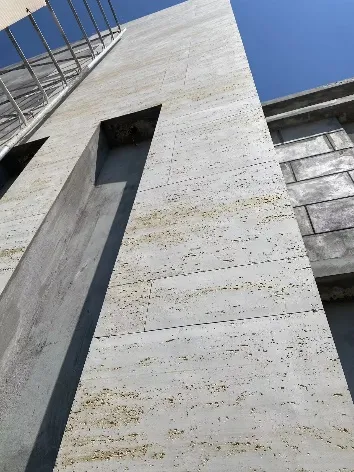
Before diving into certifications, let's take a step back. If you're new to the world of construction materials, you might be wondering: What exactly is an MCM panel? MCM stands for Metal Composite Material, but don't let the "metal" part fool you. These panels are a clever fusion of two thin metal sheets (usually aluminum) bonded to a non-aluminum core, designed to mimic the look of natural stone, wood, or concrete—without the heavy environmental cost of mining or cutting natural materials.
What makes them "flexible"? Unlike rigid stone slabs that crack under stress or heavy bricks that require extra structural support, MCM panels bend and adapt. This flexibility makes them ideal for curved facades, unique architectural designs, and even retrofits on older buildings where weight is a concern. But their real superpower? Sustainability. From production to installation to end-of-life, MCM panels are engineered to leave a lighter footprint than traditional cladding materials.
Think about it: natural stone mining disrupts ecosystems, consumes massive amounts of water, and releases greenhouse gases during transportation (those slabs are heavy!). Bricks require firing in kilns, which guzzle energy. MCM panels, on the other hand, are lightweight (reducing transportation emissions), require less energy to produce, and can be recycled at the end of their lifespan. It's no wonder they're becoming the go-to choice for architects aiming for LEED-certified buildings or developers committed to net-zero goals.
Imagine hiring a contractor to build your dream home, only to later discover the "eco-friendly" paint they used is loaded with harmful chemicals. Or installing a "sustainable" façade that, upon closer inspection, was made in a factory dumping waste into local rivers. In an industry where greenwashing is all too common, certifications act as a guardrail—ensuring that the materials you choose live up to their environmental claims.
For architects and builders, certifications aren't just nice-to-haves; they're project requirements. Many government and private clients now mandate LEED (Leadership in Energy and Environmental Design) credits, which depend heavily on material sustainability. For homeowners, certifications offer peace of mind: knowing that the products in their living spaces won't off-gas toxins or contribute to deforestation. And for suppliers? Certifications are a commitment to accountability. They prove that sustainability isn't an afterthought but a core part of the business model.
But not all certifications are created equal. Some focus on indoor air quality, others on manufacturing processes, and still others on recyclability. For MCM panels, the most respected certifications include LEED compliance, GREENGUARD Gold, ISO 14001, and the EU's CE marking for environmental safety. Let's break down what each means—and why they matter.
LEED isn't just a certification—it's a movement. Administered by the U.S. Green Building Council (USGBC), LEED rates buildings on a scale of Certified, Silver, Gold, or Platinum, based on criteria like energy efficiency, water conservation, and sustainable materials. For MCM panels, contributing to LEED credits is a badge of honor.
How do MCM panels stack up? For starters, their lightweight nature reduces the need for heavy structural support, cutting down on the use of steel and concrete (both carbon-intensive materials). This contributes to LEED's "Materials and Resources" credits. Additionally, many MCM panels are made with recycled content—up to 30% post-consumer recycled aluminum, in some cases—which earns points under "Recycled Content" criteria. And because they're highly durable (lasting 50+ years with minimal maintenance), they reduce the need for frequent replacements, aligning with LEED's "Durability" and "Waste Reduction" goals.
As a mcm flexible cladding stone wall panel supplier , we work closely with architects to ensure our panels meet LEED requirements. For example, a recent project in Riyadh—a 15-story commercial tower—used our MCM panels to achieve 8 LEED credits alone, helping the building secure a Gold certification. The client was thrilled: not only did the panels reduce their carbon footprint, but they also gave the tower a sleek, modern look that stood out in the city skyline.
Indoor air quality is a silent concern for many building occupants. Volatile Organic Compounds (VOCs) from paints, adhesives, and even wall panels can cause headaches, allergies, and long-term health issues. That's where GREENGUARD Gold comes in. Administered by UL Environment, GREENGUARD Gold certifies that products emit extremely low levels of VOCs, making them safe for sensitive spaces like schools, hospitals, and homes.
MCM panels, by design, are low-VOC. Unlike traditional stone cladding, which may require chemical sealants or adhesives, MCM panels are manufactured with water-based coatings and non-toxic bonding agents. Our panels undergo rigorous testing to meet GREENGUARD Gold standards, ensuring that once installed, they don't release harmful fumes into the air. This is especially critical for projects like schools or hospitals—spaces where the health of children, patients, and staff is paramount.
Fun fact: A study by the Harvard T.H. Chan School of Public Health found that buildings with GREENGUARD-certified materials had 30% fewer respiratory issues among occupants. That's not just a sustainability win; it's a human win.
Certifications like LEED and GREENGUARD focus on the product itself, but ISO 14001 zoom out to the bigger picture: the supplier's entire environmental management system (EMS). It's a globally recognized standard that ensures a company has processes in place to minimize its environmental impact—from waste reduction to energy efficiency to compliance with local environmental laws.
For our team, ISO 14001 isn't just a certificate on the wall; it's a daily practice. Our manufacturing facilities in Saudi Arabia run on 25% solar power, reducing reliance on fossil fuels. We've implemented a closed-loop water system that recycles 90% of the water used in production, preventing runoff into nearby ecosystems. And our waste management program diverts 85% of manufacturing scraps from landfills—recycling aluminum offcuts and repurposing core materials into smaller panel components.
What does this mean for clients? It means when you choose us as your mcm flexible cladding stone wall panel supplier , you're partnering with a company that's accountable for its entire lifecycle impact—not just the final product.

Certifications are important, but they're just the starting line. True sustainability means going above and beyond—innovating, iterating, and constantly asking: How can we do better? For us, that commitment shows up in three key areas: responsible sourcing, circular design, and community impact.
Aluminum, the primary material in MCM panels, is abundant, but mining it can be destructive if not done responsibly. That's why we partner only with aluminum suppliers who adhere to the Aluminium Stewardship Initiative (ASI) standards—ensuring ethical mining practices, fair labor conditions, and minimal environmental disruption.
But we don't stop there. Our stone-inspired finishes are created using water-based inks and pigments, avoiding toxic dyes that harm aquatic life. And when we source decorative films for our panels (to mimic wood or marble), we prioritize suppliers with FSC (Forest Stewardship Council) certification, ensuring the wood used comes from sustainably managed forests.
The traditional "take-make-waste" model is broken. In construction, up to 40% of materials end up in landfills. We're working to change that by designing MCM panels for circularity—meaning they can be reused, recycled, or repurposed at the end of their lifespan.
When a building undergoes renovation, our panels can be removed, cleaned, and reinstalled on another project. If they're too worn for reuse, the aluminum sheets are 100% recyclable—melting down to create new panels with 95% less energy than producing virgin aluminum. Even the non-aluminum core is designed to be compostable or recyclable, depending on the formulation.
We're also investing in research to develop panels with bio-based cores, using materials like bamboo fiber or agricultural waste. Early tests show these cores reduce the panel's carbon footprint by an additional 15%—proof that innovation never stops.
Sustainability isn't just about the planet—it's about people, too. In Saudi Arabia, where our main manufacturing hub is located, we've launched the "Green Builders Program," training local workers in sustainable construction practices and providing scholarships for students pursuing degrees in green architecture. We also partner with local NGOs to plant 100 trees for every large-scale project we complete, offsetting the carbon emissions from transportation and installation.
One project close to our hearts? A community center in Jeddah, where we donated MCM panels for the façade. The panels' insulating properties reduced the center's energy bills by 30%, allowing more funds to be directed toward after-school programs and job training. It's a small example of how sustainable materials can create ripple effects of positive change.
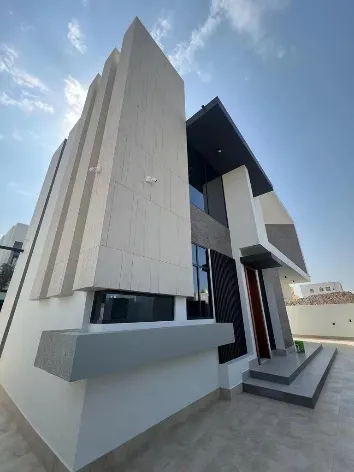
While MCM panels are our flagship sustainable product, we believe in offering a holistic approach to green building. That's why we've expanded our portfolio to include other eco-friendly materials that align with our sustainability mission—like bamboo charcoal board wall panels and Class A fireproof CPL inorganic boards.
As a bamboo charcoal board wall panel supplier , we're proud to offer a product that marries sustainability with functionality. Bamboo is one of the fastest-growing plants on Earth, absorbing 5 times more carbon dioxide and producing 35% more oxygen than equivalent trees. It requires no pesticides or fertilizers to grow, making it a truly renewable resource.
But what makes bamboo charcoal boards special? During production, bamboo is heated to high temperatures to create charcoal, which is then mixed with binders to form panels. This charcoal acts as a natural air purifier, absorbing formaldehyde, benzene, and other VOCs from the air—making it ideal for bedrooms, nurseries, and offices where indoor air quality is critical. Plus, the panels are moisture-resistant, preventing mold growth and extending their lifespan.
One recent client, a boutique hotel in Riyadh, used our bamboo charcoal boards in guest rooms. Guests reported better sleep quality, and the hotel saw a 20% reduction in complaints about "stuffy" rooms. It's a win-win: sustainable, functional, and people-friendly.
Safety and sustainability shouldn't be mutually exclusive. That's the philosophy behind our class a fireproof cpl inorganic board for hospital and school supplier line. These boards are designed for high-traffic, safety-critical spaces like hospitals, schools, and airports—where fire resistance is non-negotiable.
Traditional fireproof materials often contain asbestos or other harmful chemicals, but our CPL (Continuous Pressure Laminate) inorganic boards are free of toxic additives. They're made with mineral fibers and water-based resins, achieving Class A fire resistance (the highest rating) while emitting zero VOCs. What's more, they're lightweight and easy to install, reducing construction time and labor costs.
A children's hospital in Dammam recently chose these boards for their patient wings. Not only did they meet strict fire codes, but their smooth, bacteria-resistant surface also made cleaning easier—critical for infection control. It's proof that sustainability and safety can go hand in hand.
Still on the fence about MCM panels? Let's put them head-to-head with traditional cladding materials like natural stone, brick, and vinyl siding. The results might surprise you.
| Sustainability Metric | MCM Flexible Cladding Panels | Natural Stone Cladding | Brick Cladding | Vinyl Siding |
|---|---|---|---|---|
| Embodied Energy (MJ/kg)* | 12-15 (low) | 20-25 (high) | 18-22 (medium-high) | 8-10 (low, but non-recyclable) |
| Recyclability Rate | 85-90% (aluminum and core materials) | 5% (difficult to recycle, often ends in landfills) | 30% (crushed for aggregate, limited reuse) | 5% (non-biodegradable, rarely recycled) |
| VOC Emissions (g/L) | 0-0.1 (GREENGUARD Gold certified) | 0 (natural, but sealants may emit VOCs) | 0 (natural, but mortar may contain chemicals) | 2-5 (may off-gas phthalates and formaldehyde) |
| Lifespan (Years) | 50+ (with minimal maintenance) | 100+ (durable but heavy, prone to cracking) | 80-100 (durable but porous, requires sealing) | 20-30 (fades, cracks, and warps in extreme heat) |
| Water Usage in Production (L/kg) | 5-8 (closed-loop recycling system) | 25-30 (mining and cutting require water) | 15-20 (brick firing uses water for cooling) | 3-5 (low water, but plastic production is energy-intensive) |
*Embodied energy: the total energy required to produce, transport, and install a material.
As the table shows, MCM panels strike a rare balance: low embodied energy, high recyclability, minimal VOCs, and a long lifespan. Natural stone, while durable, is heavy and resource-intensive to mine. Brick, though classic, requires significant water and energy to produce. Vinyl, despite low embodied energy, is non-recyclable and harmful to human health. For architects and builders prioritizing both performance and planet, MCM panels are the clear choice.
Talk is cheap; results speak volumes. Let's take a closer look at a project that brought all these elements together: the Green Tower, a 20-story residential building in Riyadh, completed in 2024.
The developer's goal was ambitious: a LEED Platinum-certified building that would serve as a model for sustainable urban living in Saudi Arabia. They needed a façade material that was lightweight, durable, energy-efficient, and visually striking. After evaluating dozens of options, they chose our MCM flexible cladding stone wall panels in a warm sandstone finish—designed to complement Riyadh's desert landscape.
Here's how the panels contributed to the project's success:
Today, the Green Tower is home to 200 families, many of whom cite the building's sustainability features as a top reason for choosing to live there. "I love knowing that my home isn't just beautiful—it's helping the planet," says Fatima, a resident on the 12th floor. "And the fact that my electricity bill is half of what it was in my old apartment? That's just the cherry on top."
The construction industry is at a crossroads. With global carbon emissions from buildings accounting for nearly 40% of the total, the need for sustainable materials has never been more urgent. But as we've seen, MCM panels and complementary solutions like bamboo charcoal boards are leading the charge—proving that sustainability and style can coexist.
Looking ahead, we're excited about three emerging trends:
Our goal? To be a carbon-neutral mcm flexible cladding stone wall panel supplier by 2030. We're investing in 100% renewable energy for our factories, exploring carbon capture technology for aluminum production, and offsetting remaining emissions through reforestation projects.
Imagine MCM panels that generate solar power, or bamboo charcoal boards that track indoor air quality in real time. We're partnering with tech companies to integrate IoT sensors and solar cells into our panels, turning buildings into active participants in sustainability.
Sustainability knows no borders. We're expanding our reach beyond Saudi Arabia, partnering with architects in Europe, Asia, and Africa to adapt our products to local climates and building codes. For example, in Switzerland, we're developing MCM panels with enhanced thermal insulation for cold winters, while in Southeast Asia, we're focusing on humidity-resistant bamboo charcoal boards.
At the end of the day, sustainability isn't about checking boxes or earning certifications. It's about legacy. It's about building structures that will stand tall for generations—not just in terms of durability, but in terms of the impact they leave on our planet.
As a mcm flexible cladding stone wall panel supplier , we're proud to play a small part in that legacy. Whether it's through our ISO 14001-certified factories, our GREENGUARD Gold panels, or our commitment to community and innovation, we believe that every panel we produce should make the world a little greener, a little healthier, and a little more beautiful.
So, to all the architects, builders, and dreamers out there: The next time you're planning a project, remember—your material choices matter. Choose sustainability. Choose transparency. Choose MCM flexible cladding stone wall panels. Together, we can build a future where buildings don't just exist on the planet—they nurture it.
Recommend Products











