


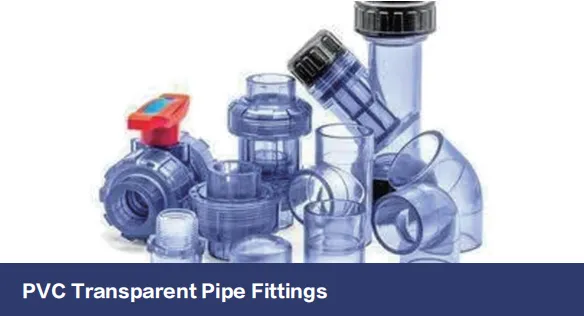
Innovative solutions merging functionality and durability for modern industrial applications
Why Do Pipe Fittings Need Superpowers?
Picture this: you're managing a pharmaceutical lab where a microscopic speck of bacteria could compromise million-dollar research. Or maybe you're overseeing solar panel installations where UV degradation silently eats away at piping systems. Maybe you're in electronics manufacturing where static discharge could fry sensitive components. These aren't hypothetical scenarios – they're daily industrial realities where ordinary pipes just don't cut it.
Traditional PVC pipes, while affordable and versatile, fall short in specialized environments. That's where advanced PVC formulations enter the scene like technological superheroes. By infusing polyvinyl chloride with targeted additives, we've created transparent pipe fittings that don't just carry fluids but actively fight environmental threats. We're talking about fittings that resist microbial colonization like a fortress wall, shield against solar damage like molecular armor, and dissipate static electricity like miniature lightning rods.
Imagine having pipeline systems that contribute to hygiene instead of compromising it , that extend product lifespan rather than requiring frequent replacement, and that safeguard sensitive operations instead of introducing risks. That's not future technology – it's available now through molecular engineering and material science breakthroughs.
The Magic Behind Transparent PVC
Let's get into the nuts and bolts without getting stuck in chemistry class jargon. At its core, PVC (polyvinyl chloride) is like cooking dough – the basic recipe stays the same, but what you mix in creates entirely different results. Standard PVC combines durability with surprising flexibility, making it ideal for countless applications. But when we start adding specialized compounds, things get interesting.
Why Transparency Matters
You might wonder why we insist on transparency when pipes usually hide behind walls. But in laboratories, pharmaceutical plants, and food processing facilities, visibility isn't a luxury – it's a necessity. Seeing inside pipes allows technicians to monitor flow consistency , spot contamination early, and identify sediment buildup before it causes problems. It transforms pipelines from mysterious hidden systems into observable, manageable components.
Achieving crystal clarity while incorporating functional additives is like mixing oil and water – except we've developed techniques to make them blend seamlessly. Through precise compounding and extrusion methods, we maintain optical properties while distributing protective additives uniformly at a molecular level.
The customization happens through what material scientists call "masterbatch compounding." Think of it as creating a super-concentrated cocktail of functional additives that gets mixed uniformly with the base PVC resin. This ensures every cubic millimeter of the final product carries precisely measured protective properties – no weak spots or uneven distribution.
Three Shields of Protection
What makes our advanced PVC pipe fittings truly revolutionary isn't just that they perform one specialized function – it's that they can be custom-configured for three distinct protective profiles or combine them in targeted hybrid formulas. Let's break down each protective technology:
The Anti-Static Shield
Static electricity doesn't just give you annoying shocks – in industrial settings, it can spark explosions in flammable environments or destroy sensitive electronics. Our anti-static formulation incorporates carbon nanotubes and specialized surfactants that create microscopic pathways for electron dissipation. This is especially crucial for industries such as:
- Electronics manufacturing: Where even a 100-volt discharge can fry microchips worth more than your monthly paycheck
- Printing facilities: Where static attracts dust to printing surfaces creating defects
- Chemical plants: Where electrostatic sparks could ignite volatile substances
By maintaining consistent surface resistivity below 10^6 ohms/square, our pipes prevent charge accumulation without compromising structural integrity. It's like having a permanent grounding wire built into every inch of your piping – without actually installing one.
The Antibacterial Shield
Microbiologists will tell you that a moist, dark pipe interior is like a five-star hotel for bacteria. Biofilms – those slimy microbial colonies that form inside pipes – can harbor dangerous pathogens and gradually degrade material integrity. Our antibacterial formulation takes a multi-pronged approach:
- Silver-ion technology that disrupts bacterial cell walls
- Zinc oxide particles that generate reactive oxygen species
- Hydrophilic surface modification to discourage biofilm adhesion
Laboratory testing shows our formulations reduce bacterial colonization by 99.7% compared to standard PVC, maintaining effectiveness even after repeated cleaning cycles. For food processing plants, hospitals, and pharmaceutical facilities, this isn't just about cleanliness – it's about preventing cross-contamination and protecting end consumers.
The Anti-UV Shield
Sunlight is public enemy number one for most plastics. Ultraviolet radiation breaks polymer chains, leading to brittleness, discoloration, and eventual failure – usually right after the warranty expires. Our UV protection system deploys:
- Hindered amine light stabilizers (HALS) that neutralize free radicals
- Ultraviolet absorbers (UVA) that transform UV radiation into harmless heat
- Nanoparticle titanium dioxide surface barriers
Accelerated weathering tests equivalent to 10 years of desert sun exposure showed less than 5% tensile strength reduction compared to 60%+ in standard PVC. This protection is invaluable for solar thermal systems, outdoor chemical transfer applications, and agricultural water systems where pipes face direct sunlight year-round.
How We Engineer Molecular Protections
Creating advanced PVC formulations isn't just about dumping additives into a mixer and hoping for the best. We've developed sophisticated manufacturing processes that ensure functional additives perform optimally without compromising PVC's inherent advantages:
Precision Compounding
Using twin-screw extruders with specialized shearing zones, we achieve nanoparticle dispersion that prevents clumping and guarantees uniform protection throughout the material matrix.
Multi-Layer Co-extrusion
For applications requiring maximum optical clarity with surface-specific functionality, we create pipes with protective outer layers and pristine inner surfaces – like having security guards only where you need them.
In-Line Quality Assurance
Real-time spectrophotometry, surface resistivity mapping, and automated bacterial adhesion testing ensure every meter of pipe meets specifications before it leaves production.
Customization isn't one-size-fits-all – we work with clients to tailor solutions for specific environmental conditions, chemical exposures, and longevity requirements. Whether you need a pipe that withstands Saharan sun or resists disinfectant chemicals in a pharmaceutical washdown area, the formulation gets precision-tuned.
Where The Magic Happens: Real-World Impact
These aren't theoretical advantages – industries worldwide are implementing functional PVC fittings with measurable benefits:
The Vaccine Lab Revolution
A leading biologics manufacturer replaced stainless steel transfer lines with antibacterial PVC fittings in their fill-finish area. Result? A 67% reduction in microbial contamination incidents and 38% faster cleaning cycle times. The transparency allowed visual inspection that actually helped prevent a major contamination event when technicians spotted discoloration from a cleaning residue.
Solar Farm Reliability
A solar thermal plant in Arizona had been replacing PVC cooling lines every 18 months due to UV degradation. After switching to anti-UV formulations, the same pipes show minimal degradation after five years of desert exposure. The project manager's comment? "We're not just saving replacement costs – we're avoiding system downtime during peak energy generation months."
Electronics Manufacturing Upgrade
Static discharge was causing mysterious chip failures in a semiconductor cleanroom. Tracing the issue back to compressed air lines, engineers installed anti-static PVC fittings throughout the system. Static-related rejects dropped from 1.2% to under 0.01% – saving approximately $400,000 annually in waste reduction alone. The solution was so effective it's now standard for their new facilities worldwide.
These cases highlight a critical advantage: functional PVC fittings don't just prevent problems – they create operational efficiencies, reduce lifecycle costs, and provide observational benefits through transparency. In industrial settings, that translates to better quality control, fewer operational disruptions, and safer end products.
What's Next: The Evolution of Smart Piping
Material science doesn't stand still – emerging innovations will further transform functional PVC applications:
Self-Reporting Materials
Incorporating pH-sensitive dyes or mechanochromic additives that change color when pipes experience excessive stress or internal corrosion.
Regenerative Surfaces
Microcapsules containing healing agents that automatically repair minor scratches or surface damage during thermal cycles.
Conductive Networks
Graphene-enhanced formulations for pipes that can double as heating elements in temperature-sensitive applications.
The shift toward multi-functional materials represents a fundamental change in how we approach industrial components. Rather than being passive conduits, advanced PVC pipes are becoming active system participants that monitor their condition, resist environmental threats, and even contribute to operational functions.
Rethinking What Pipes Can Do
We've entered an era where "just a pipe" no longer meets the demands of advanced industrial operations. Transparent PVC pipe fittings with customized protective properties represent a paradigm shift in how we think about fluid handling systems:
- Risk mitigation through integrated protective features
- Operational transparency enabling better process control
- Lifecycle cost reduction by preventing premature failures
- Compliance assurance in highly regulated industries
The real breakthrough isn't just in chemical formulations – it's in reimagining the role of infrastructure components. By shifting perspective from pipes as passive carriers to active protectors










